Showing posts with label Charles W. Chesnutt. Show all posts
Showing posts with label Charles W. Chesnutt. Show all posts
Wednesday, December 21, 2011
On "His Virginia Mammy" by Charles W. Chesnutt (6821 words) ***
In this tale from Reconstruction days, a white man falls in love with a pretty woman who doesn't know her ancestry. Like Moses, she's been pulled from a river and raised by adopted parents, these, Germans with a particular status that, though lost, doesn't make the white man fret. In fact, nothing does--or would--he's so in love with the gal. But the girl is concerned that her real parentage might not come from decent stalk, and so she refuses to marry, until one day she meets an old black woman who is able to tell her all about her wonderful parents and the ship on which the daughter was rescued from. What's rather heartbreaking about this story is the willed ignorance that all three of these major protagonists allow to stand in for truth. A mother knows her daughter is better off not as a daughter. A suitor and his love know this too. And so do we. While one may blanch at the idea of living a lie, it's hard not to see it as the best situation in an unjust world. Read the story here.


Sunday, July 11, 2010
On "The Marrow of Tradition" by Charles Chesnutt ***
This book made me angry. Revenge is not a feeling I usually get to "enjoy," but Chesnutt's book seems gauged to do just that, stir up feelings of animosity. It's essentially a text about the wrongs done to African Americans in one southern town, which serves as an microcosm for the South itself, during the latter days of Reconstruction, just years before the right to vote would be take from former slaves via state constitutions and laws.
In this small town, a white man marries a black woman in secret and leaves a tiny bit of his fortune to his colored daughter. His white daughter from a previous marriage gets most of the estate. But that's not good enough for her aunt, who arranges to steal the will and cast the black wife and her daughter out of home. The secret lives on with only the aunt.
Meanwhile, a set of newspaper men in town are tired of Republican blacks taking the political positions, tired of blacks getting "uppity," so they decide to take back the town for themselves. Even though the state constitution will change in two years, that's not soon enough. These men set out to create a riot that will displace the black leaders. In the course of the novel one after another black man will be taken advantage of, killed, belittled, pushed aside. When rage arises at the end, one can't help but feel with the oppressed people.
Written in the early 1900s, I have to wonder to whom Chesnutt was writing. This clearly wasn't a book that would have been popular in the South.
You can read the novel here at Project Gutenberg.
In this small town, a white man marries a black woman in secret and leaves a tiny bit of his fortune to his colored daughter. His white daughter from a previous marriage gets most of the estate. But that's not good enough for her aunt, who arranges to steal the will and cast the black wife and her daughter out of home. The secret lives on with only the aunt.
Meanwhile, a set of newspaper men in town are tired of Republican blacks taking the political positions, tired of blacks getting "uppity," so they decide to take back the town for themselves. Even though the state constitution will change in two years, that's not soon enough. These men set out to create a riot that will displace the black leaders. In the course of the novel one after another black man will be taken advantage of, killed, belittled, pushed aside. When rage arises at the end, one can't help but feel with the oppressed people.
Written in the early 1900s, I have to wonder to whom Chesnutt was writing. This clearly wasn't a book that would have been popular in the South.
You can read the novel here at Project Gutenberg.
Wednesday, June 23, 2010
On "The Passing of Grandison" by Charles W. Chesnutt (6736 words) ****
In this humorous sketch, a son sets out to do something adventurous to win the heart of his love. Adventurous, in this case, is to free a slave. But his father, being a slave owner, isn't to keen on the slave the son sets out to free by taking north on vacation. Instead, the son is settled with the loyalist of slaves, whom the son can't get rid of no matter how hard he tries to tempt him. Or so we are led to believe. In its use of double-spoken deceit, this one fits in with Chesnutt's Conjure Woman tales. Read the antics here.
On "The Wife of His Youth and Other Stories of the Color Line" by Charles W. Chesnutt ****
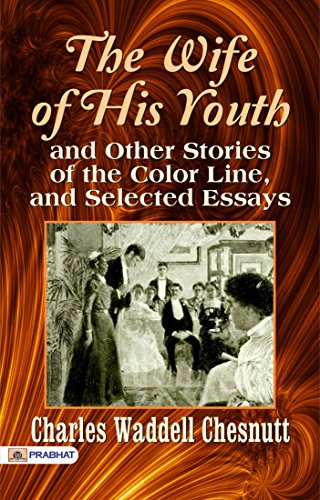
But the consequences of not following such a code also don't lend themselves to being treated particularly well either. Darker skinned people, the subject of the last few stories in the collection, find themselves shut out of funerals for people they love or herded off to jail for things they didn't steal. In each case, the prejudice that rests within post-Civil War society brings down the newly freed people and their descendants.
In college, I tended not to care as much for African American fiction because of its heavy political content. As I've gotten older, however, stories of social injustice such as these have appealed more. Call it perspective, perhaps, hearing what others say about people of given cultures or races and knowing also what is gendered in my own heart as a human being who has grown up amid such racism and how that affects my own thinking whether I wish it to or not. Stories such as Chesnutt's provide historical context for issues that linger to our present day, even if the prejudice is no longer as overt. You can download the collection here.
Thursday, June 17, 2010
On "The Goophered Grapevine" by Charles W. Chesnutt (4710 words) ****
This first tale in The Conjure Woman introduces readers to the general structure of all of the stories to follow and also introduces us to Chesnutt's main characters: Julias McAdoo, the former slave; and his Yankee employers, the frame story narrator husband and his wife Annie. Here, the narrator is considering whether to buy property down south when he runs into McAdoo while inspecting some land. McAdoo's tale of a bewitched grapevine intends to discourage the man from buying the property, in part one comes to believe because McAdoo would no longer be able to benefit from the land's scuppernongs himself. Nevertheless, although the land is purchased anyway, in true form, McAdoo comes out all right, given his storytelling prowess. Read the story here.
On "The Conjure Woman" by Charles W. Chesnutt ****

Subscribe to:
Posts (Atom)

 Posts
Posts


