This collection of stories, mostly written right around 1920, constitutes the last of the books in my Gilded Age reading list that had consumed my reading for much of this past year. Modernism dawns, and in Glasgow's very first story here, that essence seems apparent. In "Between Two Shores," the dialogue is snappy and witty, much like any movie's repartee, but much like many a nineteenth-century story (any many a movie for that matter), the story itself seems a bit manufactured. A man on the run finds a woman who is lacking her husband; without her knowledge, he decides to pose as that husband, and somehow things work out in the end, with the woman falling for the man and the two wandering off into the happy beyond.
Quite a few of the stories in the collection have similar kinds of contrived popular plot twists (or--this being nineteenth-century fiction, story-ending didactic morals). And yet, there is an artist at work here, one whom it is fascinating to watch paint her picture. "A Point in Morals" is a frame story that poses the question of whether it is better to assist someone to die or to let that person die in pain. "Thinking Makes It So" is a wish-fulfillment piece in which a writer finds a fan who falls in love with her through words rather than through looks.
"The Difference" is one of the few stories that ends on an almost sad note. In it, a woman convinces herself that it is best to let her husband leave her for another woman out of her great love for him only to discover that the other woman is merely a fling--would that the adulteress truly had been worth such love, the woman wishes, for the fact that she isn't merely cheapens her own love for her husband and his love for her. In "The Artless Age," older women discourse on the dating habits of the younger generation, in what is one of the better set of character depictions in the book.
Glasgow's most interesting stories are the ghost stories, however, which resemble in some ways Ambrose Bierce's. Most of them, however, run along a similar plot line. In each, the narrator goes to some new location and watches another person who he or she discovers by the end of the story is a phantom that only one other person (considered insane by others) can see. What makes the stories interesting, however, is that in each the phantom is a stand-in for some kind of memory that only the one person has access to. In "Dare's Gift" it is the Old South that urges a woman to betray her husband and ruin his career, just as all others who have lived in the same mansion have done. In "The Past," a man lives in the memories of a former wife, who appears as a phantom in the house, much to the man's current wife. In "Whispering Leaves," a child is cared for by his dead Mammy. "The Shadowy Third" serves as almost the opposite of "The Past" and "Whispering Leaves" with a phantom reaping revenge rather than serving as some joyous past memory.
The collection includes editorial notes on the magazine publications and subsequent alterations by Glasgow, which are interesting. The editor, however, also feels the need to pass judgment on each story, spelling out how each falls short of perfection, a practice I found a bit irritating.
Showing posts with label Gilded Age. Show all posts
Showing posts with label Gilded Age. Show all posts
Saturday, October 9, 2010


Wednesday, October 6, 2010
On "John Barleycorn" by Jack London ***
I was thinking this was a novel but was happy to find out this was actually more a memoir of London's drinking rather than a veiled fictional account of it. I was also surprised to learn that this book is not as much a memoir as propaganda. That latter definition of it makes it interesting on a superficial level but far less interesting as literature. London's point seems first and foremost to secure the vote for women so that they can pass prohibition (something men would never do for themselves). London then goes into an account of his own drinking, how he became drawn to it for social compatibility reasons rather than a desire for drink in and of itself; he doesn't even care for drinking, he says.
But this is where it gets truly interesting. He binges as a kid, on beer. As a hard laborer, he has to drink to be one of the guys--or to get along with some of society's best most-caring men, the bartenders (the only ones who will lend a guy money in times of need), whose generosity then becomes an obligation on the part of the recipient to fraternize in the man's workplace. He learns the rules of drinking, how if one person treats, one must treat back, and so on, till one is stuck with twelve or fifteen drinks inside one's system.
Perhaps I'm a cretin, but I've never followed this rule; perhaps that also is why I feel awkward when others pay for a drink for me. I resent those who urge me to have another just to be with them. I generally only carry enough money on me for a drink or two and so can't get dragged into multiple rounds. I like drinking. But I don't like getting drunk. And I don't care to subscribe to the rules London feels obligated to follow.
The deeper London gets into drinking the more interesting the text becomes, in part because it becomes an increasingly self-justifying work, a work of an alcoholic who believes himself not to be one. Or is he being tongue in cheek? It's hard to tell at times. In one passage, he talks of how horribly easy it is to become attached to regular drinks even as a nonalcoholic like himself (imagine, he says, just how much more difficult such things are for an alcoholic). This would seem obviously a joke. But then he notes how he doesn't drink for three months at a time to justify how he isn't addicted or how he can still function as a writer, still churn out four pages a day, even when drinking. Meanwhile, he goes from having a drink after writing to having one in the middle of it to one at the beginning. He descends more and more into its grip. On that level, as the story of becoming an alcoholic, this is a fascinating and scary work, for even in all my above bravado about my limits of drinking, London makes any drinking seem like a slippery slope, and so it could be. Read it here at Project Gutenberg.
Saturday, September 18, 2010
On "Martin Eden" by Jack London ****
Growing up, I read London's tales of dogs and wolves and of one seafaring man. I did not like London. I was told I read the wrong things. One of the books I needed to read, I was advised, was Martin Eden. Indeed, this book seems more intriguing than the animal stories that inspired no interest in me.
That said, I had a kind of love-hate relationship with this book and with Eden himself. Perhaps, that's what London intends, or perhaps London is Eden, which is also easy to read into the novel. I would prefer to think the former, to think that this is some kind of psychological study of a flawed character, more impressionist than realist.
The book starts with a silly love affair. In fact, perhaps, writing a love affair that doesn't seem silly is impossible to write. Perhaps, the cynical part of me will only accept love combusting. Watching Eden fall for this woman was rather agonizing.
But the text gets interesting from there. Eden is anything but a flat character. Rather, he is one of the most transformative characters I've ever read in fiction. He is constantly discovering new things about the world and about himself. In an effort to win this woman he loves, he educates himself, reads constantly. And he begins to write. He becomes a writer. He decides that this is how he will make his living. And he doesn't give up.
It's a good thing I didn't read this book when I was twenty. I'd have likely fallen for Eden's idealism, have believed that if you just worked hard enough you could be anything you wished--even a famous writer. Eden becomes, in his self-education, a man of incredible hubris. And in this also is one of the things that rather disturbs me about the book, because he never loses that hubris, never discovers that he isn't the great man he comes to think of himself as. Rather, he becomes disenchanted with the world, with all people around him--something not unbelievable, given that his education essentially divides him from others. Or does it? He thinks it does, but to think that, he also has to think himself better than all others.
The ending is somewhat disappointing as well, but I won't go into it here. However, the center of the book, as Eden discovers himself is fascinating. And even that love affair becomes fascinating. His girlfriend wants him to get a job. All his associates want that as well, want him to give up his dream, think he's being silly to pursue it so devotedly. They don't have faith in him. In the end, Eden thinks that this means that they don't love him. And maybe he's correct. Maybe, as long as one is successful, one wants to be your friend, but if one lives as a pauper and does as one wants, then one is a sponge and not someone people want to be around. Does this mean love is unreal or superficial? Maybe. But love is also--and this Eden never accepts--based, on some level, in circumstance, in action. Refuse to work, live poorly, why would a woman want a man like that? A man of riches, well, in the end, he can at least provide--as would have been nearly essential at the time London was writing. It's nice to think love conquers all, but reality is something else: it's cold, and love doesn't beat long when one partner refuses to supply for the needs of the other. In the end, Eden, nineteen at the start of the book, seems no more than his twenty-one years at its end, despite how much he's learned. You can read the novel here at Project Gutenberg.
Friday, September 3, 2010
On "The Jungle" by Upton Sinclair ***
My original post became corrupted, and unfortunately I've only been able to salvage the last half of it.
This book surprised me in part because it was much more a critique of capitalism than an expose on the meat industry. To be sure, the latter forges a good chunk of the novel, but it's not the novel's core. I suppose I shouldn't have been surprised, given Sinclair's own political leanings.
The story is one of an immigrant named Jurgis. It starts with familiar social realism and with troubles caused by society. But halfway through, another surprising thing is that it becomes a kind of adventure story. Jurgis becomes a crook. He becomes a politician. He becomes rich. He becomes poor again. This is supposed to be a critique of the system, but mostly he seems able to do these things because he gives up caring about anyone other than himself. I suppose that that is Sinclair's point--that capitalism is a system that rewards the selfish and that does so haphazardly or sort of haphazardly in a survival of the fittest sort of way. Only by banding together can common men survive.
Sounds great. But the elements of my doubt creeps in in those moments when Jurgis seems to be doing so materially well. If he reaps so many rewards by being selfish, why--except he fall--should he bother to help other men? What's more, many of the troubles in the book comes from Jurgis's own shortcomings. Had Sinclair stuck to Packingtown's abuse and Jurgis been less active in bringing his downfall had Jurgis remained wholly a victim all the time there might be more case of the Socialist cause. It would also be a less interesting novel.
I'm made to wonder why men so given to exploiting each other, so given to using others to gain power and prestige, would suddenly become wholesome individuals in the face of socialism. And this, going back to my twenties, was the problem I had with my coworker's abiding faith in the Revolution. No fan of capitalism myself, socialism, because of our own human nature, doesn't seem a viable alternative. What's needed is a turn in the human heart--one like what the socialists hope for. You can read this novel online here at Project Gutenberg.
Wednesday, August 25, 2010
On "The House of Mirth" by Edith Wharton *****
In line with William Dean Howells's account of Silas Lapham, Wharton's story tells of a young lady who is ruined by doing right. There is a slight difference, however. Lapham seemed a man of mostly indubitable strength of character with occasional lapses; Lily Bart, of The House of Mirth, is a woman of seemingly weak character who transcends herself through the efforts of a friend and through the ties of love.
Lily Bart has been reared to prize money and to live with and among those who have it. Denied her rightful prize, she has something to trade to obtain what she deserves: good looks. From the start of the book to its end, she sets out to marry a rich man who will make her life as full as it has been promised to be. But in that process, she discovers--sort of--that happiness doesn't consist in the riches one has but in the kind of person one is. I say "sort of" because she seems conflicted about this right up until the very last few pages. Were the story to continue, to be able to continue, one wonders whether Bart would renounce her ideas of happiness in feeling and return to happiness in riches. She seems very closed in by her upbringing and the values that she was reared with.
But I guess that's sort of the point. At one place in the novel, Lily Bart discovers that, raised to be rich, she really has no value as anything but a showpiece. At first, she detests work; later, she comes to see that she can't even do it.
Who Wharton wrote this book for is something I've been wondering. Certainly, the same forces of fate work on Bart to create its miserable end as one might find in many a novel of the period. But Wharton's bitter swipes at the immorality of the upper class would wipe away any sympathy among that set. This leaves the lower classes--or more likely the middle classes, able to have some time to read--as the audience, those able to be swayed by the author's argument that money ain't everything. But isn't it? If money doesn't bring happiness to Lily Bart, it certainly makes life more tolerable, and its lack draws her demise. Sure, she can take a certain comfort in family life, but I'm tempted to see this as a seemingly easy answer meant to squash down the rabble rousers wishing to move forcefully into the higher echelons of American society. Be content, Wharton says. But why?
Or why not? Is not America in part about striving toward being better off? Does not that itself make the American dream a bit of an delusion.
Download the book to read for yourself here or to listen to it here.
Friday, August 13, 2010
On "People of the Abyss" by Jack London ****
A few years ago, I read Barbara Ehrenreich's Nickel and Dimed, her attempt to live on a minimum wage and among minimum-wage workers. I found it a bit forced, its solutions a bit too easy (raise the minimum wage: I've been part of that class, and raising the wage doesn't work if it's followed--as it was--by a raise in all of the prices, which I suppose beats being laid off). Nevertheless, the work highlighted many of the problems that exist among those who aren't well off.
In response to Ehrenreich's book, another writer wrote a book titled Scratch Beginnings, which I haven't yet gotten to but hope to soon. In that book, the author gave up his education and his home and started from scratch, as a un-college-educated vagrant on the street. His purpose was to show that Ehrenreich was wrong, that anyone, if the mind is set properly, can make it--and that he apparently did, at least in the NPR interview I heard.
Between these two extreme camps, one begging for more government help and the other saying that the poor need to help themselves, there's a middle ground. Just what that middle is is difficult to know, since at any given time the left and right argues over the fact the country is pulled too far one way or the other. I tend to have views closer to the Ehrenreich camp, believing that the system is fundamentally flawed and that society needs to be changed as a whole to give poorer people a chance before we can go about blaming the less-well-off for their own plight. I mean, who really wants to be poor? Are people really so lazy that poverty comes upon them solely because of their own indigence? Maybe some, but such a mindset is hard for me to fathom. Rather, I think of people I know who look and look and look for work and cannot find it--or can't find work appropriate for them (sure, it's easy to say a person should just get a job, but if there are children to support and no mate, a night job, a minimum wage job, isn't going to supply the needs).
So enters Jack London, into early 1900s London. Were this written today, he'd be accused of bleeding heart liberalism. And I suppose, given that he had certain socialist leanings, such accusations would be fair. London, like the aforementioned authors, dons the garb of the British poor and goes to live among them on the East End. He stays in poorhouses, sleeps on the streets, works the low-end jobs he can glean, eats at the charity soup kitchens. And he complains, over and over and over. Life is horrible for these people, and how do we expect them to amount to anything when they're struggling just to have enough to eat, when they share a room with ten other people or sleep in beds in shifts. One might point to the drinking that some engage in as part of the problem--London tends to dismiss that as a fair action among such blight (but how, one might ask could one afford a drink and not food or housing?). As such London's agenda and sympathies are clear. But it's hard not to sympathize, for most of the people do not seem to be drunkards but simply people whose luck ran out and who have no way out of the hole, who lost a job to sickness and now have bills to pay but no means to pay them and who then run into the street.
Amusing anecdotes include London's account of going to eat breakfast at the Salvation Army, where he then has to endure a sermon into the afternoon to "earn" his food, even though it's going to keep him from looking for a job; and a story about a boy caught for stealing whose excuse to the judge, when asked why he didn't just ask the woman for some money for food was that he'd have then gotten arrested for begging. Indeed, the latter shows the catch-22 that many of these people are in.
Where are all these nameless people now? Dead and long gone. And so too to our day people come and go, living in states we care not to imagine, all the poverty-stricken masses. Change is needed. But unlike Ehrenreich, London doesn't propose solutions--he simply notes that the whole structure of society needs redoing, and in that, I'd agree, right down to the structure of each of our greedy self-loving/self-preserving human brains. You can download the book here.
Saturday, August 7, 2010
On "The Octopus" by Frank Norris ***
If I were teaching a class on naturalism, The Octopus would certainly be one of the best assignments I could make. By the end of this novel, Norris has thumped his readers over the head with his overarching philosophical theme. The octopus of the title is the railroad, its tentacles spreading out into every aspect of modern life, having sway, killing and making itself ever more powerful and ever richer.
Enter wheat--you know, the stuff we make bread from. Large landholders in central California intend to make a fortune from it, but bad years have kept them down--and the railroad, which controls the prices they can get for their grain by controlling the cost of delivering it. Rich men fighting richer men, one might sum the story up as, but the rich man are certain underdogs. The richer men control the government--the politicians and the courts and the newspapers that report on those things. The railroads, as it turns out, also control the land, so these landholders aren't owners of much.
It took me some time to get into this book, but eventually it did manage to enthrall. I found myself drawn to the tale of intrigue among the landholders as they tried to wrestles control of their crop from the railroad, not so drawn to the sentimental love stories Norris feels compelled to include. And yet, there's something in these love stories. The men fight, sans ethics, but the women, as many would have touted in Norris's day, soften the men and are the men's voice of conscience.
Where the naturalism comes in is this. Late in the novel, when it's clear just how much Norris seems to hate the railroad--and corporatism--one of his characters goes to visit the railroad's CEO. The CEO, as hated as he is, turns out to be a rather caring person, and his excuse for treating the farmers so badly is that if he doesn't make a profit, he'll go out of business. In other words, the CEO says, "It's not my fault. It's the system." All of the characters fall prey to "the force"--they are powerless before it. Though Norris's sympathies seem to lie with the farmers, I wonder if his farmer characters, placed in the same situation of power would have acted much differently than their railroad counterparts. One thinks not, as is hinted at when Magnus Derrick, the lead farmer, says something to the effect of what will happen when they gain control of the land.
The force that Norris speaks of is bound up in the wheat itself, which grows up each year to be reaped and than dies and is sown again. All men are helpless before death, and yet life goes on, so that death is really an illusion--we're just part of a natural process. We can't fight it. We just have to accept it and live in it and accept the role we've been handed to play. A rather bleak vision, with some truth to it, though in the end, I choose to believe we do have some choices. Even if in the face of death, they might not mean much, we don't have to treat each other as the people in the novel treat one another.
You can download the book here at Project Gutenberg.
Friday, July 23, 2010
On "The Son of the Wolf" by Jack London **
This collection of linked stories tells of settlers, mushers, and gold seekers in the Yukon. As with many of the writers of the time, London uses dialogue dialects to full effect here, though unlike Charles Chesnutt, who mimics black and lower-class dialects, London mimics Irish and, more often, Indian dialects. Think, "Me go to store," as in the old movie portrayals, and you've about got it. A lot of the stories focus on why the white man is so great and come off pretty much as racist, though at times it's hard to know how serious London is, as the story itself doesn't always support the narrative point of view. The title story is a case in point, the tale of a white man who decides to marry the prettiest woman in a tribe and who puts all the Indians who try to fight him down; the introduction to this collection, however, makes some tangent points regarding the white man's faith in himself--and how at some level it deconstructs itself.
"An Odyssey of the North" retells the ancient Greek tale in a rather ironic sense. An Indian prince displaced by white men and separated from his espoused lady sets off on a journey into foreign lands. Years later, he returns, a richer man, and sets about to get his lady back. But she has married a white man, and his eventual killing of his competitor and reuniting with his one-time wife proves fruitless. She loves another. Last of their respective tribes, they cannot come together to save them. She has no desire to return to tribal life, and neither, the Indian man realizes, does he. It's a sad and interesting take on Native American life in the face of European aggression.
Still, I don't think this collection on the whole--London's first--has aged well. The fact that I can't recall most of the stories says something about how little I was drawn to them.
The version of the book that I read, published by Oxford, however, contains also a selection of other tales by London involving the same area. These on the whole seem much more accomplished and interesting. Many of them are tragic . The last tale, for instance, recounts the story of an old man who decides to go look for gold in far north frontier. It's a story about confidence, about faith, and about perseverance. It's also a bit tongue in cheek, an all around adventure tale.
Read The Son of the Wolf collection here.
Sunday, July 11, 2010
On "The Marrow of Tradition" by Charles Chesnutt ***
This book made me angry. Revenge is not a feeling I usually get to "enjoy," but Chesnutt's book seems gauged to do just that, stir up feelings of animosity. It's essentially a text about the wrongs done to African Americans in one southern town, which serves as an microcosm for the South itself, during the latter days of Reconstruction, just years before the right to vote would be take from former slaves via state constitutions and laws.
In this small town, a white man marries a black woman in secret and leaves a tiny bit of his fortune to his colored daughter. His white daughter from a previous marriage gets most of the estate. But that's not good enough for her aunt, who arranges to steal the will and cast the black wife and her daughter out of home. The secret lives on with only the aunt.
Meanwhile, a set of newspaper men in town are tired of Republican blacks taking the political positions, tired of blacks getting "uppity," so they decide to take back the town for themselves. Even though the state constitution will change in two years, that's not soon enough. These men set out to create a riot that will displace the black leaders. In the course of the novel one after another black man will be taken advantage of, killed, belittled, pushed aside. When rage arises at the end, one can't help but feel with the oppressed people.
Written in the early 1900s, I have to wonder to whom Chesnutt was writing. This clearly wasn't a book that would have been popular in the South.
You can read the novel here at Project Gutenberg.
Friday, July 2, 2010
On "Sister Carrie" by Theodore Dreiser *****
There are moments toward the end of Sister Carrie that reminded me of a work toward the beginning of my list of American writings between 1870 and 1920, and those moments help illuminate why Dreiser's book was hushed away while Horatio Alger's books were popular. Alger writes of a shoe-shine boy who works his way from rags to riches. Dreiser writes of a man on the way down. The former works hard for a living; the later, at some points, tries to but remains too depressed to move forward and too hard pressed by the forces around him to even manage to make a decent living. Meanwhile, a woman who has shown almost no substantial morality gets rich on her looks.
But although Dreiser's book may be a commentary of sorts on the saccharine view of some of the popular literature of its day, it's even more a commentary on American society and American values--as they were then, and as they continue to be to our day. Dreiser's work is nothing less than an attack on consumerism, capitalism, and the American dream. Each of the three main characters in some way values money and riches. That's is their soul. That is their occupation. That is the only motivation.
Carrie, the book's main character, is a case in point. She moves to the big city for some adventure and for a little spending money. She ends up in the dull home of her sister and her brother-in-law, hard-working lower-class Americans. If this were Alger's work, this family would be moving on up--and quickly. But this is Dreiser, and their life is a drudgery, and so too promises to be Carrie's life.
Carrie, however, is swept up with the glamor of the big city. She wants in--but not on some servant level. She wants to be as well off and well dressed (grooming is important in this book) as the rich people she sees wandering down the street. She wants to go to the fine restaurants, to the plays. She wants to be entertained. She wants.
So do the other characters. This is America, and what's more natural than a little lust to make things work properly. Drouet, an up-and-coming salesman and a lady's man takes Carrie in. She gets paid well for becoming essentially his mistress. She gets clothes. She gets to go to the theater. She doesn't have to work. Drouet knows to say just enough to string her along, promising marriage, some day, if he can ever manage to be faithful and ever manage to make the next big sale.
Enter Hurstwood, a man of even greater wealth and seemingly more depth. Carrie falls hard for him. He falls hard for her. The problem: He's married, only Carrie doesn't know it. But in the end, what does marriage matter when lust is involved? Hurstwood determines to have her at all costs--destruction of his marriage, double-crossing his friend Drouet, whatever.
In the end, the two of them get exactly what they want--only it's not what they envisioned. Happiness, says Dreiser, is something one finds only in one's dreams.
In keeping with what was the rising modernist period, Dreiser places "art" as a counterpiece to this lust. Toward the end, Carrie, with all she has ever desired but incredibly unfulfilled, begins to realize that there is more to life than material things. Somehow, art can fill our craving. Call it what you will, the modernists were an optimistic sort. If God is dead, art, which can do nothing for us save offer some happy distraction for our brain or, more rarely, some insight into bettering the human condition (but certainly not escaping death or meaninglessness), is certainly an empty shell of a replacement.
Dreiser's writing is dry. Toward the the start, I found myself dreading the read. He provides lots of details about the city of Chicago in his day, many not pertinent to the narrative. He goes off on philosophical tangents (the story is told omnisciently, something few authors would try now and even fewer could get away with). But for all that, the novel picks up, and by the end, I found it hard to put it down for need of doing something else. This one is well worth sticking out the early passages.
You can download the book here at Project Gutenberg.
Wednesday, June 23, 2010
On "The Wife of His Youth and Other Stories of the Color Line" by Charles W. Chesnutt ****
But the consequences of not following such a code also don't lend themselves to being treated particularly well either. Darker skinned people, the subject of the last few stories in the collection, find themselves shut out of funerals for people they love or herded off to jail for things they didn't steal. In each case, the prejudice that rests within post-Civil War society brings down the newly freed people and their descendants.
In college, I tended not to care as much for African American fiction because of its heavy political content. As I've gotten older, however, stories of social injustice such as these have appealed more. Call it perspective, perhaps, hearing what others say about people of given cultures or races and knowing also what is gendered in my own heart as a human being who has grown up amid such racism and how that affects my own thinking whether I wish it to or not. Stories such as Chesnutt's provide historical context for issues that linger to our present day, even if the prejudice is no longer as overt. You can download the collection here.
Thursday, June 17, 2010
On "The Conjure Woman" by Charles W. Chesnutt ****

Monday, June 14, 2010
On "The Country of the Pointed Firs and Other Stories" by Sarah Orne Jewett ***
Jewett's writing reminds me most of the nature writers of the late nineteenth century. Her characters often go out to the woods and commune with it, find something from it, and return to the world refreshed. There is much attention to what exactly they see, as if Jewett herself had a nature guide with her when she wrote the story or traversed the hills (likely, she knew more about which species was which than I do--I'm the one that would need the book). "A White Heron" fits this perfectly. Initially the story of a girl who meets a boy who likes to hunt and "falls" for him, "A White Heron" becomes a story about a girl who falls for nature instead.
The Country of Pointed Firs--a work I'd long assumed was a short story because of its constant pairing with "other stories"--is actually a novella of quite some length. It tells the tale of a woman who goes to visit Dunnet Landing, a seaside town in Maine. As in much of Jewett's work, nothing much seems to happen. The woman meets locals, talks with them, hears their stories about this person who died or about how the current generation isn't as tough as the previous or how all the sailors have gone away, walks into nature by herself or sails there, collects herbs, learns about herbs from the woman she lives with, and so on. And yet, by the sheer beauty of her language, Jewett moves us forward, compelling us to read lazily on. And we do. And when summer comes to an end and fall makes its full claim on the senses and the visitor must go away, we too are sad. It's like we're leaving a town we've spent the summer in. And that is not an easy thing to achieve in mere words.
The collection I read included the novella, four other Dunnet Landing stories, and four random classic stories by Jewett. The novella is the main feature for good reason, as it introduces all the major characters and is probably the best of the works in the collection, save perhaps the classic "A White Heron."
Tuesday, June 8, 2010
On "Tales of Soldiers and Civilians" by Ambrose Bierce ****
With that in mind, I listened to a set of ghost stories of his that were available online. And now, because I'm reading more extensively in his time period, I've opted also to read his classic Tales of Soldiers and Civilians. If I'd stopped at just reading the soldier stories, I've have thought I had missed out on an absolute classic. Unfortunately, the second half of the collection, the civilians, is mostly lackluster--familiar ghost stories or melodramatic stories about people dealing with death.
The soldier stories, however, fit quite nicely with the work of Stephen Crane and others of the naturalist school of fiction of Bierce's day. Sometimes, Bierce sticks in the requisite ghost, but here, amid soldiers wasting away, almost ghosts themselves in life, the phantoms seem as if they belong. Bierce seems intent on stripping away the glories of war and presenting us only the gory, sad plight that war drops men--or former men--into. His world is harsh, like our own can be.
The gist of the text I read can be found here at Project Gutenberg.
Thursday, May 27, 2010
On "Looking Backward" by Edward Bellamy ***
But Bellamy's book is not terribly focused on technology. Rather, it is focused on institutions and social change. Written at a time when industrialization had resulted in vast amounts of inequitable wealth, Bellamy aims to tell of a time when all humans will be equal, to show how nineteenth-century culture fails to value people, and is thus un-Christian.
Bellamy's solution to this dilemma may sound somewhat familiar. Today, we might call much of what he is proposing communism--or, perhaps more accurately, national socialism. The basic idea is that industry works best (most efficiently) when it is larger, and the larger it is, the better. Hence, rather than have, say, three car manufacturers, let the government own and control the one car manufacturer. In this way, competition is removed and all can work toward making the best product at the best price at the exact number needed. Sounds great. Planned economies, in theory, should be much better than our mess of capitalism.
Take away money, as Bellamy does, and replace it with a credit card (in his nineteenth-century ideas, this seems more like a punch card with items on it), wherein everyone is limited to purchasing a certain number of goods. Each person gets the same amount on the card, no matter the amount of labor expended. In this way, no one has too much or too little. But why work hard if one will make the same either way? In Bellamy's world, one works for glory--for the good of the common man. There is honor in this, and that is its own reward.
Beyond that, everyone has the job he or she wants and, thus, enjoys. To avoid having an excess of, say, literature professors and a derth of, say, coalminers, work is divvied up so that those with the more desirable careers have to work more hours, while those with less desirable careers work fewer hours. Hence, a coalminer might only have to work four hours a week, while a professor works sixty; some professors might be tempted, therefore, to become coalminers so as to have free time. An interesting theory--but in practice, impossible. More hours can only be granted if there is more work; a shortage of workers would in fact guarantee an excess of work and necessitate more hours not fewer.
But this is fantasy, after all, which is unfortunately where well-working planned economies tend to dwell. Much as I would love to see Bellamy's type of world come to be, people do not have the character to create such a society, and the structure society--contrary to what Bellamy hypothesizes--does not wholly create a people's character, given that people themselves make up the society.
Nevertheless, as a study in late nineteenth-century criticism, Bellamy's book is very interesting--especially given that it was a best-seller in its day. Happily, it's available online here at Project Gutenberg.
Tuesday, May 18, 2010
On "A Humble Romance and Other Stories" by Mary Wilkins Freeman ***
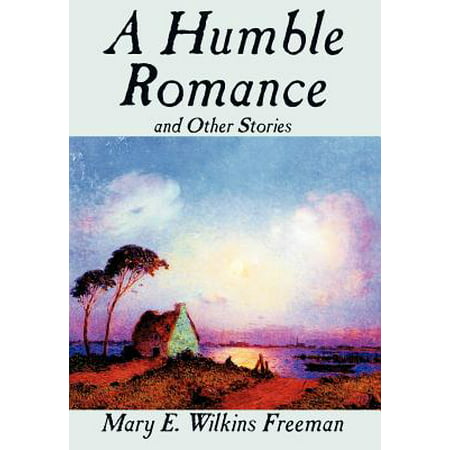
The final story, "A Conquest of Humility," in this collection is a prime example of a typical Freeman story in this collection. In most are lonely people who somehow find a happy resolution. In this story, a woman betrothed to a young man is thrown over for another woman. A year goes by, and then the man is thrown over by the woman, and he returns to the original. Obviously, the first woman is a little less interested than before. However, in Freeman's usual style, a final few paragraphs bring the story full circle, and the couple marries. For more of Freeman's stories from this collection, you can check them out here.
Thursday, May 6, 2010
On "The Rise of Silas Lapham" by William Dean Howells *****
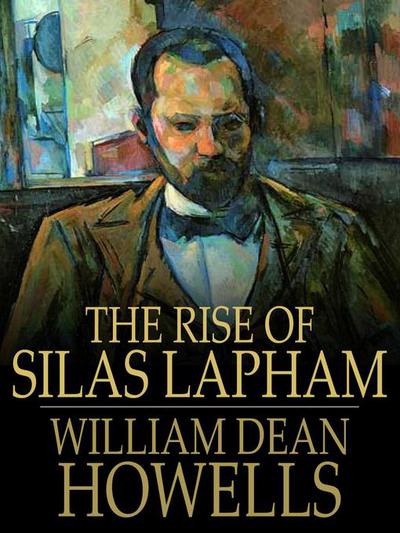
The Rise of Silas Lapham is at once a comedy of errors, a comedy of manners, and a tragedy created by pride as much as by right action and by the dark forces over which humans have no control. The tale is primarily that of Silas Lapham, one of the new rich of the Industrial Revolution, a man with an inferiority complex he hides in bragging and in good deeds, a man with an overactive conscience. He is the father of two daughters, one pretty, the other intelligent. Of these, high society takes note in the form of a gentleman who comes acalling. Rich meet formerly poor; a love triangle of sorts comes into being; and there is much misunderstanding. This is the source of the comedy, toward the end a bit overwrought but mostly well done. The tragedy comes from Lapham's own braggadocio, his feeling of invincibility, which allows him to be careless, as well as through his generosity and guilt for his riches. Placed finally in a situation that asks Lapham to stick to his ideals or to compromise in an attempt to save himself, Lapham has to make a choice that will affect his whole family.
I felt incredibly close to Lapham in many places, not because I'm rich, but because like Silas, I can be made to feel guilty for doing what is right because of the wrongs it will do to others--not that doing wrong would solve things other than to wrong a different set of others. And Lapham's own daughters have similar crises of conscience--having to choose what's right for one's self even though it hurts another (even if no true wrong is involved). The moral struggles of these characters were very enjoyable to see worked out on the page, especially as Howells seems to have more trust in people's personal morality than I generally have been willing to harbor, at least in narrative, where more often my own characters give in to their base instincts, even if they force themselves to believe they do so for a higher cause. I suspect as much of myself, I guess. You can read Howell's novel here at Project Gutenberg.
Tuesday, April 27, 2010
On "The Adventures of Huckleberry Finn" by Mark Twain *****
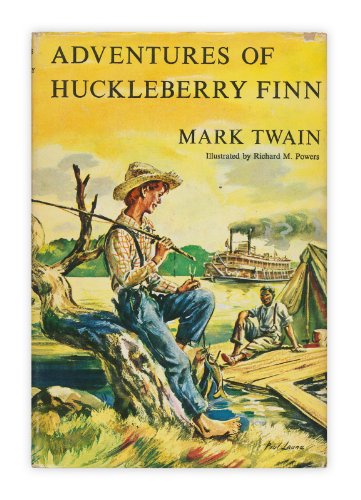
Now here I am reading all these American texts written between 1870 and 1920, mostly books I failed to read while in college but that are iconic nevertheless. Sneaking in a reread of Huck Finn onto this list seemed quite a perfect fit. Twain, writing over one hundred years ago, still seems fresh in the twenty-first century. He plays with dialect. He plays with an unreliable point of view. And he's still funny.
As with most critical assessments, I do find the latter third of the book a little disappointing; once Tom Sawyer shows up, the novel gets rather silly, and the slave Jim, always a bit too childlike so as to be a bit disturbing, becomes downright stupid. And yet, it's possible to read these latter sections as part of Twain's point. Jim, not assessed as a human being by most of the slave society around him, isn't treated any better by the boys; he is infantilized by the racist society, and what for him is a matter of freedom and slavery, life and death, is just fun and games to Tom.
The most humorous passages, though, revolve around the king and the duke, a tiresome duo that take up the middle third of the book. While funny, there's something sad about the dirth of quiet moments in the book once they show up, as the most beautiful passages are those in which Huck and Jim simply float down the river, and we get to listen and look in.
The book may be downloaded here from Project Gutenberg, and the audio here.
Thursday, April 15, 2010
On "Roughing It" by Mark Twain ****
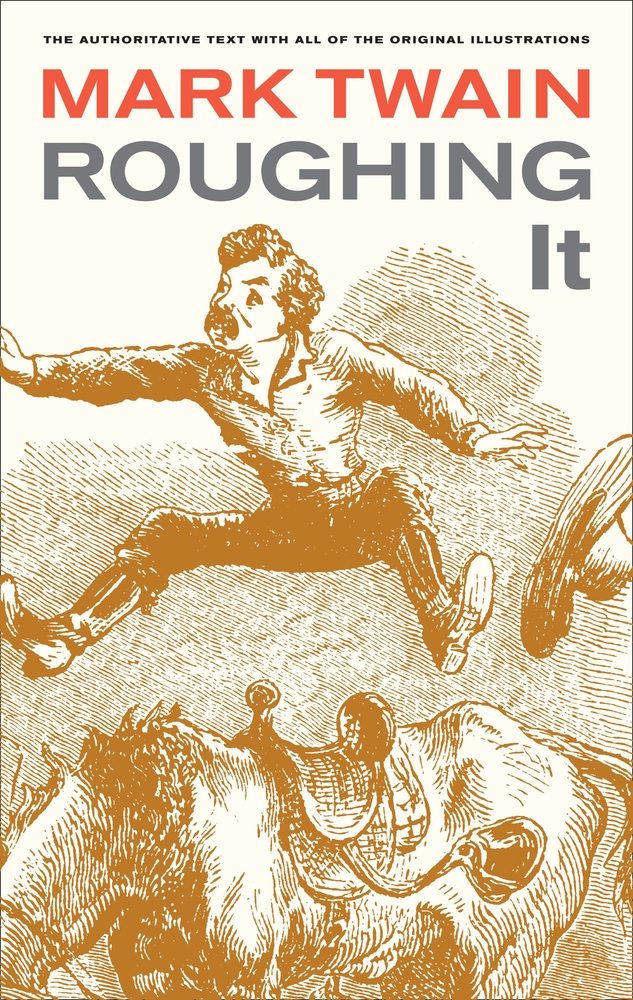
The book is Twain's account of going to work with his brother in Nevada, back when it was still a territory. The two of them got government jobs of some sort, but little time is spent describing those. Instead, one gets accounts of stage travel before the days of railroad (a grueling and long trip it must have been), of silver mining and claiming, and of newspaper writing. Midway through the book, Twain opts to visit California and live there for awhile, and then he moves on to Hawaii. Admittedly, by these later portions of the long text, I was becoming restless. Sans a strong plot, the episodic nature of the writing eventually begins to wear one down, even when well written and at times funny.
Some of the historical information, as well as some of the tall tales and myths, is interesting as well. Twain goes on at length about the relatively recent faith of Mormonism, which was at its polygamous stage with regards to marriage rights. He tells the story of John Slade, a rascally gunshooter who manages to threaten his way into government--and eventual death (I could see those chapters becoming a movie, though a very violent one). He tells tales such as one about a buffalo who chases a man up a tree and then follows him right into it (clearly a "true" story since the man lost his hat and the buffalo staggered off--and neither of those items are present any longer).
The text is in the public domain and can be read or downloaded here.
Thursday, March 25, 2010
On "Selected Stories and Sketches" by Bret Harte ***
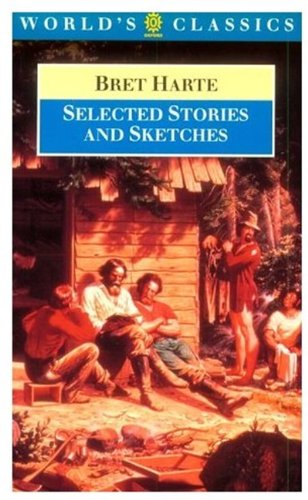
Some have accused him of sentimentalism, and the accusation seems accurate. Often, in reading a particular story, I got to its end and felt let down. Some characters are just too good. Some characters are too evil. And endings often just drop off the page, a day done, everything made right, and isn't that character of righteous action oh such a good person? When Harte is at his best, the righteous aren't so nice, and the bad are more self-interested than illogically evil, and the world is a tough place in which to dwell. Watching characters manage in that is much more fascinating than letting them dominate as we would expect or desire.
Subscribe to:
Posts (Atom)

 Posts


