Showing posts with label Five-Star Novels. Show all posts

Tuesday, September 15, 2026

On “The Age of Innocence” by Edith Wharton *****

Another work about the hypocrisy and shallowness of New York high society in the Gilded Age. This time the main character is Newland Archer, a young man born into wealth who is tired of the stodginess and predictability of the New York scene and its close-minded and often superficial morality. He is engaged to May Welland, but as the novel opens he finds himself drawn to her cousin Ellen Olenska, a gal of uncertain means who married a rich European count and who has left him and returned to New York. She is, as such, due to be shunned by most, but Archer shows her favor and gets her integrated into the New York society, despite being a near divorcee (she never does actually divorce the man).

Men, in turn, are drawn to her and spend much time with her. Archer is himself drawn to her as well, and she to him. But Archer is engaged, and when given the chance to break off the engagement, as his soon-to-be wife suspects his heart lies elsewhere, he insists that is not the case and goes through with the marriage—ahead of schedule. And then the dalliances with Olenska begin and continue.

I cannot much stand Archer. He is a rogue. And the more he falls “in love” with Olenska, the more respect for him I lose. I have a hard time seeing what Ellen sees in him. He seems a desperate man, one so certain of what he wants that he schemes various ways to desert his devoted but dull and dull-thinking wife. Olenska represents both a debauched old Europe and new ways of thinking, and Archer wants that.

May is not without knowledge of what's going on, and she schemes various ways to keep her husband.

Spoilers from here: Eventually May becomes a mom, which puts a death knell on Archer's plans to run away. Ellen, though she “loves” Archer seems to be doing her best, in the later parts of the novel, to stay away from him out of duty to her cousin, even as Archer continues to thrust himself at her.

Who are we to sympathize with? One feels like Archer is supposed to represent some new and better and more genuine way of thinking, but if that is actually better, it seems awfully selfish. Ellen, by contrast, comes across as a decent but flawed woman. May, to me, seems the genuine hero. Like all three characters, she's trapped by and in the moorings of the society of her day, but even so, she does her best to be loyal. Archer eventually succumbs also, becoming a family man and giving up his dream of Ellen. In the end, after his wife dies, while he is still relatively young (fifty-seven), he returns to Europe and has a chance to reunite with Ellen. There's a passage where the narrator says that Ellen is waiting for him and has been. Since most of the novel is from Archer's point of view, it's a bit uncertain whether this is his viewpoint or a third-person omniscient voice intruding (as it does from time to time). The important thing, however, is that Archer opts not to pursue her. He's “old fashioned.” He can't have his great love. Or maybe, he has it—because he notes that he'd rather have the dream and memories than the reality, which of course may not prove to be as great. But if that is an omniscient narrator, Archer is once more focusing on his own wishes and desires more than any other person's needs.

Tuesday, February 17, 2026

On "Out of Sight" by Elmore Leonard *****

My favorite film based on an Elmore Leonard book, at least among those I've seen, is this one--perhaps, in part, because it was directed by Steven Soderberg. The film takes liberty with the order in which the story is presented and works really well as a result (this is one film where the previews did it a great disservice: it looked like a slick and ridiculous movie to me, but good reviews and Soderberg's name compelled me to see it after all, and I was happy to have done so). I am glad also now to have read the book, these many years later, even if it's hard not to picture George Clooney in the role of Jack Foley. The book, unlike the movie, is a straight chronological tale.

There are a few things not to like about the novel even so. One is a complaint I'd have about most all of Leonard's work. That is that the story in the end doesn't emotionally resonate. Leonard tells a good tale, but one never gets too close to any of the characters that one actually ends up crying. That said, some of the characters are least likeable, most especially Foley, such that one does wish him well. He's a man who made bad choices in life and now feels he has no choice but to continue down the same road, even though he wishes he could do something else.

The other issue is that I don't really buy the relationship that is forged between the bank robber Foley and the U.S. Marshall Karen Sisco. Two conversations and a few hours of time are certainly enough to make one fall madly for some other person; it is possible. But even so, it's hard for me quite to figure that either of them would risk as much as they do for each other based on a couple of encounters, Sisco's penchant for falling for crooks, as she has in the past, notwithstanding.

Still, Foley is the real soul of this story to me, a guy who seems to have a good heart but who doesn't feel he can make better choices, who in essence has a kind of death wish and a desire to be someone else and somewhere else. Given a "chance" to break out of prison, he takes it, claiming that he'd rather die than ever go back. Once out, it's back to robbing banks (he's very good at it, having done something like two hundred heists), but he finds himself dragged into something much more sinister by the ex-cons with whom he associates.

Monday, February 2, 2026

On “Rum Punch” by Elmore Leonard *****

The basis for Tarantino's Jackie Brown, this novel about Jackie follows the plot line at points fairly closely. It works better as a novel, I think, than it did as a movie, which I found disappointing. Still, as I am now through several Leonard works, I find that what perhaps makes his novels less interesting than they could be is his limited third-person omniscient point of view (that is, he wanders around from perspective to perspective). I find that the technique means that we are not ever for long with one person's perspective and thus rarely become emotionally connected to anyone. Thus, there's a degree to which the novels are more heavily plot dependent to sustain one's focus.

One issue with reading this novel so many years after seeing that movie is that I kept imaging certain actors as certain characters, even though Tarantino chose to change up some of the characters significantly. Jackie, for example, in the novel is a hot-looking fortysomething blonde; in the movie, she's a good-looking African American woman; my mind kept returning to the film rather than the book. The dynamic, however, is significantly different with the racial change.

The story is essentially that of a bail bondsman, a gun runner, federal agents, and the gun runner's associates. Max Cherry, the bondsman, has a run-in with Ordell, the gun runner, whose money is tied up overseas. That money comes in via Jackie, a flight attendant who sneaks it in in her luggage with each flight. She gets caught; Ordell posts bond; Cherry falls for the gal. Schemes are laid wherein multiple parties decide to abscond with the money Jackie brings in each month. It's uncertain really whose side each person is on until the end.

Tuesday, January 27, 2026

On “Get Shorty” by Elmore Leonard *****


I come to this work having already seen the movie, which colors the whole thing. Would my reaction to the work have been the same? I liked it, especially the characters (and especially the main character), and then again, I was not as enthralled as I have been by some other works, because I kind of knew where everything was headed (at least until the end). It was hard not to see Travolta and Hackman and Devito as the characters in their various roles.

Except, everything did not quite head in the same direction as the movie, at least as I remember it. The ending kind of fell apart, rather than tidying up everything as well as the movie did, but that's kind of the book's point. I like both the book and movie endings in their own way. They're doing somewhat different things and making a similar point.

Like the book La Brava, this one has something of a metafictional vibe, if the book were a movie. That is, Chili Palmer is a guy working for the mafia, enforcing the payment of extortionary loans. He goes to Hollywood to track one of the guys who hasn't paid up—a guy who faked his own death to get out of paying the loan and to grab his own pile of cash from an airliner for wrongful death. There, Palmer falls in love with the film industry and wants to become part of it. He pitches a movie to a producer/director of B movies. The film he pitches doesn't have an ending, because it's Chili Palmer's own story, the story of how he ended up in Hollywood via his attempt to track down this guy who faked his death. Everyone who hears the story loves it, up to the point that Palmer gets to, which is wherever Palmer himself is in the novel. As such, of course, there's never an ending—even at the book's end, which leaves quite a few things up in the air, like how Chili is going to fund a movie, what happened to a mafia guy who's tracking Chili and likely to turn him in after being set up, and so on.

Monday, November 24, 2025

On "Hombre" by Elmore Leonard *****

Another fine western by Mr. Leonard. This one, apparently, is the only novel that Leonard wrote in the first person, but he uses the voice effectively if unironically. It's a taut thriller from start to finish. The story involves a man who is actually called Tres Hombres at one point, because he manages to shoot as many as it would take three men to shoot. In typical western fashion, that is our book's superhero—a man raised by Indians who sympathizes with them and lives half on the edge of civilization.

Our narrator is a young man who has just lost his job with a wagon company, the railroads having taken most of the business. But there is a need for a wagon on his last day on the job, and one of those passengers needing a ride is a young gal who has been held captive by Indians for a month and is now free and wanting to get home. Other passengers include Russell, the aforementioned hero, and a rich man and his wife. It's the rich man who agrees to pay for the journey, so the young man's boss agrees to allow use of a wagon to carry them, to the young man's chagrin, as he wanted to drive (something he hadn't done before). But the good thing is that this gives opportunity for the young man to sit in the carriage with the young gal. Also along for the ride is a military man readying for marriage and a new job, but though he's bought a ticket, he's bucked out of his seat by a bully named Braden, who shows up at the last minute.

The rich man insists that they take a seldom-used shortcut since he's paying for the journey. But this off-road experience proves to be as harrowing as one might expect. And then, that's where things get really interesting. Spoilers follow.

The reason the main road was not a good option, it turns out, is that the rich man is transporting stolen goods, money he's stolen as a federal Indian agent, allowing the Indians for whom the money was designated to starve. The main road is more likely to be dangerous in terms of thieves (or, one might also assume, law enforcement). As such, it takes the thieves, who actually were aware of the rich man's bounty, extra time to catch up, word being sent to them by Braden, who it turns out is part of the party. Once they circle the wagon, they take the bag of money and the rich guy's wife (for insurance) and leave the party to die.

Except that things don't work out that way. Russell, as would be expected, comes to the rescue, recovering the money and leading the party out of the area. The wife, though, is still a hostage, and the thieves are keen on getting their loot. Alas, a man who steals from Indians is not to be trusted and certainly has no honor when it comes to either his wife or the others in his party. Is he worth saving, after he himself steals the money (again) and leaves the party for dead and then finds himself in trouble? Some people seem to think so; others not so much. When it's at the cost of lives, who gets grace and who does not? Tragedy unfolds.

Monday, September 22, 2025

On “Tapping the Source” by Kem Nunn *****

I was uncertain whether I read this while living in California or while living in Texas, but my reading log, reveals it was the latter, which makes sense, because a fresher read would better suggest why I kept the volume. It was recommended to me in California, while I was working at a bookstore. I picked it up cheap on remainder but like so many books at the time, I didn't read it. It sat in my library. In Texas, I was without access to a public library, which meant that array of books I'd collected over the years finally got read, every single one of them. This was one of those. And when I read it, finally, I was impressed. That's how it ends up here with five stars.

On rereading it here nearly thirty years later, I remembered almost nothing about it except for the fact that it involved a mystery and surfing. Likely, these sort of things are what impressed me. I love Nunn's description of a California desert town, which fits well with what I remember of the state. His attention to the California beach towns is also interesting, though Huntington Beach, where this book is set, always seemed a good deal more built up than how he describes it here. The attention also to surfing culture, about which I know little, and to bike culture, is also of interest. This is also a book about “tough” guys, a kind of overmasculinized culture, which is fun in its own right.

The novel is gripping. But it is also selacious and, in the end, rather ridiculous, at least to me as I read it now. (I'd be more inclined to give it four stars were I rating it now instead of then.) The story involves a young man who is in love (incest forges part of the text) with his sister. Years ago, his mother took off; he never knew his dad. Though their physical needs (a place to live) were supplied by an uncle and grandmother, he and his sister were left to fend largely for themselves. Ellen, the sister, eventually, though, ran away, taking up with various men. One day, Ike, her brother, receives a note with three names on it and word that Ellen is in trouble, has gone off with these three men to Mexico and never returned. Thus begins Ike's quest. He leaves the desert for the beach and takes up surfing to try to get close to the men who might know what happened to Ellen. (Spoilers from here.)

Instead, he ends up largely becoming friends with a man named Preston, a biker, impressed with Ike's mechanical skills, which he picked up working at a shop in the desert. Preston warns him to stay away from Hound Adams and the other two men on the list. They are trouble. But Ike never is told the truth about what happened to Ellen. As such, as one can imagine, he ends up not taking Preston's advice, and when opportunity presents itself, he takes up with Hound. Preston and Hound, as it turns out, are old rivals and old friends. Ike, meanwhile, takes up with a gal. Bad things go down between Preston and Hound. Ike ends up being pulled into a nefarious underworld of drugs and pornography and eventually Satanic rituals in the quest to find out what happened to his sister. While engaging, the book gets more and more ridiculous and perverted, until of course we finally find out where Ellen is.

Friday, May 26, 2023

On "The Assassination of Jesse James by the Coward Robert Ford" by Ron Hansen *****

Perhaps I ruined this book by watching the movie a few months ago, unwilling to wait to see something that had gotten such great reviews. The book received great reviews too, and I understand why, even if as I read, I often saw Brad Pitt and Casey Affleck in my mind. In a way, seeing the movie first may have helped, insofar as the book includes a lot of characters and keeping them straight might have been more difficult had I not known where the story was already going.

Hansen comes from a different school of fiction writing than that to which I've become accustomed and generally come to see as professional. What I mean is that unlike so many purveyors of modern fiction, he doesn't seem to descend as much from the concrete, action-is-character line of writers like Hemingway or Carver. Hansen has no problem using abstractions, describing people's character and feelings without reference to an act. Yet he manages to do so with great power. The book is also heavy on physical descriptions of people and places, which while beautifully rendered, seem somehow pertinent despite their length.

As historical fiction, there's a degree to which it's sometimes hard to distinguish what is fact and what fiction. Hansen noted that he didn't make up anything that would have strayed from known facts, but clearly in smaller scenes, he rendered some dialogue and so forth (but how much of this itself was pulled from newspaper accounts and so on is difficult to know without looking at his source material). At points, the novel felt more like history, as he covered material that seemed less connected to the action, providing readers with information about people and what happened to them once they left the main plot of the story. The last portion of the book, likewise, feels a bit of a letdown, as insofar as once Jesse is killed and we focus almost entirely on Ford, the chronological pacing picks up rather rapidly. Years go by in the page span where previously only a few days would have. And yet, in a way, that's Hansen's point. The letdown is not just ours but also Ford's. He had thought killing Jesse would bring him fame and fortune and popularity. He had not considered the emotional consequences (after all, he kind of idolized Jesse but also felt a bit envious of Jesse's own fame and wanted that for himself--even as Jesse was a quasi friend). In the end, the fame turned out to be more infamy, and the fortune short lived. As Ford notes, at one point, he died long before his actual death.

It's curious also how one comes to care about both James and Ford, who were both rascals and not people we would term good human beings insofar as what they did to others. Yet even after all the killing and stealing James did and how much you hate the way he treated others, when James dies, you end up feeling a little sad and a little angry at Ford; likewise, you feel somewhat similarly about Ford at his death, though he'd proven to be not much better. Perhaps that's because Hansen portrays them a little as men who come to rue their life choices and who wish that somehow, could they go back to pivotal moments in their past, they'd have taken a different path, like the one Jesse hopes for for his son, whom he shelters from stories about his bandit life.

Tuesday, March 7, 2023

On “Last Stand at Saber River” by Elmore Leonard *****

This short novel is the best western I've read so far among those in this most recent genre list (though not nearly as good at classic Van Tillberg's classic The Oxbow Incident). There's reason, I suppose, Leonard was the writer dujure for many movies in the 1990s. This work includes full characters, an engaging plot (with cliff hangers at the end of each chapter), and historical tie-ins. I was thoroughly entertained and wanting to read more than I am by a lot of fiction these days. The only thing disappointing was the end, which was sudden—I could have actually wished for a coda or an epilogue, though in a way that would have dissuited a work that was generally full of suprises. Still, without the coda, a certain amount of emotional payoff seemed absent.

The work concerns Paul Cable, a Confederate veteran returning to his home in the Arizona territory. In his absence, some Union-leaning ranchers have taken his property. Family (wife and three young kids) in tow, Cable needs his farm back, but the ranchers aren't about to surrender it. Meanwhile, the local general store has change hands. The new owner is himself a Confederate veteran but something seems off about him. Indeed, as Cable soon discovers, he's about as untrustworthy as most of the Yanks. For both, the Civil War looms large, even out here on the territory, where the war is far away.

Wednesday, March 17, 2021

On "The Portrait of an Artist as a Young Man" by James Joyce *****

At one time, I considered this my favorite book. When I look back at when that was so, I realize that I likely had lots of favorite books, rotating as I got to work after work--Dumas’s The Three Musketeers, various books by John Steinbeck (To a God Unknown, Tortilla Flat, and The Winter of Our Discontent come to mind), McInerny’s Bright Lights, Big City, Kerouac’s On the Road. Somehow, though, I put this Joyce novel at the top of the list for quite some time. Today I don’t know what book I’d put atop that list, let alone what novel at the top of the best novel list. (Joshua Ferris’s And Then We Came to the End may qualify as the best novel I’ve read in the past couple of decades, but how could I really say that it tops The Great Gatsby or The Sun Also Rises or whatever other great novels are out there.) The issue is generally that no one book fits every occasion, mood, or use. Of great short story collections/books, I’d rank Jesus’ Son as one of my favorites, but I certainly am not always in the mood to read about heroin addicts. Sometimes one wants a good plot, sometimes lyrical language, sometimes deep thoughts, sometimes new techniques or a very particular technique. As a much more widely read reader at age fifty than at age twenty, I find fewer techniques seem truly novel and so am often less easily impressed. The fact that some classic books still stand out to me may be a sign of how great those books are or of how the “first” book I read that did X or Y or Z continues, because of its personal connection to me, to hold sway over more recently read work.

Coming to Portrait twenty-five years since its last reading, I can easily see what I found so impressive about it when I was younger. It features a lot of classy technical virtuosity. The stream-of-consciousness works here without seeming too difficult to understand, and as Stephen Dedalus grows up, so too does the language used. The technique and language are something hard for me not to enjoy, even on the third or fourth pass all the way through the book (and innumerable passes through various passages). The book also gets into a lot of aesthetic discussions about art (and its relation to religion) that I would have found intriguing at the time.

Reading it now at an older age, however, I found myself having a hard time taking young Stephan terribly seriously. He seems so earnest in his thinking. The idea that art could replace religion, outside of giving one something to do with one’s life, seems silly. I found myself thinking that any such work I’d write now would make such points ironically, would poke fun at such notions--or really at nearly any serious notion at all. And I wonder how much I should actually identify Dedalus’s views with Joyce’s--could Joyce really be serious? Such is the cynicism of age and of our age.

I was also surprised by the brevity of the chapter (3) on awfulness of hell that had once seemed very long to me and somewhat less enjoyable. And I was surprised by the manner in which, in some ways, the book is slow and slow to develop. It is high modernism to be sure, and something I liked when younger. I still enjoy these modernist manifestos, but as a novel, Portrait seemed to me to be a bit too intellectually focused to be truly enjoyable to most folks looking for a good read, including these days to an extent even myself.

Wednesday, September 23, 2020

On "Ask the Dust" by John Fante *****

I read this book multiple times in my early twenties, but it has been probably more than a decade since the last time that I read it. I remember loving the book, though on the last read, being disappointed by its second half. This time around, I didn't find the second half as disappointing, though clearly the best portions of the book are in its early-going.

What makes this book so utterly enchanting is Fante's use of language. Although he writes simply, he does so in a way that is poetic, even without being luscious in his description. The simple turns of phrase and occasional perfectly placed metaphors do the trick. And he knows it, as evidenced in a passage early on. The book centers around a writer named Arturo Bandini and his love of Camilla Lopez/Lombard. In one passage shortly after he first sees Camilla, Arturo begins an excited oratory to her: Oh, Camilla, you . . . but he abruptly quits with these simple words: "but not here." It's inappropriate, Bandini/Fante seems to be saying to begin with such praise. We don't even know the gal--and what's more, to do so would actually break down how much we understand Bandini's connection to her.

Another thing that makes the book so engaging is Bandini's sense of confidence in his own skill as writer. He is hubristic to the extreme--so cocky that it's funny, so cocky it's hard to believe he's serious. In addition, that cockiness spills over to equal moments of despair. Bandini is a man of extreme emotions.

Finally, there is the dialogue, which consists of constant punches between the performers, most especially Camilla and Arturo. There is not a lot of lover speak here; instead, each line spoken is a surprise, insult after insult, and yet, somehow, beneath it, longing.

Of course, that longing is more on Arturo's end than Camilla's. Camilla is in love with another man--Sammy--a man who unlike Arturo plainly cannot write, even though he wants to.

On this read, one thing that stood out very much to me was Fante's interest in what constitutes an American. Both Arturo and Camilla talk of being American but also denigrate each other as not so, most especially because they are not Anglo. Both want desperately to fit into that narrow definition of American but push each other (and others) down in that effort. Were I writing a paper, I'd likely look at the theme more closely and draw some conclusions, but that is not my place here.

Near the end, Arturo and Camilla reach a sort of understanding that softens their relationship, as Camilla becomes addicted to marijuana and goes crazy (the extremity of this addiction and insanity seems a bit unrealistic given what is known of the drug now), and that certainly makes the writing less compelling (now come those Oh, Camilla! lines that were put off earlier), but that section of the book is relatively short and fits well the work's overall arch.


Saturday, December 14, 2019

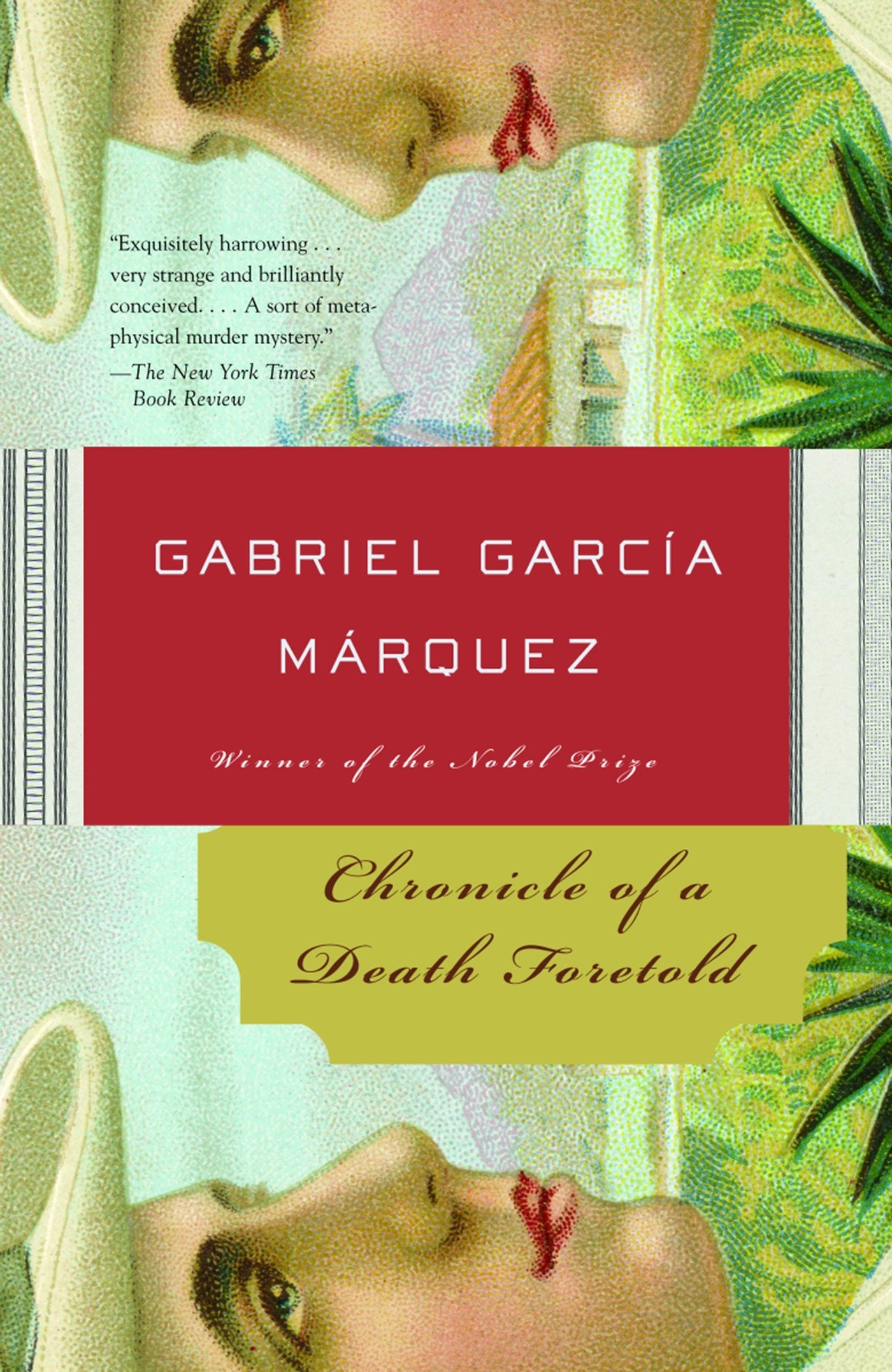
On "Chronicle of a Death Foretold" by Gabriel Garcia Marquez *****

It's been a long while since I read Garcia Marquez, and this reread was well worth the time, suiting my mood precisely. In the cannon of Latin American writers, Garcia Marquez has generally ranked behing Borges and Cortazar for me, but were it not for those two great writers, I'd probably think much more about the Colombian author.

This tale is wonderful for its various details but also for its tone. Garcia Marquez builds the story as if a man were really conducting research on an incident from earlier in his life. We read of interviews he's conducted, his own memories, written accounts. In that sense, the Chronicle is like reading an investigative report.

The story revolves around the killing of Santiago Nasar for the apparent deflowering of Angelica Vicario, whose new husband returns her as such. As we read further, we learn not just how the killing went down but how Nasar was implicated--even as his actual guilt is called into question. By the end, I found myself saddened by the course of events, which is as good as one could hope from such a story. The novella can be read here.

Wednesday, December 6, 2017

On "The Killer inside Me" by Jim Thompson *****

This was the first work I read by Jim Thompson, around a decade ago now. I read it in conjunction with a number of other crime novels. I was impressed in part because, well, I'd known of Thompson for some time, but in the midst of other classic crime novels, it did not stick out perhaps as much as it would have in another type of list, such as this one. I still rated it my second-favorite on that list. Now, having reread my two favorites from that list, I can say that this one was actually better on a second read--and rightfully stands as perhaps Thompson's masterpiece.

It has much in common with Pop. 1280, which I'd recently read--both are about killer sheriffs. But where that one plays things much more for laughs, this one is a bit more serious. That sheriff is over-the-top in acting dumb, and he doesn't let readers in on it: we have to discover such for ourselves. But in this book, the sheriff, Lou Ford, pretty clearly to us readers reveals his cards early on: that he's putting on an act. In a way, I think that works better.

Ford suffers from, he says, "the sickness." There are, I suppose, some psychological dimensions going back to his childhood, not wholly interesting or convincing. What's more interesting is to watch how one action spirals into the set that follows, one murder becomes many more to cover it up.

The work proves suspenseful as one watches Ford attempt to cover each crime. Finally, as the murders mount up, one's feelings for the victims begin to come to the fore. It's not so much that one hates Ford--he becomes more and more pitiful--but one hates what he does to others.

Monday, October 16, 2017

On "The Grifters" by Jim Thompson *****

I've wanted to read more of Thompson for quite some time, but our local libraries have only one book of his. Going on vacation recently, I figured I needed some light reading that I could take with me, so I purchased a selection of Thompson's work, this one among them.

I was familiar with this book because of the movie, and admittedly, it was a bit hard for me not to see John Cusack, Annette Benning, and Angelica Huston in the characters of this work. But I'd forgotten much of the plot of the movie luckily, so the book remained largely fresh to me--and it was the kind of read I was hoping it would be.

The story follows Roy Dillon, raised by a young mom who doesn't really want to be a mom and who is a small-time hood. Dillon grows up to be a con artist in his own right, and saves up a good deal of money in the process, clearing his way for an early retirement.

An accident brings him back in contact with his estranged mom, who hires a nurse to care for him (or spy on him). He falls for the nurse, but he's also carrying on with another woman, another con artist as it turns out. These two loves, in essence, represent two sides of Dillon--one that wants to go straight (and has the opportunity to do so) and one that remains tied to the underworld. The novel hinges on which path he will choose. Or should--there seems something of an element of fate in the events that befall him.

Thursday, June 22, 2017

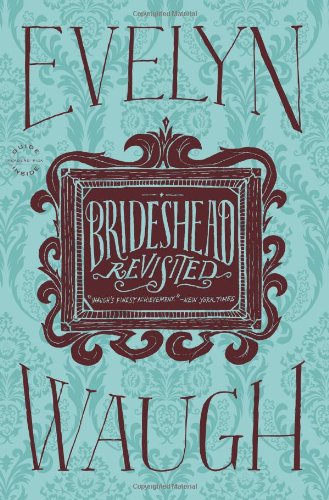
On "Brideshead Revisited" by Evelyn Waugh *****

I've come late to this classic novel, in part because the work always seemed like it would be something boring to me: the title, the idea that this is about some kind of life among upper-class Brits. And it is the latter, as most of Waugh's is, but it is magnificent.

What do I like about this book? It has a very strong voice, one that beguiles, that ropes one in, as if it were a true-to-life memoir. And secondly, it takes religion seriously--and respectfully--which is not something one sees in a lot of post-1900 fiction.

The story is about one Charles Ryder, an officer in the army who comes upon the Brideshead estate in his work. This is the frame through which the story of the estate--of his relationship with it--is told.

Most of that relationship is with Sebastian, the younger brother of the four children to whom the estate might one day fall. Sebastian and Charles meet at Oxford, where they do as many college students do: they drink and they party. This is the bulk of the first half of this book. It is a story of friendship. And it feels as if it is going nowhere, and yet, as I noted, it beguiles. I was reminded of On the Road, another book about a friendship that has only a loose plot that somehow manages to keep readers hooked. We're not driven to find out "what happens." We just enjoy learning about these young men, sharing in their fun times and enthusiasm for life. And most of all learning about the fun, strange character Sebastian, who carries a teddy bear with him as a friend.

While one can clearly read the story as one of male friendship, there is a subtext of homosexuality going on as well. Some of the friends of the pair are clearly of that persuasion, and at various times we are provided strange asides: the two too naked in a bedroom to come out to see their sister, the two being denoted as not interested in women by other relatives. But Waugh keeps that in the background; his focus is on friendship. This might be a reflection of the time in which Waugh wrote or it might be more that friendship is Waugh's concern here. Or both.

Alas, a plot does kick in. The drunken escapades become more regular, and from here the novel loses some energy as it becomes more and more concerned with Sebastian's alcoholism. Attempts are made to keep him from drinking, and one sees the strain that is put onto a friendship in which one is confronted with wanting to help one's friend in two different ways: giving the friend the freedom he wants but also keeping the friend from destroying himself.

Eventually, Sebastian wanders off into Europe and Africa and drifts apart from Charles, who has become a kind of member of the family. Eventually, Charles is sent to find Sebastian to tell him of his mother's impending death, but such ends up being the climax and end to the friendship. Years later, having moved into a career as a painter and married, Charles meets again Sebastian's sister Julia. The two have an affair, and one has to think that it is in part an unspoken love for Sebastian and for times past that draws them together.

Charles is the lone cynic among the family of Catholic believers. His agnosticism is the point of view from which the novel is written, and thus much of the book is about Charles attempting to understand the family's devotion to Catholicism. It is in this sense that the book takes religion seriously, for rather than dismiss religion, in the end, Charles comes to have an understanding of its meaning.

Waugh, himself a Catholic, thus wrote a Catholic novel. If we take this as being his view of the church, one would see within it a way to stave off or deal with the issues of modernity and death, a way to put order to the world. It's more a feeling than a logic or way of life, insofar as its enacted in the novel, though I'm sure Waugh would see that to be very much logical in itself.

Friday, April 28, 2017

On "The Loved One" by Evelyn Waugh *****


I last read this book toward the end of my senior year of high school. I remember loving it and wishing I'd picked Waugh for my senior paper instead of Thomas Hardy (who I'd chosen as the least of the uninteresting British writers much earlier in the year). Yet strangely, I never went back and read more of Evelyn Waugh.

And now, here is it nearly thirty years later, and I'm finally picking him up again, with the intention of reading much more of this humorous British novelist.

The book, which I remembered was being about a love affair between morticians, one of whom was a plagiarizing poet, was enjoyable again, as it was those decades ago. I can see why I liked it so much in my late teen years: it was funny, and it was dark. The latter probably would have made me like it even more in my early twenties. For it has, under its core, some of the same themes that pop up in many other modernist works. I was reminded quite a bit of the two most famous novels of Nathaniel West, both because of its setting and because of its use of advice column letters.

Also of note--things I didn't remember: The book is about Hollywood, most specifically British writers in Hollywood. There's a good amount of skewering of the movie industry in addition to that of the funerary industry. And the morticians--well, one of them works at a pet cemetery. I laughed out loud at some parts.

I could say something here about how the interest in death is also about the death of the soul, how the main character's interest in becoming a minister merely to make money represents the loss of religion, how he returns to art to replace religion, after losing his artistic abilities to the materialist interests bound within capitalism, which even tries to sell you on burial spots for your pets. Or I could focus on the title and try to ferret out what it is Waugh is saying about our "loved ones." But those sort of philosophical ideas, while perhaps interesting, to me now seem perhaps a bit put on and also lead me to the one fault I have with the novel in these my older years: it doesn't have much heart. It is a vicious book. Funny, but in the end, these characters are cardboard and/or dreadful, and while I enjoyed the book, I didn't find myself caring much about the people themselves. This isn't to say that all books must accomplish this; I like scathingly funny works, dark works, works with characters no one can love too--but I probably prefer most those books that in the end make me feel, and care.

Thursday, October 27, 2016

On "They Shoot Horses Don't They" by Horace McCoy *****

I first read this book a decade or so ago while reading a list of pulp mystery novels, a list that I enjoyed much more than I expected to. McCoy's book stood out because of the extended metaphor and its reference to a historical phenomenon I had not been familiar with. Less a mystery than just plain pulp, the book tells the story of a couple who go to make some money, to survive, during the Great Depression, by joining a dance marathon.

Dance marathons were popular for some time during the 1930s. Essentially contests in which couples danced for as long as possible, until they were the last couple standing, they were entertainment spectacles. Here, however, the marathon is a metaphor for life--a tough and grueling life. The couple can't leave the floor; it has to remain to eat (food is provided) and to have a chance at the thousand-dollar prize that will give them a new start in life, if they want it, that is, for the woman, Gloria, has already given up on life: she just wants to die, if only she had the guts to do herself in.

And that is the gist of the book, how her dance partner is finally convinced to kill the woman as a favor to her, as the dance marathon moves forward despite petty crime, crooks hanging out in disguise, affairs, better morals society protests, and so on.

Tuesday, December 22, 2015

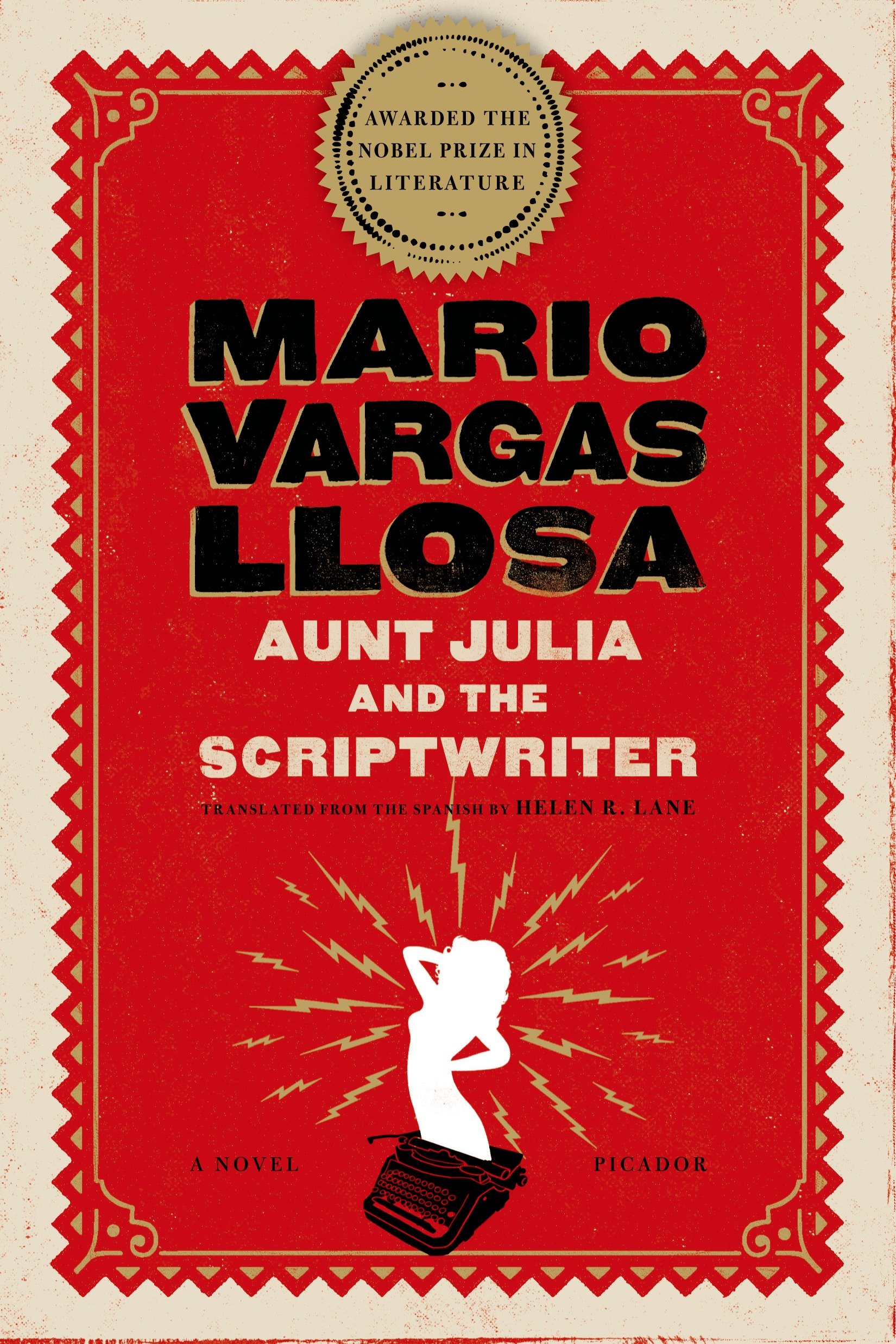
On "Aunt Julia and the Scriptwriter" by Mario Vargas Llosa *****

Vargas Llosa, along with Manuel Puig, is one of those South American authors I've long intended to get around to reading (like for more than two decades long). It finally happened, and I'm glad to have finally gotten around to this book, as it was an immense pleasure. As with Puig, Vargas Llosa seems to be writing from a different tradition than many of the fantastic realists, but there is a touch of fantasy in this work, if only in the alternate chapters.

What are alternate chapters? Vargas Llosa's book is divided essentially into two parts. Odd chapters focus on the main story; even chapters focus on short stories. The main story involves an eighteen-year-old man in law school who has a job as a radio newsman in Lima, Peru. This young man falls in love with his Bolivian aunt Julia, who is in her early thirties and newly divorced. (The two are unrelated by blood, the aunt being the sister to the wife of the young man's uncle by blood.) As might be imagined, this creates a scandal. The book recounts how the two fall for one another and how they attempt to keep the relationship secret.

But it also recounts the life of another radio employee, who works for a different radio station with the same owners. This other radio station focuses not on news but on entertainment, notably soap operas. The Pedro Camacho, the scriptwriter, is the brain behind these operas. Earlier, the station had depended on imported Cuban scripts, but the Bolivian Camacho is an artist and a perfectionist whose devotion to his craft creates an equal devotion among radio listeners. Audiences grow huge.

It is summaries of the scripts for the stories that Camacho's writes that forge the alternative chapters. These stories are on their own very interesting, and I wish I could find one on the Net to share, but alas, it eluded me. The best stories come toward the front of the book. The very first focuses on a man in love with a woman, but the woman has opted to marry another man, one not really befitting her station--because, as it turns out, she has gotten pregnant by her brother, with whom she is in love. These seems appropriate for soap operas, but it's told with a high literary voice that appeals to someone like me. And true to form, the story ends, not with a conclusion, but with a series of questions about what will happen next. Later chapters focus on a seeming alien arrested by a police officer who has qualms about actually shooting the innocent creature, despite orders; and the rape and attempted murder of the owners of a hotel by one of its boarders. As the stories continue, they became less interesting to me, especially as I got more involved in the main story. But they also devolve naturally, as Vargas Llosa explains in the main text. Character names begin to be repeated between stories (even though they are not the same character) or changed midstory. And then, eventually, all the characters are killed off. Pedro Camacho works himself so hard that he has a meltdown.

Meanwhile, the narrator and his aunt are found out and ordered to stop. Instead, the narrator seeks out a means to get married, which is difficult, given that he is technically a minor under Peruvian law. The tale becomes a love story, as the two try to stay together against overwhelming odds.

And for what? The family is concerned because Aunt Julia is a divorcee and so much older. The narrator is so young and not finished with school. He's condemning himself to a life of hardship. I can understand the family's concern.

But the fortunes of people are not always what they seem likely to become. Camacho goes insane and loses all. The narrator, living for love, seems to come out all right in the end. So too does another radio employee who is largely considered an oaf, while another such employee struggles on along a similar path that he's always been on. Life is a soap opera.

Sunday, August 23, 2015

On "Day of the Locust" by Nathanael West *****

One of the best Hollywood novels of all time, reads a few of the reviews of this classic book. I'd call the book Hollywood gothic, and of West's body of work, it probably is my favorite, despite my liking for the aesthetic experiments in his other famous work Miss Lonelyhearts. This one feels like more of a narrative, and the characters are a bit more fully realized and drawn out.

West's main character is an aspiring artist named Tod Hacket (get it, a hack) who has come to Hollywood to do backdrops and other art needed for the studios. In his spare time, he thinks about drawing the dead--that is, a Los Angeles that is on fire and burning, because Hollywood, as the narrator puts it, is where people go to die.

Death here could mean any number of things. It could mean the death of morality--a kind of moral vacuum that people enter into when going into the movies. It could mean death of meaning (religion, art). It could mean a death of a the soul.

Death, in fact, pervades the book. Tod is in love with Faye Greener (the name suggesting life of a sort, I suppose--or at least "life" in comparison to others). But a lot of other men are into Faye as well (in this respect, she reminded me of Brett in Hemingway's The Sun Also Rises but of a lower class and less intelligent sort). She won't have the men--or at least not Tod. He's not rich or successful, so he can't advance her career--she's an aspiring actress. Despite this, Tod befriends her father Henry so as to spend more time around her. Tod's a rather sad aspiring beau.

Henry is an old Vaudeville hand who is literally dying.

Among Faye's other suitors are Homer Simpson, an older man who has some money from before he moved to Hollywood and who agrees to take care of Faye after her father's death (in an arrangement wholly benefiting Faye not unlike Tod's); Earle, a fake cowboy whose dates with Faye Tod pays for; a dwarf; and a Mexican.

A scene I remember from earlier readings is one involving a cock fight. Simpson's property is used for the contest, even though he disapproves, since it is Faye's friends who insist on it. The fight is gruesome, as one chicken takes care of another--and here there seems a parallel to the bullfight in The Sun Also Rises. In fact, one could almost look at the novel as being a kind of parody of Hemingway's work, since what is high brow there is now reduced to low brow. Instead of army veterans and drunks we have fake army soldiers and drunks, just as instead of regal bullfights we have cheap cockfights.

At the end of the novel, we get a kind of living fulfillment of Tod's imagined painting as a mob devolves into violence.

Tuesday, August 18, 2015

On "Miss Lonelyhearts" by Nathanael West *****

Two decades plus makes quite a difference to a reading experience. I read this work a few times back when I was an undergraduate and probably once after that, but certainly well over a decade ago. I was blown away by it as an undergrad, not as much now as an older man.

In between, though, there's not just been life experience but other reading, most specifically other reading of Nathanael West. Not only did I read his Day of the Locust (more than once) but also his two minor novels, and in that regard, I couldn't help on this read to notice the similarities between Lonelyhearts and his first novel, which was written for a small audience and mostly centers around dream life and Freudian psychology. This time around, Lonelyhearts seemed to have the same obsession, though on a more sophisticated and more interesting level. Still, that took some of the joy of it away from me.

Miss Lonelyhearts is an advice columnist who is tired of dealing with the heartache in the world. Written more as a set of short anecdotes than a full-fledged plotted novel, it focuses on healing that heartache--or the inability to do it, through religion or through art. This made for easy papers on modernism as an undergrad, but now I find myself wanting more. So the center won't hold? So what? What are we to do with this knowledge?

The last time I read Miss Lonelyhearts, I remember having come to prefer The Day of the Locust. We'll see if that holds true this time. Still, I mark these books as five stars for the joy I got from them at a younger age; they hold a good place in my heart.

Thursday, July 9, 2015

On "Forever Amber" by Kathleen Winsor *****

I'm not sure where 1945's fiction best seller fits in terms of World War II. It seems, in the context of the war, to be escapist fare. And certainly, the reasons for its best-sellerdom probably had most to do with its seeming depravity. The book is stock full of allusions to sex, abortion, prostitution, and crime--all of it set in Restoration England. (The war ending midyear, people's attention may have already begun turning elsewhere.) But what a great portrayal of a historical age it is.

The main character is Amber, a woman who goes from innocent virgin and depraved and corrupt madam. Watching her moral descent is fascinating--and sad. The reason for the descent is, one might say, in part an sort-of unrequited love, in the form of Bruce Carlton. Or it might also be her love of nobility and the upper class, who are anything but noble in their actions. It is the lack of nobility that makes Carlton want to flee England and the king's court, to which Amber aspires and clings.

At the start, Amber is a country girl who would not ever sleep with anyone but her one true love. She meets Carlton, who takes her along to London as an adventure. There, she becomes with child by him (the beginning of her corruption), though she refuse an offer for sex with his best friend, who will go on to become one of Amber's best friends. Carlton leaves to go privateering but also leaves her a generous sum of money to take care of the child. Naive as she is, she falls into the clutches of a greedy woman who gets her to marry her son and who then abscond with all her cash, leaving her in debt.

This takes her to the debtor's prison. Here, she is granted favor with a scoundrel who breaks out of prison with her and then uses her for his own purposes to run various scams. She breaks free from him by running off with a man named Michael who has been hired to teach her how to speak other dialects of English so as to help with the scams. In turn, Michael's dad finds the two of them living together and forces Michael to return home, much to Amber's relief.

In the meantime, Amber has taken up acting. Another actress takes a fancy to a particular gentleman named Rex Morgan, and Amber decides to get this man for herself and does. Though she refuses to marry him (and give up her freedom), having been burned by a bad marriage once, she agrees to become a kept woman. She will sleep with no one else, and he will support her in the lifestyle she desires. During this time, the king sees her and sends for her to sleep with him, which she does, not telling Morgan. It is only because of the king's main mistress, the jealous Barbara Palmer, that Amber is not summoned again. (Our morally pure girl by now has slept with at least six men, and from there, one loses count, for many other interludes are hinted at from here on.)

Carlton returns, and lovestruck Amber gets him to run away with her, giving Rex a silly excuse for her absence, an excuse that doesn't hold up to reason and that gets Rex to challenge Carlton to a duel. Rex refuses anything but to murder Carlton or to be killed, and as a result, his life is ended--and so too Amber's life of ease and perhaps the best chance she has of a good marriage to a man who really does love her. For Carlton will never marry her, as he notes, because she is not noble.

Amber than aspires to become what Carlton says he wants. She gives up acting and marries another man, much older, in order to inherit his fortune at his death, much to his children's disapproval. Carlton visits, and the black plague hits, and they almost die, but they nurse each other back to health. Still, he won't marry her.

She marries yet another man, poor this time, but of noble blood, in order to gain a title. This marriage is an absolute disaster, and Winsor's skill allows you to sympathize with Amber even as one realizes just what a horrible woman she has become. Because the man is a vicious husband who uses Amber's money for his own purposes but cares nothing for her and controls her every move, she opts to cheat on him with his son. (But wait, if he weren't controlling her every move, she'd be going to London and cheating on him with people at court, so . . .) Her husband then conspires to kill her but kills only his son. Now she has what she wants: a title and no husband.

She moves back to London and takes her place at court. She becomes the king's mistress, to an extent displacing Barbara Palmer. Carlton returns for a visit, but this time he's married, as he said he would be--and he's taken up residence in the American colonies. Amber does all she can to curry Carlton's love and favor, dressing scantily, summoning him to meetings alone, and so forth, and Carlton falls for it in terms of sleeping with her regularly, but he is committed to marriage to his wife.

In a final fit of anger, Amber tells Carlton's wife of their affair, but she only ends up distancing herself from the man she loves more than would ever seem possible to repair. Still, even at the end of the novel, she continues to chase him, even if it means going to the colonies. She has become a sad, disreputable woman, one worried constantly about her looks and age, for they are what she has lived by and she knows that her days are numbered.


In this book, among Europeans, only the Puritans displaced from power seem to have much in the way of morals, but they also come off as stodgy and greedy in their own way. It is the Americas that beckon, the world from which Carlton draws his wife, that seem to offer some sort of honesty and reward for hard work rather the depravity of inherited leisure.