Showing posts with label Five-Star Collections. Show all posts

Sunday, September 29, 2024

On “The Edge of Marriage” by Hester Kaplan *****

I was blown away by this collection when I read it about twenty years age, which is why it resides so much in my memory as a great work. This time around, I could see the skill involved—Kaplan is a remarkable writer—but at the same time, I felt more manipulated. I'm not as much of a fan of fiction as I once was. What made me like fiction was that I felt like I was getting a deeper glimpse into the society and the people in it than one could get from nonfiction; these days, though, I tend to feel all the more the writer's use of puppet strings, the artistry of the fiction itself, which rather undoes the mistique of genuiness I used to find in such works.

Most of the stories in Kaplan's first collection, as one might expect from the title, revolve around marriages in some state of disrepair. “Would You Know It Wasn't Love?” subtly hints at a man's growing dimensia even as it revolves around a grown daughter who has come back to live with her parents after her marriage has proven to be somewhat less than satisfactory; the dad is not too keen on this, even while the mother seems perfectly fine with the situation.

“Dysaesthesia” is the most powerful story in the collection and the one that probably sold me most on the book when I first read it. An older first-time wife who married in part just to be able to have a marriage and family finds herself with a husband, an art professor, who is a prolific cheater, even as she attempts to raise their daughter, who idealizes both parents. The issue, however, is that one of those cheating sections goes disastrously awry, and now the wife finds herself the likely caretaker to a mostly disabled and unemployable husband. Were it not for the daughter, I would figure this marriage would be on its way to a quick divorce. As it is, however, one really ends up feeling just awful for this woman and the family in general—and even a bit of the husband's frustration.

“From Where We've Fallen” involves another couple with an adult child, this one a kid who can't hold down a job except as employed by his dad. Alas, even that is tenuous, as the son's actions put his father's business in jeopardy, and the father finds himself lying to protect his family but in the process hurting others.

“Cuckle Me” focuses on an old man and his youngish female caretaker, one who has come to love him almost as a husband, even as the man's son isn't particularly keen on the closeness that has arisen between the two.

The title story focuses on an older couple, the wife of whom has lost her best friend, leaving of course just her husband as her main social conduit. The story basically details how our relationships change with age. “Goodwill” walks a similar line, this time with a daughter grieving her mother's death, as she goes through her mother's things deciding what to keep and what to throw away (probably the weakest story in the collection, insofar as there are no real surprises here, and it seems mostly just a laundry list of items attached to memories).

“Claude Comes and Goes” focuses on a couple and their best friend—an ex-lover of the wife's, who lives a stereotypical bachelor life: different women all the time, never eating at home, and so on. In this case, Claude tries to establish a relationship with a grown daughter of his who had previously never met, but as with so many such storylines, the bachelor finds that his no-connections lifestyle is not conducive to suddenly having a relative care about him.

“The Spiral” focuses on a stairwell in a house's center, and a couple's relationship with it, with the older not-so-healthful husband confined to the downstairs and the wife with her own life upstairs, until of course life changes the way they use the different parts of the house.

“Live Life King-Sized” focuses on a grown son who takes care of a resort that his family owns. But really, it's about that son's relationship with a man and his wife, a man who has decided to live out the rest of his life, what little there is of it, at the resort, scaring away other patrons in the process.

Thursday, March 4, 2021

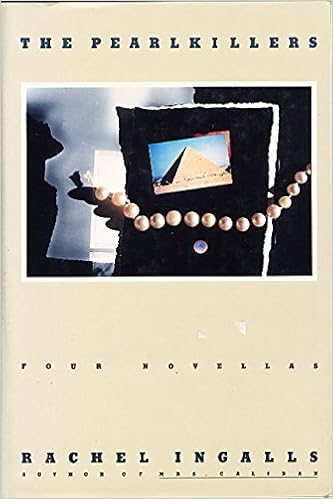
On "The Pearlkillers" by Rachel Ingalls *****

I read this book decades ago, when I was in the twenties, at the suggestion of the manager of a bookstore where I worked. Although the manager's taste in books was good, I always remained somewhat resistant to her suggestions. I think the reason is that she was an older white lady, which gave me the feeling that she would like tasteful English women's novels. It is not--and was not--a fair stereotype. The books she recommended that I actually got around to reading proved to be extraordinary--and nothing like the dainty works I imagined she would have been into. This is one of those.

All these years after that initial read, I've kept this book on my shelf. I knew I liked it--a lot. Strangely, however, I haven't read it in the ensuing decades, and that same old prejudice has stuck with me on this one. Do I really want to read this book again? What did I see in it? However, I was taking a trip and I needed a book to read, and in my systematic way of rereading, I was on the letter I. I chose Ingalls. What had I liked about it?

Wow. This book is killer--and that quite literally. The title suggests a theme that continues through the four long stories (or novellas) that make up the work. It comes from a passage in the third story in the collection, which is about a woman who goes to meet her deceased mother's family, whom she's barely ever met. One of her aunts tells of people who when they wear beautiful pearls literally kill them--somehow sucking the vitality and life, the sheen, out of the jewel. Such is the family itself, as we come to feel and see, as the story, which has a magical realism feel, winds its way to its end, wherein the family appears to have some sort of secret to immortality, one that involves sucking the life from others.

The central idea, then, conveyed in the collection, is one of killing the people you love in order to manage your own survival. In the first story, a twice-married young woman goes on her honeymoon with her third husband, scared that somehow she is cursed with an ability to kill off lovers but also aware that she doesn't really love the man she is with.

The second story is my favorite of the book--a thriller and an absolute brute of a piece. College friends accidentally kill/bully a young man in their dorm and hide their part in the death. Years later, one of them decides to come clean. What to do? That is the heart of the discussion among the other surviving friends.

The fourth story, the longest, is also quite brutal. It tells the tale of a explorer/sailor returned to his family after a decade missing, the lone survivor of the journey. Or so we are made to believe.

Monday, January 13, 2020

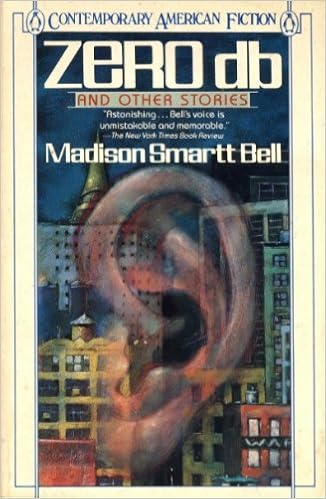
On "Zero db and Other Stories" by Madison Smartt Bell *****

I read this book nearly twenty-five years ago, back when I was in grad school. I went on to read another book of Bell's stories, which was about as good as this one. At the time, however, I don't know that I was necessarily that impressed. Rather, this was a book that stayed with me, the way a movie called The Conversation stayed with me, kept me thinking about it for weeks afterward.

The two stories that are my favorite in this collection fall at the start of the second section, which is my favorite section of the book. The book as a whole is set into three sections, with "three" being something of a motif in this work, as designated by the first and last stories of the first section. Those stories are called Tryptichs--they are stories in three parts.

Triptych I is about a little girl at a hog killing. Where Bell excels throughout the collection is in his somber attention to detail, and that's what makes this otherwise less interesting story impressive. It's set in the South, among black folk and white, and burning and accidents are something of a theme throughout the three disparate parts.

"The Naked Lady" is a powerful piece of wit and writing skill and was the one that most impressed me when I first read the collection. It's about the friend of an artist, their horrific home, the sculptures the artist creates, and the rats they kill.

"Monkey Park" is another sort of hopelessness--this one involving a couple that isn't.

"Triptych II" focuses on different ways of dying, one among peacocks, one an old man, and one a bull. The idea here seems to be that people are little more than animals in the end, facing their final hours. And it mirrors the final story in the collection.

The middle section includes six stories about young men (or a young man, as many of the stories seem to be about the same person and arguably all of them could be) fighting--or perhaps, more so, giving into--depression. "The Structure and Meaning of Dormitory and Food Services" involves a young man who goes off to college, does well for a few months, and then sinks into a morass wherein he stops bothering to attend classes and spends most of his days on the "sad" side of the university cafeteria. Here, a blind man is sat down by him each day, but the blindness is really the narrator's own, as he is lost without knowing how to escape his own lethargy.

"Irene" finds a young man living in a Hispanic neighborhood with cheap rent. The man knows little of his neighbors and few of them, but he forges a kind of fascination with a twelve-year-old girl that is at some level a bit creepy but at the same time a kind of cry for connection--with someone, anyone.

"The Lie Detector" involves a young man who loses his apartment and has to go find a new one. Thing is, his old landlord seems to be trying to stiff him on the deposit; his new landlord seems to be trying to ask for extra kickbacks in order for him to move in; and true to form, the narrator himself begins to apply similar sorts of dishonesty to grift a bit more cash for his needs.

"I Heart NY" involves a young man trying to do just the opposite--that is, to be a responsible and good citizen. He takes real interest in those around, but the city doesn't seem to care much for or about him, and when he tries to help others, it rarely works out. Police don't come to assist. Muggers he catches turn out to be the wrong person, and so on.

"The Forgotten Bridge" focuses on the same young man as in "Lie Detector" after he is in the new apartment--and on the relationships he forges with his Hispanic neighbors. There's a kind of sadness to the tale insofar as it's told from a distant time with a certain amount of nostalgia, though it's nostalgia for a time that was rough on all of the people involved.

"Zero db" is about a man who works on sound for motion pictures and other productions. Here, he's recording people in a bar after a particularly bad day at work.

The final section/story is "Today Is a Good Day to Die" and focuses on an officer in Custer's army out west who is rescued from a snow storm by the Indians Custer has tried to and will try again to kill. This leads to some uncertainty in the officer regarding his role and purpose in life.

Wednesday, September 20, 2017

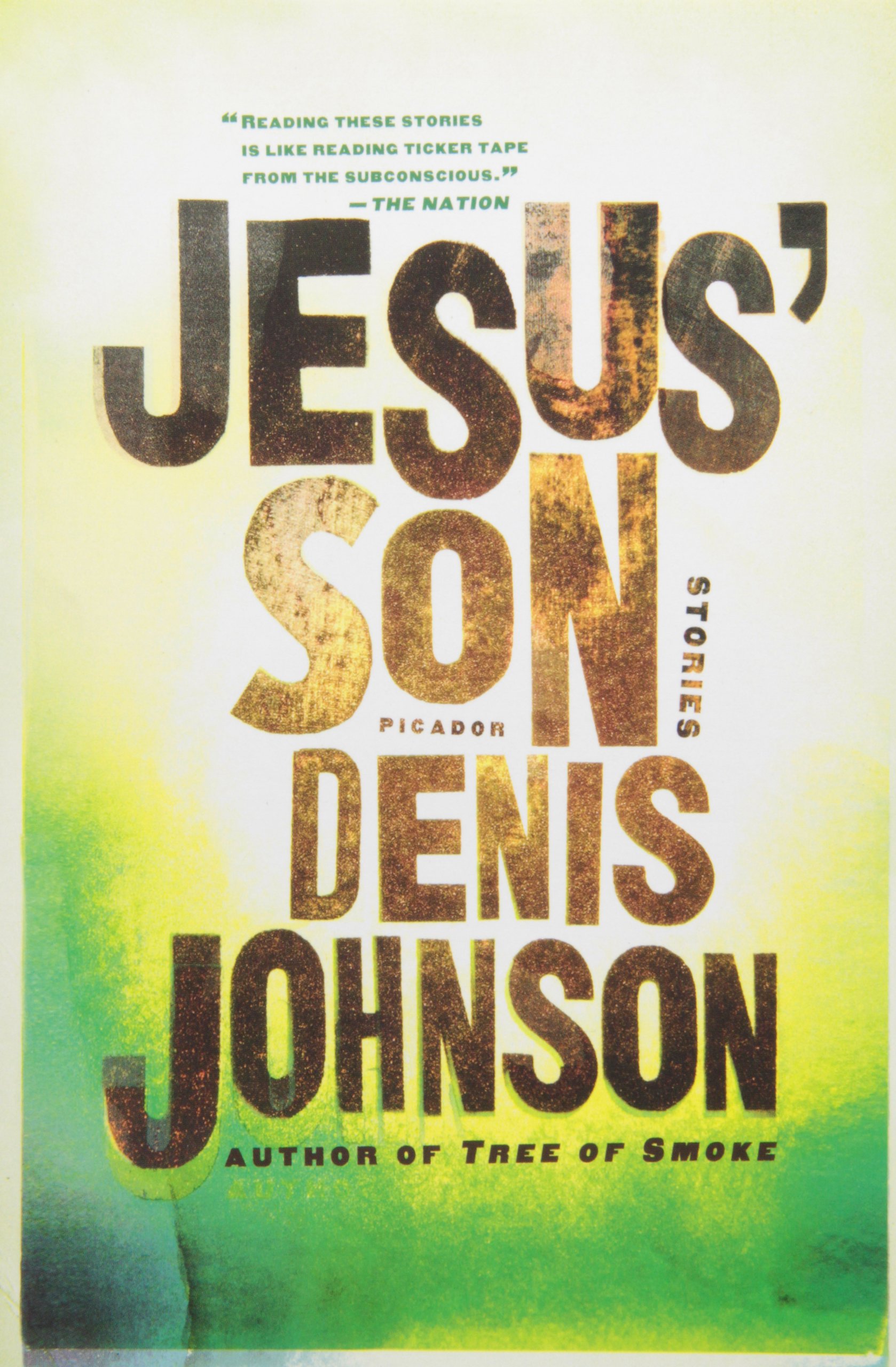
On "Jesus' Son" by Denis Johnson *****

Having read this collection for the fourth or maybe sixth time but the first time in at least ten years and possibly eighteen, I am still astounded by it. It's writing that inspires--or at least, inspired. At one time, I wanted to write as well as Johnson does here, but I have come to see I never will. The collection is a work of poetry in short story form, full of beauty amid the squalor that is described.

I won't bother with a recitation of the contents, as the collection is best absorbed afresh with each reading, even if I generally remember the stories even ten years after the last reading. The book as a whole is about addiction, and it doesn't pretty up. It's a book about a misfit, a young man, coming apart and slowly getting things back together.

My first reading was while I was in graduate school. The book had come out maybe a year or two earlier. I'd seen it in the bookstores, been told how great it was. I found a remaindered copy, and I bought it. It probably took me a few months to get around to reading it. I was not pulled toward it by others' love for it. But once I started reading, it was one of those reading experiences that changes the way one sees the story. I read it again soon after. I read pieces of it separately in other collections, astounded by the individual stories.

I read it again, I know, right after the movie came out. I suspect I read it sometime since then, but I don't recall at the moment. The movie was, I thought, a good adaptation, not insofar as strictly following a book that could not be easily translated into screen but insofar as changing it smartly as necessary so that it would work on screen. A fine movie. But still a finer book.

Monday, March 13, 2017

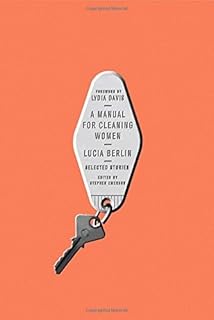
On "A Manual for Cleaning Women" by Lucia Berlin *****

Where has Lucia Berlin been all my life, and why am I just last year hearing about her? She was a Black Sparrow author, that great old Black Sparrow Press, a publisher whose construction paper covers I long adored. But when I worked in bookstores, we didn't carry Lucia Berlin. Berlin has a strong voice. Her writing is as if she is telling you stuff from a memoir. It seems real, and yet it is harrowing.

In "Dr. H. A. Moynihan" an El Paso girl is kept away from outdoors where the kids of the neighborhood play--kids who are "dirty," meaning from other countries and races. Instead, she labors in her grandfather's dental shop. And one day, her grandfather insists that she operate on his own teeth. The descriptions here are raw and dangerous. I was reminded of a story I read in a creative writing class, years ago, about a girl who goes to get her tongue pierced; I wonder what ever happened to that young author?

The title story is a moving piece about a widow who takes up cleaning homes to support her four kids after her husband's death. There's a coolness of tone and a concreteness of language that makes Berlin's stories work so well. A piece like this could easily be maudlin. Instead, we get advice about cleaning homes and interspersed we're made to understand how much the wife has come to miss this man she loved.

Similarly well-placed language is used in the short-short "The Jockey," but Berlin really shines when she opens things up a bit, gives herself a little more room, as she does in "El Tim," the tale of a young non-Catholic teacher in a Catholic school forced to take on a juvenile delinquent in her class. Here, we watch a battle of wills unfold that is gripping. This is the stuff from which novels and movies could be made. What Berlin does here, however, is subtle--it's no over the top teacher baiting. It's just a run-of-the-mill change of tone in the classroom, much as such small changes can put an unnamed awkwardness on our own lives.

"Point of View" is metafiction, asking us to think about why we consider third-person narratives about the mundane to be consequential versus first-person narratives about the same. It was an interesting exercise in thinking about fiction and fiction writing.

"Her First Detox" is a scary tale about a woman's first trip to a detox center. It isn't the trip itself that is scary. There, she mostly tries to fit in among the other drunks and does a fairly good job. It's the title that is scary--"first"--suggesting a long, depressing road that is to follow.

"Phantom Pain" focuses on a woman's visits to her aging dad, who is slowly losing his mind and becoming someone even colder and more bitter than before. The daughter just wants some kind of reassurance that she's loved.

"Emergency Room Notebook, 1977" is an odd piece insofar as it has the real feel of a notebook. It's more a set of notes about the people and the work than a full-fledged story. But it also demonstrates what makes Berlin's stories so compelling, for those portraits are enough to keep one amused and wanting more. That more arrives in "Temp Perdu," which takes the same setting and tells a story--of a woman working at such a room and thinking back on the love affair of her life. What works here is the voice, the attitude--this is a woman who hates the hospital's clients but who knows also how much she can get away with in terms of not working. Great line, one nurse to another: "That's neat--you still think of love at your age." It says loads about both characters.

"Toda Luna, Todo Ano" tells of a widow vacationing in Mexico, trying to adapt, still, after three years to life alone. This is a longer piece, and the fuller-fledged portraits work well to ensure our connection to the story. The woman leaves her easy estate and goes to live among a set of clam divers (reminding me of Steinbeck's The Pearl). Subtly, she falls for one of the men, and yet both know that it's just a momentary thing, ending with the summer.

"Good and Bad" is about a girl in Catholic school whose American teacher of English and American history draws her away from class and into her own political concerns with the poor people of Chile. The girl has no interest in this, being from the upper class. It's fun to watch the American lecture the girl on the need to be active in one's community and about the meaning of life, even while the other snidely rejects all the high-minded thinking. The story's ending makes things a bit more personal and sad.

"Melina" is a great tale about a woman who has a certain effect on men--and on women. There do certainly seem to be people like this, people who draw others into their orbit just by being. You want to be near them, want to spend time with them. They're that charismatic, that wonderful. But often, such people are less tied to the others who find them so fascinating. Still, you are happy just for the amount of time you've been handed by this person, the blessing of their presence. So Melina boinks one man, marries another (who leaves her when she gets pregnant, since it's not his baby, but then begs to be allowed to return), and has an affair with yet another when the husband is gone (the affair being the great event of this other man's life). Years later, the narrator meets the woman at a party. She feels a certain draw toward her but also a certain jealousy, for she wishes on some level that a man could be drawn to her the same way. This causes her to do something she regrets.

The next several pieces are really short. "Unmanageable" is about an alcoholic mom getting ready for the morning by trying to get enough to drink so that she can function. "Electric Car, El Paso" is about a ride in such among a set of women who quote scripture to one another and try to guess the book, chapter, and verse. "Sex Appeal" is about an eighteen-year-old woman's attempt to get a date with a movie star--and about the young eleven-year-old cousin who helps her but who is the actual object of the movie star's perverse interest. "Teenage Punk" is about a mom who spends alone time with the drugged-out friend of her oldest son. "Step" involves a set of detox residents watching a welterweight fight with Sugar Ray Leonard.

"Strays" involves more detox--this time, it's a methadone clinic just as such treatments were catching on. Folks are forced to go there, forced out of their usual drug and drink regimen, but the setting is still derelict. There must be hidden anger in them all--trying to root out the trouble via psychology. They make up stories. They are angry at dogs that get fed. One night, the dogs get it--killed, gruesomely. Somehow, all this fits together, this feeling of a dead end that keeps getting deader.

In "Grief" two women hypothesize on the lives of two other women they observe. And they we get the story of those two other women. This was an interesting way to tell a tale, one I'd like one day to return to--making up stories about others. But it's also a story of the two women, how one in the midst of sickness grows stronger and how the other falls back into her old crutch.

In "Bluebonnets" a fifty-something woman goes out to visit a stranger, a man she's corresponded with and whose book she translated. The man lives out in the woods, like some Thoreauvian recluse. It seems ideal and beautiful, but as the visit wears on, it becomes clear why this man is a loner.

"Dear Conchi" is one of my favorites in the collection. I'm not usually a fan of expostulatory fiction, but in this case, the letters work. They're all from a girl writing to her friend Conchi, writing about her time going to school in the United States. An American citizen who grew up in Chile, she is learning the ways of a new country that is actually her own. Much of the story revolves around her interest in two men--one an intellectual and the other an anti-intellectual. The latter is also Mexican, which brings consternation to others at the school and to her own parents. As the story unwinds, this consternation begins to play a central role in the events that unfold and the eventual sad denouement.

Many of the stories following focus on Sally and her sister, the characters in "Grief." Sally has cancer; her sister, Carlotta, is/was an alcoholic. They had an upbringing with an alcoholic mom and a strict father who traveled around for work. This colors their lives; it is only now, as Sally's life is ending, that the sisters have made peace with their parents and with each other. In "Fool to Cry" Sally's sister goes to meet an old flame and comes to understand that the past can't be reclaimed. "Panteon de Dolores" recounts the sisters' mother's alcoholism and the father's travel and strictness. "So Long" recounts Carlotta's wild life, her marriages, and the affair that ran throughout them, the drugs and the drinking. Sally, by contrast, has lived by the book: one husband, a politician. Much of Carlotta's troubled life comes from her affair with Max, a heroin addict with whom she runs off.

"Mourning" focuses on a cleaning woman--one who goes to homes of the recently deceased. In this tale, two siblings argue over which things they want and which things to donate to their church. The cleaning woman notes how sad it is in either case--where families don't want anything or where they fight over what's left. Either way, our life's accumulation is cleared out in a couple of hours.

In "A Love Affair," a woman who has to cover for a coworker's affair. The coworker is happily married--in fact, happy about everything. The affair seems to be some way to satisfy others or to make her husband jealous or . . . Either way, it takes its toll not just on the husband but also on the coworker/friend, who has to rearrange her life and cover for the cheater.

"Let Me See You Smile" is another story about Carlotta, but this tale is told from the point of view of her lawyer. She gets in trouble with the law, defending some underage kids at the airport, friends of her children, one of whom (seventeen) she is having a relationship with. The gist of it is that the police report adds crimes and uses loaded language--enough that the lawyer can easily get them off. But the lawyer too is transformed. He finds that he likes Carlotta and Jessie and the rest of the family and goes to hang with them each Friday, even as his wife grows more distant. When the case is over and the professional relationship ends, which means that technically the relationship ends, there is a kind of mourning.

"Carmen" is one of the most harrowing stories in the book. It recounts a pregnant woman's journey across the border to score heroin for her husband and the impending pregnancy while the one she loves is high on drugs. It's the sort of deadpan among such travesties that makes these stories often shine and shock.

"Silence" is another story about Carlotta, this time as a little girl--it's a narrative of her one real friendship and how she loses it. But like so many of the stories, its real power comes from the gut punch that happens when we know what is to happen to Carlotta later in her life.

Another one of my favorites is the extremely powerful "Mojito," which made me cry. It's about a Mexican woman who marries an American, who is then sent to prison. Forced to live with his no-good relatives, to give up what assistance she receives to them, before being eventually kicked out to the street, she struggles each day to figure out how to provide for the baby she's had, a baby she knows nothing about raising. The piece is told from her point of view and from the point of view of the doctors she goes to visit. The latter seems almost unnecessary until the end, when a first-person point-of-view would likely not work--Berlin makes the right choice here by putting a certain distance between us and the events in the woman's life.

"502" rehearses the life of a drunk--but it focuses especially on her relationship with one officer Wong, and most especially on their first interaction, one in which the drunk's car rolls down the hill without her, crashing into another vehicle and how she gets out of trouble via the other neighborhood drunks, a sort of community in which the patrons stick up for one another.

In "Here It Is Saturday," a group of convicts share time together in a creative writing group. As with so many creative writing groups, the people inside it grow very close to one another, given how vulnerable it is to expose one's writing. One star pupil outshines them all, however. But as it is some communities, one can't have someone becoming an actual success.

"B.F. and Me" is about a repairman and an old sickly lady. The former comes to fix the woman's bathroom floor, but like all such men, proves unreliable. Still, he's sexy. The idea of sexiness is turned around here quite a bit, relying mostly on voice rather than our usual expectations.

"Wait a Minute" returns readers to the character of Sally, this time as the cancer that assailed her body finally takes her life. And "Homing" focuses on another older lady, this one noticing how blackbirds come to her backyard, forcing her to think about all the other things she missed in her life and to consider what it means to have regrets: each opportunity not taken is a different opportunity that would have been lost. No use, in other words, wishing to have made other choices. These latter stories, we get the sense, are about Berlin looking back on her own life.

Monday, August 8, 2016

On "Prodigals" by Greg Jackson *****

Jackson's language is beautiful but a tad difficult (his stories aren't quick beach reads that roll easily across the eye; you have to do a bit of sentence parsing and pay attention--but luckily, there's enough beauty that you want to pay attention). It is the language itself, I figure, that has led to his publication in various big-name journals. The stories themselves are often a bit light on plot.

Such is certainly the case with the first tale, "Wagner in the Desert," which recounts events among friends and involves much in the way of drugs, a theme that will be returned to at the end of the collection. "Serve-and-Volley, Near Vichy" also involves friends, but this time the focus is clearer--on a couple and a tennis star family.

"Epithalamium" rehearses the story of a soon-to-be-divorced woman who shows up at her vacation cabin to find another woman, much younger, already there. The soon-to-be ex has rented out the cabin for charity. Angry at first, the woman continues to live with the charity winner, finding herself more and more drawn to the companionship the younger woman offers. In the process, the divorcee begins to reveal--perhaps, see--parts of herself that are perhaps not so healthy.

"Dynamics in the Storm" is one of the best stories I've read all year, pulling off a very difficult trick that had me scratching my head and rereading the piece.

One of the weaker stories, "Amy's Conversations" recounts the tale of a close friend's encounters with Amy, as she moves from conventional faith to activism to the seemingly banal existence that we all desire to lead.

"Tanner's Sisters" manages to be as mesmerizing as the conversation it recounts--namely that of a man who has been through a relationship that has changed his view of the world. The story's conclusions, unfortunately, are not nearly as bold or transcendent as the tale itself, one in which a man falls first for one sister and then for another, one beautiful and amusing, the other sad and profound.

"Summer 1984" and "Metanarrative Breakdown" move into the subject of storytelling itself. The latter tale returns to some of the drug themes of the opening story--and also to the seeming lack of plot. The narrator is at a wedding when he gets word that his grandfather is dying. After catching a plane to the grandpop's residence, he has a conversation with his cousin Misty, a woman who takes up new pursuits every year or so and drops them before much is accomplished. This conversation involves him recounting another conversation with a woman named Gaby, a conversation that involves them taking mushrooms and other drugs and that in turn brings them into contact with a car impounder, who then tells them a story. Hence, we have stories within stories within stories, which are all brought back to the frame story by the end. This story dives deep into theory, and if it weren't for the interesting characters and their interesting manner of talking, I'd have lost interest. Instead, I found myself pulled forward despite myself. And it is this, this ability to make me want to read more that makes Greg Jackson's book such a pleasurable read.

Thursday, November 24, 2011

On "Trouble with Girls" by Marshall Boswell *****

I suppose one could call this book lad lit. It was well received among the indie bookstore crowd. It's a collection of linked stories, in chronological order--some publishers might have even tried to call it a novel, which I think would disappoint those looking for a sustained narrative. The book is also one of my favorite reads of the past decade.

The story that first brought Boswell to my attention was published in the Yalobusha Review some eight years before the book saw light. By then Boswell had already won a context with Playboy magazine, and I couldn't help but wonder why he was submitting to the little magazine I was serving as an editor of at the time. We accepted the story in a heartbeat. That story, "Bloody Knuckles," however, seems quite unlike most of the stories in this collection. It has a kind of lyricism that Boswell's other stories only hint at. And it, along with the first story, "Ready Position," makes up the set of only two pieces that have nothing to do with "girls," the title of the collection. I suppose this makes sense--they are stories about boys.

By story three, the main character, Parker, is in high school and has discovered girls--and girls become the subject of the last eight stories. Parker is clueless and innocent and hopelessly optimistic, and it's a treat to watch him marshall his way from relationship to relationship, whether it's with a gal at a Christian camp, a too-hip-for-him punkster, or a gal who is about to be committed (literally).

The two best stories--or I should say, the two most memorable--from my first read of this book several years ago now are the two that appeared in Playboy. "Stir Crazy" is the tale of a couple of strippers who live next door, and Parker's eventual dating and dropping of one of them, with attendant bad results. "Venus/Mars" regards Parker's beautiful wingman (or rather, wingwoman) for a week and the help she lends him scoring with others--but with eventual revelations that threaten to destroy all that Parker has gained.

I also, on this read, particularly liked a story called "Between Things," which was first published in the Missouri Review. Here, Boswell, in places, returns to the kind of lyric voice he holds in "Bloody Knuckles," but in addition there's a kind of maturity of storyline and plot, complete with perhaps the best epiphany in the book, as Parker discovers something about both himself and the woman he's been sort of dating, sort of not.

Wednesday, November 9, 2011

On "Girls in Trouble" by Douglas Light *****

I'm not a fan of Grace Paley, but I am a fan of this, a Grace Paley Prize winner. I've become familiar a bit with Light's work through stories of his that have been published online, most particularly those that found a home at Failbetter. Both of those stories are featured here in this book, and especially in the case of the second, "Breaking Up," I was reminded by just how phenomenal Light's writing can be. It's essentially a recounting of various breakups amid yet another attempt to find a girlfriend--hilarious, clever, fun.

That's not to say that all of Light's stories are light. Many of them are far from such. "Orphans" ventures into the dark territory of a girl sexually abused by an uncle who may or may not have actually been related to her and who now is storming back into her life in the form of an inheritance she has been handed.

"Zebra" is one of my favorite of the darker stories in Light's first story collection. The tale recounts the life of a girl adopted by a family of another race. The word "Zebra" itself takes on so many meanings here that Light's story is one that would lend itself fairly easily to teaching. There's, of course, the idea of black and white mixed (and yet contrasted) on one creature as it is mixed in this one family. The reason, as Light notes, for this feature on a "Zebra," is that when the animals are together, it is not easy for them to be preyed upon; predators can't pick out any single one from the pack because of the coloration. But when one is alone, the pickings are, of course, easy to the extreme. And in this family, struggling to stay together, one gets the sense that their survival as individuals depends on their finding some way to continue to exist as a group. Or one could read it as the opposite, that the girl here, pulled from the community in which she has been raised, is now on the verge of some kind of greater danger among kin who are not her kin.

Some of Light's most powerful stories build on small details, using them for multiple effect. In "Orient," for example, Light recounts the tale of a woman who dates a man who has a fascination with an ancient map that places the Orient in the center of the world. It is, as the man states, the reason that part of the world has its name--the center orients us to all the other things in the world. The point hits hard as the story moves forward, with the girl, who is already lost, working harder and harder to find where she belongs. "Separate" is about another lost person, this one a man whose divorce has set him adrift in New York City and who realizes that he never knew love.

"Three Days. A Month. More." is a tale that made quite a few fans when it first appeared in the Alaska Quarterly Review. It's a story much like the others in that it involves women adrift, this time a thirteen- and eleven-year-old whose mother has disappeared and who now live alone in an apartment with a boyfriend of sorts who the two curious girls compete for.

"Animals" is a fragmentary piece that works extremely well in the composite. It's essentially a set of sensational stories involving violence. Each piece on its own is interesting, but what's fantastic is how Light manages eventually to weave them all together.

Light's stories go down easy. On the whole, I found the longer ones more to my taste, but that's not to say that the longer ones are long. None of the stories go more than twenty pages, and most stick to around ten. The stories are fun to read, and as a writer, I found them fun to watch see being put together one word and sentence at a time. Light makes it look easy.

Friday, October 28, 2011

On "Will You Please Be Quiet, Please?" by Raymond Carver *****

I haven't read this collection in years, but it still speaks to me. I think my favorite collection is still What We Talk about When We Talk about Love, but this one still stands out nicely. I remember loving the title story for one. On this read-through, it was still fairly powerful, the way that Carver adds up all the simple details until we get to that final moment in which there is a kind of recovery. But I wasn't as well moved by the opening of the story, which didn't seem to justify the particular conversation that creates all of the story's angst. In fact, many of the stories toward the end of the collection didn't speak to me as much.

But at the start of the collection, Carver is on fire, and it's several of these that are classics. In "Neighbors," a couple assigned to check next door while the neighbors are away begin to lead a kind of fantasy life in the other's home, suggesting some great lack in their own lives. In "They're Not Your Husband," a man works to make something of his wife (that is, make her look good to other men), in a way that is both creepy and somehow touching. In "What's in Alaska?" friends share weed and talk about imminent plans to move away from one another--like many of Carver's stories, nothing much seems to be happening, but we remain glued to the story somehow because he conveys a power in the most mundane of moments. In "Night School" a man living with his parents tries to pick up a couple of women but finds his child-like living arrangement to be too difficult to get past.

"Put Yourself in My Shoes" recounts another party, this one, one in which a couple confronts another about damage to a rental home. In "Jerry and Molly and Sam," Al decides to get rid of the family dog but finds it more difficult than he'd have ever expected, just like so many things in life. In "What Is It?" a couple desperate for cash settles on selling a car--and perhaps a wife in the process.

It's the sheer fact that there are so many great stories here that I have a hard time remembering all of them. Some, over the years have stuck with me, not as much because I once read them here but because I read them, separately, in some other anthology, when compared with other stories, they stood out like diamonds.

Wednesday, September 28, 2011

On "Lust" by Susan Minot *****

I've now read this book at least three times in the past twenty years and assorted stories from it many times more. Minot's writing is spare, reminiscent of the What We Talk about When Talk about Love Carver and that ilk from the 1980s. Such spare writing is easy to read, but it is not necessarily easy to write if the work is to have much power. At times, Minot strains too hard at her endings, but when her stories work, they have real force.

The most memorable story continues to be the title story. It is unlike any other in the collection, and only a few tales I've come across use a similar form. The reason is probably that such a form is not easy to pull off. It's essentially a list, a set of discreet paragraphs, about different boyfriends that builds to a crescendo without any kind of overt plot. We get the sense of someone desperate for love or desperate for something, someone struggling to find her way past lust and sex toward something more substantive. It's a story that works well for the collections opener, since all the short, spare tales that follow essentially work off the same theme.

My favorites in the collection, beyond "Lust," include "Blow." This is a tale about a man who has just been broken up with and who is high on drugs, trying to deal--or it's a story about someone else, a woman friend, high on the drug of love and not realizing how much that too can distort everything you do and feel. Another one of the best is "The Break-Up," which revolves around a visit from another man who has just lost his girlfriend. In this case, he decides there, visiting a couple, that he will pursue the girlfriend again--but we get a sense that the couple he visits is also on the downslide. "The Feather in the Toque" revolves around a woman dating a man who has had lots of other women and how that makes her feel, to know she's just one of his temporary stays. The motif comes up in several other tales in the collection as well, as in "A Thrilling Life."

The very spareness of these tales, mixed with the similarity in theme across them, does cause them to begin to blur together. It is one of the unfortunate things about the collection, for a get a sense that, alone, many of these stories would shine much more brightly.

Sunday, September 25, 2011

On "Orientation" by Daniel Orozco *****

This is one of the best new books of short stories I've read in a long while. I say "best" even though I've read some really good book collections lately. The difference here, however, was that Orozco pretty much doesn't miss with any single one of the stories. Certainly, as with all collections, some stories are better than others, but there was only one story in here where I felt like, Yes, that was okay. The rest, on some level each time, wowed.

The longest story--"Somoza's Dream"--is the one I was the least interested in. It reads like a Garcia Marquez historical piece (think The General in His Labyrinth). Certainly, it's an accomplished story, but it didn't stand out to me in the way that Orozco's other tales do.

My favorite was "I Run Every Day," the tale of a middle-aged virgin who is befriended by a slightly overweight coworker. What happens as a result is shocking and bleak, and yet somehow I found myself feeling for a person with whom generally one would feel no pity. This is also one of the straightest--that is, most traditional--stories in the collection and one of the few in first person.

Many of Orozco's stories work around gimmicks or experiments, but he pulls each one of them off. The title story--the way in which I became familiar with the collection--was read on NPR; it's a story of advice, an introduction to an office environment, every bit as cold as some office environments can be and yet every bit as bureaucratic and personal-privacy sinister as they often can be as well.

"Hunger Tales" is just that--four snapshots related to food--that somehow end up feeling like a complete story, even though none of the four stories have anything in common with one another other than the theme of food. The tale reminded me a bit of the triptychs Madison Smartt Bell pulls off in his collection Zero dB. I found these tales more interesting than Bell's triptychs, however.

"Officers Weep" tells a tale of a duo of police officers' day in the form of a police report. As it unfolds, the information becomes more and more personal. This isn't, for the most part, a Hollywood duo's day--this is mundane police work, breaking up loud parties and rescuing cats (though as the story goes on a subplot does emerge that promises potential serious trouble).

"Only Connect" tells the story of a drug shooting from three different points of view. "Temporary Stories" revolves around one temp's various temporary jobs, forging another kind of triptych story. Orozco finishes the collection with "Shakers," which isn't a story in a conventional sense--it's more of a description of California and of a quake in California, but what a description! The writing reminded me of how Kate Braverman can be sometimes in her work, going off on some subject, not necessarily plotting anything out for us but leaving us so breath-taken by the words and phrases and sentences being used that the language itself becomes a kind of storyline with climax.

Thursday, January 13, 2011

On "Squandering the Blue" by Kate Braverman *****

Braverman's first collection of stories explores the lives of women overcoming drug and alcohol addictions (or giving into them). It explores colors--especially blue. And it explores language, as Braverman's work always does. Of the three books I've read of Braverman's, this one remains my favorite, in part because of the unity of theme, in part because when she hits her stride, the stories sting.

Sure, there are places where Braverman seems almost to get carried away with language, overwrought sections that probably could have been toned back. Her own obsessions are on display in reference to the turn of the millennium, which she mentions in poetic zeal numerous times. And some dialogue is incredibly pretentious, though in ways that make for interesting reading (a woman, in the midst of a nervous breakdown, in "Desert Blues," references theories of poetry and philosophy, and her friend knows exactly what she's talking about--clearly, this is a kind of obsession that afflicts both of these women).

However, the turns of phrase are largely extraordinary. A writer can easily put down lines that simply tell us what someone did or the fact that someone said something, but with Braverman, each line is like an emerald hacked from the center of a poem and then sanded for display, and we're not just talking ten pages of this--we're talking a couple of hundred pages. That's some dense prose, and some beautiful prose. One of my favorite sections of writing comes at the end of a story called "Falling in October," which becomes largely a rant on history that will make one want to sing--or to write something similar.

The best stories in the collection, however, manage to balance the need for story with Braverman's linguistic strengths. There are reasons that "Tall Tales from the Mekong Delta" gets anthologized so often. It has a narrative line, a consistent extended metaphor (that is easy to teach), and a whole lot of energy. The title story of the collection has also long been a favorite of mine, a tale about a girl growing up with an alcoholic mother. But of particular note this time around was a story called "Temporary Light." In it, a woman who has recently overcome an addiction problem suffers from the fallout of her previous life--and it is heartbreaking. She's lost everything, even as she has finally found the strength to start over.

Family also plays a large role in the collection. The affecting "Naming Names" explores the world of a kid growing up in an apartment, where other kids with sick or missing dads live and where residence means embarrassment at a high-class school. "Over the Hill" and "Points of Decision" reflect on a woman's attempts to break away from a abusive and manipulative husband. The families here are not healthy, but the people inside the stories are, by and large, survivors.

Tuesday, January 12, 2010

On "The Stories of John Cheever" by John Cheever *****

I first read this book about ten years ago. In those days, I'd often go to the Hulen Mall in Fort Worth, Texas, to read. Recently, sans computer, I realize why. There's an unbearable loneliness as a single person that a computer--or a television (which is one reason I've refused to have one)--fills in. Back in the Texas days, without a computer, I had no ability to correspond online and certainly very little ability to meet anyone in real life (I've always been relatively shy), so reading in public was my attempt to do something I love while perhaps opening myself up to the possibility of social interaction.
The only people I ever seemed to meet, however, were vagrants who wanted money. And such is the one memory I have attached to the first reading of Cheever's stories. A man from Germany who had come to Texas to visit Kenneth Copeland and now was sans money or place to stay sat down next to me. He needed a place to sleep. Could he pray for me? Yada, yada. I was in the middle of, I believe, "The Day the Pig Fell into the Well." And I was a bit annoyed, but being the kind of person I am, I agreed to help the man. In the end, I took him to a Motel 6; a few months later, the same guy asked me for money again--and I figured I'd likely been duped, as is so often the case with such beggars.

The unfortunate thing, however, was not being able to read "The Day the Pig Fell into the Well" in one sitting, as the story demands. It's one of Cheever's best--a story told from multiple points of view about a single incident years ago, full of sadness in the form of sentimentality, but in the best possible way.
Another story that stuck out on this read was "The Hartleys," the story of an unhappy couple everyone likes who at the end of the piece brutally loses their daughter. Favorite stories from the previous reading included "The Enormous Radio," "Torch Song," and "The Wrysons." The first still stood out on this reading; the latter two not as much. At the same time, "The Swimmer," a favorite of so many other people I know, read much better to me this time around than the first time. All of this shows in part why the collection remains one of my favorites. Thick and full of Cheever's wit, the book is sure to surprise and fascinate in new ways on each read.

Saturday, September 5, 2009

On "Olive Kitteridge" by Elizabeth Strout *****

I came to this book reluctantly. Sure, it won the Pulitzer, but other books have won that prestigious award and still managed not to totally inthrall me. Sure, it's a short story cycle, a genre I love. Sure, it was recommended to me--not by one person but by three. But it was about a crabby old lady. It didn't sound like my kind of text. Neither, said one of the recommenders, did it sound like my kind of text to me. So I read it, and boy am I glad I did. This is one of the most enjoyable collections of stories I've read, one of the best new discoveries to come before me in the past few years.

Ostensibly a cycle of stories about Olive Kitteridge--the crabby old lady noted above--this collection somehow managed to make me care or at least enjoy getting to know this woman. Granted, I would never want to know her in real life. She's overbearing, selfish, mean. She's also, at times, caring--but the bad seems to outweigh the good, much as such does in many of Flannery O'Connor's characters (a writer whose stories, somehow, I've by and large never managed to come to love). Also, in the level of detail with which Strout writes, I'm reminded of Alice Munro, and yet again I am a big fan of these stories about Olive, whereas for all her skill I usually find Munro's work a tad boring.

Two things pull me to this collection. First, the stories are often hilarious--or at least moments in the stories are, just as those moments are so incredibly unpredictable. Second, the stories--the best ones at least--leave me shuddering at the end. To be sure, some stories I merely shrugged at, but probably half of them gave my heart a little pitter pat when I got to the end.

Take the first two stories, "Pharmacy" and "Incoming Tide." The first is a quiet story about Olive's husband Henry's female coworker. This isn't one of those stories that made me say Wo! at the end, but what I liked about it was how through the various subtle details, we got a vision of Olive, on the sidelines, as the jealous wife. Sure, it was Henry's story, but the little nuances that were Olive's made this a piece to admire. Next, we see Olive through the eyes of a man who is readying to commit suicide. Here, Olive comes across simultaneously as a tedious bully and as a wonderfully caring person. It's not that Olive tries to talk the man into living. The man never opens up about what he is on the verge of doing. It's that she is so a part of her own world that she never even seems to notice the emotional stress that the man is in. But she does notice someone else, and it is Olive's concern for this someone else who in the end saves this other man's life.

Strout is at her best, though, when we get into Olive's head. And Olive, when we're in her head, is even less sympathetic in most cases than when we see her from outside. In the hilarious "A Little Burst" we watch Olive because some jealous of her new daughter-in-law's relationship with her son that she commits an act--and commits to acting in a way--that is sure to undermine her son's marriage. One is shocked. In "A Different Road," Olive forces her husband to drop her off at an emergency room so that she can take a pee and ends up somehow in the middle of stickup, during which she and her husband--at gunpoint--get into one of the funniest arguments I've ever heard. The results are, to be sure, disastrous.

Friday, August 21, 2009

On "First Love and Other Sorrows" by Harold Brodkey *****

I first read this collection some twenty years ago. I hadn't returned to it since, but it stayed on my shelf--and there is a reason. It is good. It is very good. Brodkey's second collection, Stories in an Almost Classical Mode, didn't impress me as much--repeating characters, stories that seemed to repeat themes and details--it got boring (save for the most amazing sex story I've ever read, "Innocence," a forty-something-page description of a guy trying to give his lover her first ever orgasm). Then I started reading his novel The Runaway Soul and recognized so much from the second collection that I gave up. But his first book has kept a place in my heart all this time, and I've been meaning to reread it for several years now.

And now I have. What a pleasure it was to return to. I recognize many of the things he does in the second collection, but here--perhaps because the collection is shorter--they don't grow so irritating, so redundant. The first half of First Love revolves around narrators who are adolescent (teen and young adult) boys. Here, I'm probably the most entertained. We get the story of a boy seducing a girl, while his older sister works on seducing a husband. We get a boy babysitter who, as he looks back on that time as an adult, recognizes that he isn't living up to what he could be living up to during those youthful moments. We get a boy in college who falls for a young woman and watch as the two characters, in all their clumsy youthfulness, move from love sickness to simply being sick of one another (and back again). The second half of the collection, while less entertaining on the whole, revolves around a girl named Laura, as she moves through the early stages of marriage--dating, marrying, having a child, becoming an adult (sort of).

What makes Brodkey's stories so grand to me, besides his command of the English language, is that they seem have such keen psychological insights into their characters. We watch these people, in all their confidence and lack of it, swagger from moment to moment, between varying emotions and thoughts not very dissimilar to our own. And yet, Brodkey does this so well that the emotions and thoughts seem fresh, seem singular. Only this character would think this at this particular moment. Such heavy attention to thought, taken to extremes, as it is in some of the stories in his second collection and in Runaway Soul, where he's got eight-year-old kids thinking such complex things about the world around them one wonders how they ever managed to grow up, it can seem ridiculous, but here, in this lovely first collection, every bit of writing seems to work just fine.

Wednesday, September 24, 2008

On "Blind Willow, Sleeping Woman" by Haruki Murakami *****

I wasn't that impressed by Murakami's previous collection, After the Quake, and while I remember enjoying The Elephant Vanishes, I don't recall finding any particular story especially amazing. There, it was more a matter of the collection's overall weirdness and wackiness, something unique Murakami's vision, which was largely new to me at the time (though I'd read a couple of his novels previously). This latest story collection seems more like the work of a master, though some of the stories, in the Japanese, date back to before The Elephant Vanishes. Why Murakami would have left out a story as magnificent as "New York Mining Disaster" I'm not sure. That story, my favorite in the collection and surely one of the best stories I've ever read, tells the tale of a young man who for one difficult year loses a lot of his friends to death. But it's really about death itself and about the way we commune with the dead, and the way in which death makes little sense to those of us who are still alive. Other highlights of the collection include four of the last five stories, the last five apparently being Murakami's most recent output. Murakami claims these are weird tales, though he admits that just about any of his stories would fit that claim; I found them (at least four of them) to be, in fact, refreshingly restrained--weird, but more subtly so. One is about chance happenings; another, "Hanalei Bay," is a story of grief that becomes a rather traditional story of another type--but, for me, rather unexpectedly; one is a story of love with the "weird" story embedded in its center. I won't say that every story in the collection spoke to me--some just seem strange with not much more too them--but on the whole, this is a fantastic new set of stories, one I'm glad to have added to my personal library.