Showing posts with label Chinese History Culture and Literature. Show all posts

Thursday, July 21, 2022

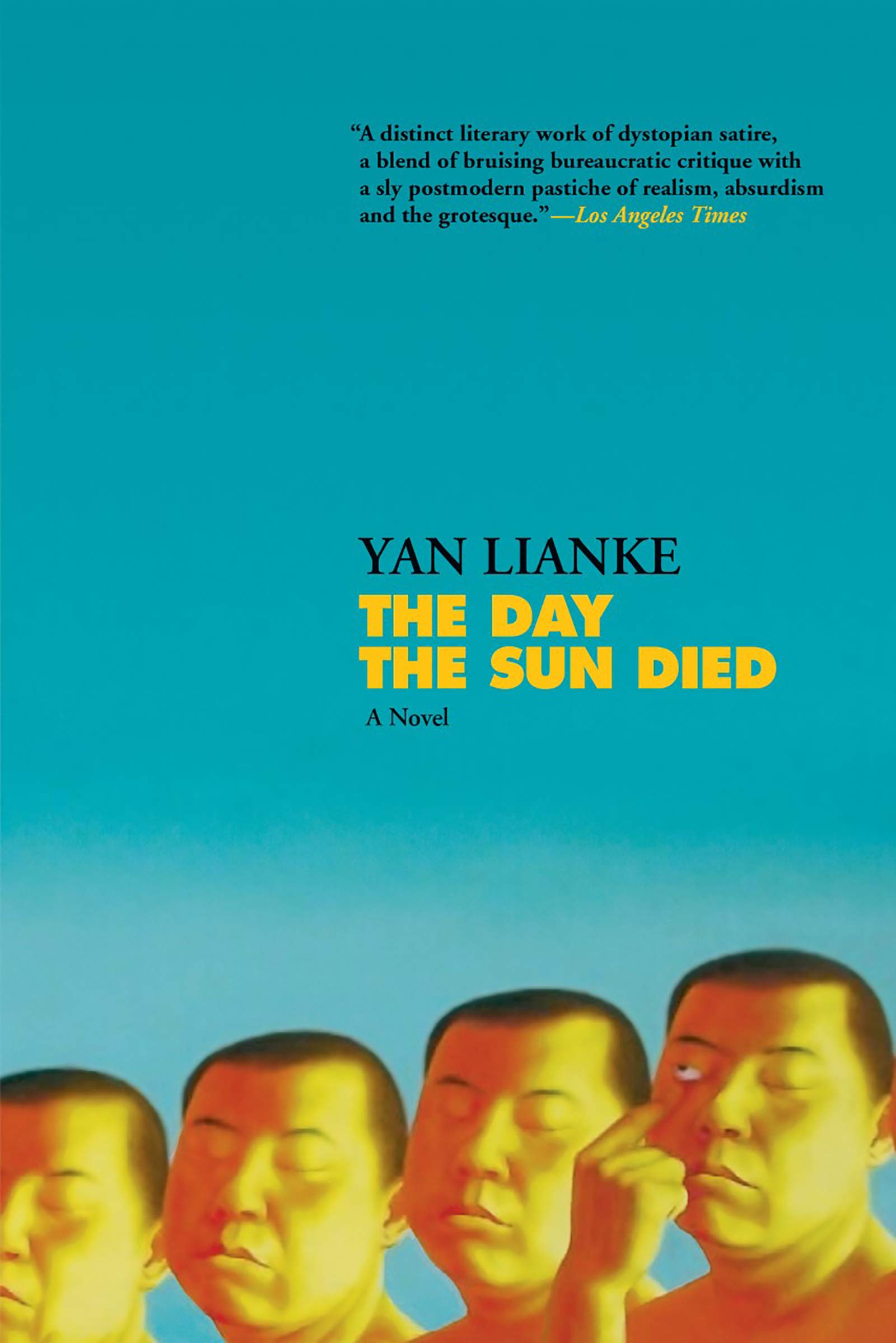
On “The Day the Sun Died” by Yan Lianke ****

This is the last book on my Chinese literature reading list, a work by a contemporary author that plays mostly as dark fantasy.The work is one that would have likely fascinated me at a slightly younger age, as it heavily involves sleep walking and that line between sleeping and waking.

The text centers around a young man, a child maybe, a simpleton, who grows up the son of people who run a funeral accessories store. At one time, his father worked with his brother-in-law in the crematorium business. His job was to inform on people who bury their dead relatives, as the law no longer allows that due to a shortage of land. There was much money in it, but eventually, the father felt too much shame in informing on his neighbors, so he gave it up. His brother-in-law, by contrast, makes good money, burning up bodies. What's left, often, is a bit of oil, much like grease is left when one cooks ground beef. (I'd never thought of that aspect of crematory work.) This oil, he sells for a nice sum. The father decides to buy that oil at an inflated price, as long as the price always remains the same, in part to make up for his once having been an informer. He does nothing with the oil—simply stores it. You know that oil is going to play a role somewhere later in the story, and it certainly does.

The story itself focuses on one long night, when various atmospheric forces block out the sun and result in people falling very easily to sleep. Pandemonium ensues, as people live out their dreams—often killing themselves or others. Others stay awake and take advantage of the situation. This part makes little sense to me, since we don't all start committing crimes because folks are sleepwalking or asleep. Otherwise, every night would be scary indeed. Nevertheless, looting and riots follow.

With no sign of the night ending and fights become more intense, the boy's family tries to come up with a plan to bring back the sun and wake people up.

Perhaps the strangest element of the plot is the author's own namesake taking part in the novel. The boy is a big fan of the author's novels, and were I more of a reader of Yan Lianke, I would know whether the plots, quotes, and titles cited are real or just made up. Nevertheless, the author is there in the town, sleepwalking among the inhabitants—and eventually gathering notes for the novel.

Thursday, June 30, 2022

On "Playing for Thrills" by Wang Shuo ***

This book starts off with a very interesting premise, arguably even a good one. It's a mystery. A guy finds out he's the major suspect in a murder case, the death of a friend of his ten years ago. He's got to clear his name, find an alibi. The week of the supposed murder, however, he doesn't remember. Where was he? What was he doing? Could he have been the one who murdered his friend?

Imagine The Hangover as a murder mystery, and you've got kind of the gist of this work. The protagonist doesn't have a great memory. Of course, I probably wouldn't know my whereabouts from a given week ten years ago either, except that I live a very humdrum life and so could probably point to being at work, but after work? I would have no idea and little way to track that down if I hadn't taken notes in some way. Or maybe the main character was on a bender. The novel then tracks his attempts to find out what he was doing that week, as he interviews friends he knew and places that he frequented at the time.

The protagonist is something of a ne'er-do-well, a guy who spends most of his time gambling and playing around with friends, and when he can still manage, chasing tail. So are most of the characters in the novel. This makes for some degree of difficulty telling the characters apart. There's a man in a striped shirt whom nobody knows who was at the last dinner at which they saw the murdered man. But later in the book, other friends wear such a shirt, the murdered man does in a dream/memory, and even the protagonist. The characters are in a way interchangeable, which makes them a bit less interesting.

And when one doesn't have characters to root for, it all becomes about the plot. This plot is loose and goofy but substantive enough to sustain two-thirds of the book. But at that point, the novel takes an odd turn, one that plays well with the kind of players all these people are but that blows all the suspense in the book and makes it, well, not terribly interesting anymore. One gets the sense that even the author isn't all that interested anymore, from the way the last few pages of the book go.

There's probably a lot here that is missing in translation. Footnotes explain some of the cultural context, some of which I knew but most of which I didn't. There are jokes that flew right by me, not being Chinese, references to classic works and authors. Such makes me appreciate all the more works that manage to speak to a person in translation, because they speak not just to the culture in which they arose but to the human experience. This book didn't really do that, even though it made a stab at trying to say something about identity and jokes and other human things; there wasn't, in the end, enough heart.

Monday, May 30, 2022

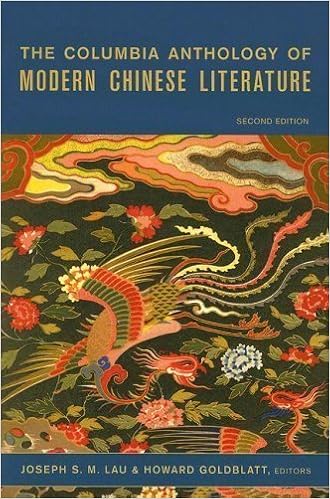
On “The Columbia Anthology of Modern Chinese Literature,” edited by Joseph S. M. Lau and Howard Goldblatt ****

This is the second volume of Chinese literature put out by Columbia University Press that I've read. The first was classic lit; this volume deals chiefly with the literature of the twentieth century. The shame in that is that when the two volumes are put together, the one to two hundred years in between get short shift. Like the previous volume, I was not a fan of the manner in which this volume was put together. As someone who knows little about Chinese literature and who is trying to learn more about it, I would have relished a bit more attention to context. Why these selections? And what do these selections say about the state of Chinese literature at the time? This volume, rather, is set up like a literary anthology in which the editors' voices are relatively muted; the “literature” you're reading is the important stuff, even if you know little about it. There are no headnotes. Instead, there is a set of short biographies placed at the start of the entire book, forcing a reader to go back and forth between the selections and the bios for info. The bios give good life info and sometimes a little info about the selection itself, but it's hard to glean, from the bios and the overall setup, why the editors chose some works or how relatively important the writer or the piece is to the overall body of modern Chinese literature. I found myself no longer checking the bios by about halfway through the volume, as they began to run together.

Intriguingly, the editors chose to provide the volume in three sections, with three subsections each. First, the anthology is split up by genre: Fiction, Poetry, and Nonfiction. Then, it is split up by period: pre-Mao (from 1918), Mao, and post-Mao. Personally, I would have preferred the genres not be split out, so that the work would have been wholly chronological, but I can see the value in the generic splits. The fiction section is the longest, taking up 5/7 of the overall text, with the poetry and nonfiction each taking up about a seventh. Initially, I would have thought the fiction—short stories, not chapters from longer novels—too long, but the editors choice here seems to be wise. It is the stories that are the strongest section of the book. The poetry, I found, though often full of profoundly beautiful imagery did not seem on par, as a whole, to the classic Chinese poetry of years before, the images often not evoking a parallel track of thought about life. The nonfiction was also not so inspiring or interesting to me. As such, the stories proved to be the section that most seemed to reflect the concerns of daily life for modern Chinese.

What is evident in the pre-Mao section stories is the poverty that must have dominated China before the coming of communism. Such helps explain why the revolution came about. One gets the sense in some tales, which present a more communistic view, of the hope some held out for revolutionaries. But mostly, one gets the feeling for the overall povery of the population. The Mao section of stories present only a few of idealism. That's because so much of the literature that the editors have chosen comes out of Taiwan. But there's probably good reason—idealistic stories of Maoist society do not generally make for interesting reading, except maybe the first one or two times. The Post-Mao world is surprisingly open about the failures and horrors of the Cultural Revolution—neighbors turning in/on neighbors to keep from being turned in themselves, no one truly guilty of anything outside a willingness to sell others out for alleged lack of loyalty to save one's own skin; old revolutionaries who have come to see the folly of their hopes; local party leaders who use their authority to perform heinous acts.

My two favorite pieces in the book stemmed from this post-Mao period. The first, “The Tunnel” by Chen Ruoxi, concerns a lonely older man whose adult children are devoted to the party and who are making their way up various government positions. This older man cannot be and is not allowed to have a love interest, since that would interfere with inheritance and potentially with the children's party status. During the course of the story and his service on one of the party committees helping to aid the community, he finds himself falling for a widow, whose husband had been accused of being against the party and had been taken away. The father finds various amusing ways to have small trysts with this woman, sneaking out, for example, to see movies with her. But the family will NOT allow him to remarry—it is simply shameful for an older man and would hurt his children's own economic needs. One day, the couple opts to skip the movie and go for a hike in some lesser known part of the city. They find a tunnel and some alone time. The ending here is heartbreaking, just as the man's experience of being denied love would have been.

The other story, and a very short one at that, that stood out to me was Liu Yichang's “Wrong Number,” not so much for its emotional connection as for its technical trickery. The tale is one told twice, once without the “wrong number” phone call and once with it, showing how a few minutes—a dead butfferfly, if you will, to use the old sci-fi trope—can change the course of one's life.

Wednesday, March 23, 2022

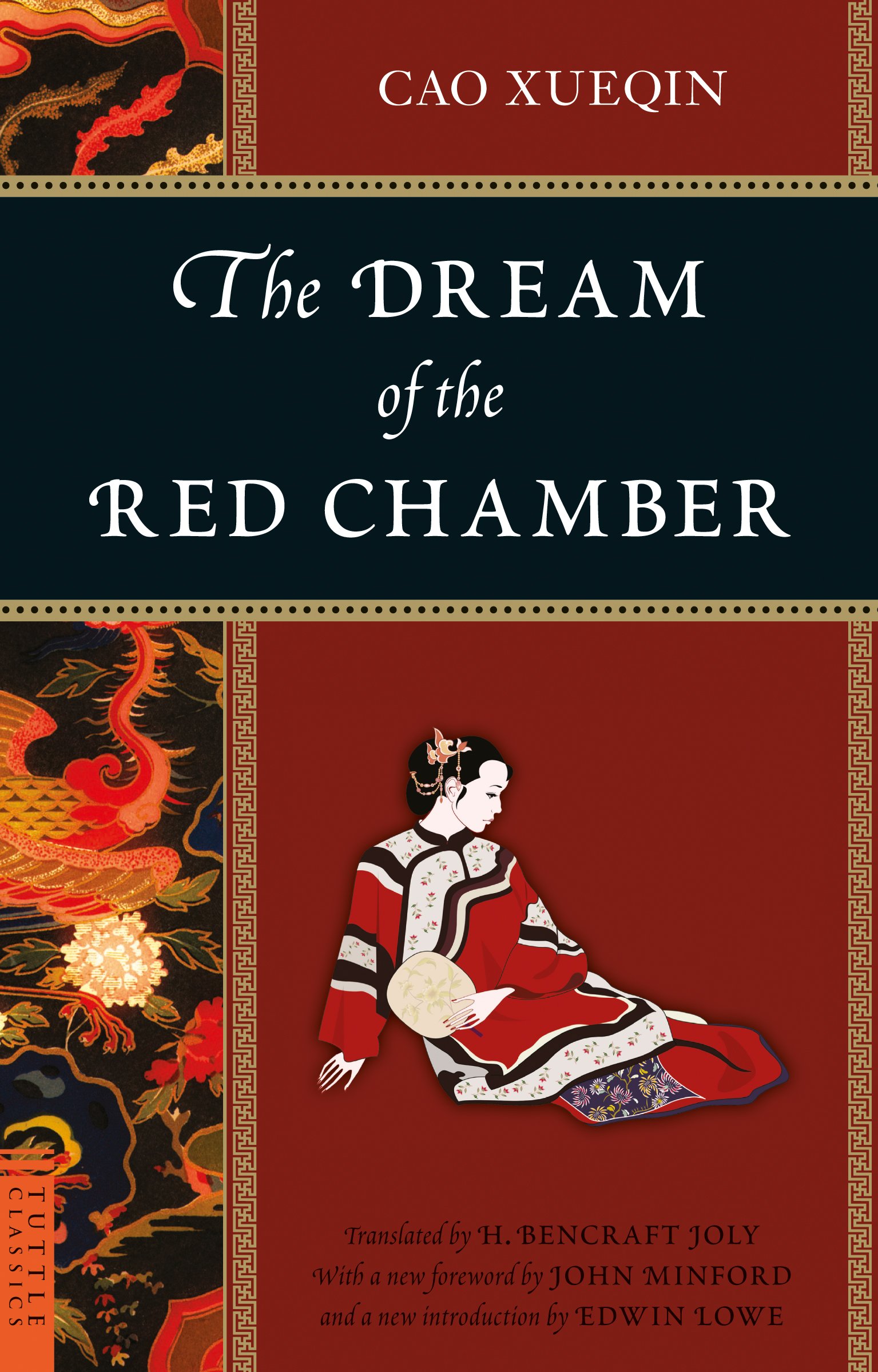
On "The Dream of the Red Chamber" by Cao Xaoqin ***

Credit working a second job and general length of the book for making me take so long to get through this one. Or perhaps credit the fact that this book, although a classic of Chinese literature, goes nowhere. It reminded me of the Japanese classic The Tale of Genji, insofar as it is largely about court intrigues and relationships among a well-to-do family. Single chapters are great. Indeed, I read an excerpt from this book in an anthology, which made me look forward to reading this text. But the episodic nature of the book and the fact that the writer often introduces plot points that go nowhere ultimately make this something of a frustrating read.

The early chapters of the book recount the disappearance of a young woman and the family's reaction to it. It's a great set-up (where'd she go? what happened? don't know), but eventually, we end up spending time mostly with the family of one Pao-yu Secundus, a fifteen-year-old with many female cousins and servants who sloughs off at his schooling and displeases his father. As a portrait of this portion of China at this time, it's intriguing. Pao-yu forges a close friendship with one other male at one point, who then traipses off to other places. He forges close relationships with his various maids and cousins. They get together to write poetry and start a poetry club. Families of the maids visit. One lower-class mother of one of the maids visits, gets drunk, and makes a full of herself.  One maid is given the opportunity to be the second wife to a rich older man, which she rejects, much to the shock of others. Pao-yu travels far off to a temple, unbeknownst to his family, indeed, hiding the very fact. Each of these things is told in discrete chapters, which alone are interesting enough. Together, not so much. Court life is tedious.

The book ends--or at least the version of the book I read--ends with Pao-yu meeting a doppelganger, another boy named Pao-yu, this one twelve years old, but otherwise similar in personality and looks and even class situation. He is even, at one point, somewhat mistaken for the other boy. Intriguing. But alas, it was just a dream. Not so intriguing. "And if you'd like to know what happens next, reader, you'll need to turn to the next chapter." That is, the book ends with the same ending that all other chapters carry, as if the author were writing a serial that was cancelled in its midst, with discrete chapters that feature the same characters but not always plot points that go from start to finish.

Wednesday, September 1, 2021

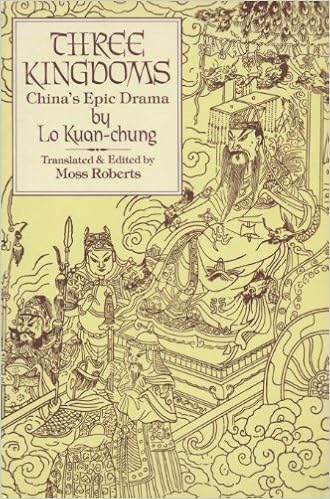
On “Three Kingdoms” by Lo Kuan-chung, translated and abridged by Moss Roberts ****

This abridgment of the full text amounts about one-quarter of the original's size and about three-quarters of the original story. Roberts presents key scenes and summarizes large portions for the reader. In all, one gets a full sense of the essential plot, which seems an amazing feat really, when one thinks about how complex this novel is.

The story recounted here essentially involves the three kingdoms period in China, just as the Han dynasty was ending and three kings fought for control of the land, leading eventually to the short-lived Sung dynasty and the domination of China by the Mongols.

In the book, the Hans are beset by a disloyal general in the north lands Tsao-Tsao. Although he proclaims his loyalty to the emperor, he is most certainly looking to gather power to himself. Poised against him is a southern kingdom that has broken away and Liu Pei, the book's hero. Liu Pei aims to restore the Han dynasty.

The book, however, starts on a more personal note. Liu Pei becomes friends with two men with whom he forges a pact—namely, that they will always look out for each other. These two men thus forge Pei's main helpers during the course of his attempt to restore the empire. However, the pact proves also to be Pei's downfall, as the killing of one of the men means that he has to take revenge for his death by attacking a potential ally, even though his real enemy is Tsao-Tsao. Indeed, it is Tsao-Tsao who got the potential ally to kill the friend, knowing it would distract Pei.

Roberts discusses the various themes in the book and the way in which Pei represents both ultimate duty and honor but also how that intransigence to such order can lead to one's downfall. The other characters have similar links to larger ideas that are played out in the plot of the book.

Sunday, August 15, 2021

On "The Travels of Marco Polo" by Marco Polo **

Polo traveled from Italy across Asia and back during the years that the Mongol Empire reigned over most of the territory. The version I read was the Yule edition, which coming from the nineteenth century was likely a bit too old to keep the reading interesting.

The Yule edition was heavily annotated, such that the notes were often two or three times the length of Polo's original text. Polo's text itself might have been fairly interesting, although it would have been extremely repetitive. Many a chapter recounts how a given region was infidels, etc. Polo uses nearly the exact same wording each time. Of course, the annotations are necessary because many of Polo's place names are now out of date, such that it's hard to know what location he is writing about. However, the nineteenth-century place names are also many times out of date, such that the annotations weren't much help. And this truly seemed a scholarly edition insofar as the notes recounted numerous opinions with regard to what Polo actually meant every location that he wrote about.

A case in point would be Madagascar. Polo talks of giraffes and other creatures that are not at all on the island. Most scholars l think he has the wrong place and meant another location. After all, the big southern island would have been off his route anyway. Of course, Polo wasn't averse to writing about nearby places that he'd heard about. This really is a kind of geography book in many ways and was likely fascinating to readers of the time.

This isn't to say that there aren't parts that are fascinating even now. His account of Japan, I found a bit interesting, even if most scholars dispute his historical accounts of the battles that he describes. Another particularly intriguing account was of a nation that consisted of two islands. On one island only women lived, and on the other only men lived. The men would visit the women's island for three months of the year. Children lived with the women until the age of fourteen, at which time the boys moved to the men's island. Not many people, even in Yule's time, though the account accurate or true. Finally, there is the religious variety that he encountered, something we often don't think of now when we think of Asia. That is, in Polo's time, while there were plenty of Buddhists and others of so-called Eastern religious affiliations, in his time, there were also a fair number of Muslims and Nestorian Christians scattered across the continent all the way across China.

Sunday, May 2, 2021

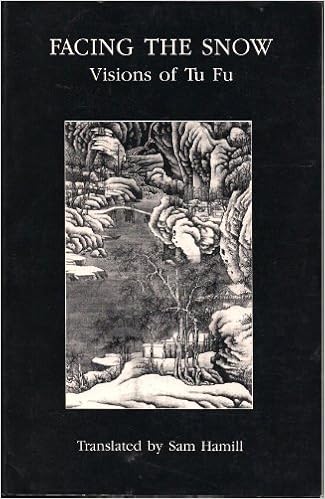
On "Facing the Snow" by Tu Fu, translated by Sam Hamill *****

The other great Chinese poet from the same period in which Li Po was writing is Tu Fu, and this selection of poems provides a rounded view of his work.

Hamill's introduction makes clear that Tu Fu suffered many of the same difficulties that Li Po did, as their lives ran roughly parallel, with Tu Fu, the younger, dying earlier also. However, both failed to obtain government jobs except on the lowest end, and both suffered the consequences of the wars that broke out in China around 750 that lasted for a decade or so. The poems reflect that. Like Li Po's work, we have only a segment of what Tu Fu actually wrote, maybe one-third.

Hamill's intrdocution, however, only touches on Tu Fu's life. Most of it is about translation--the difficulties of moving a poem from one language to another and the reason for his choices. Tu Fu was apparently quite a formalist, with many of his poems built around set stanzas and rhymes. English offers so much less in terms of rhyming opportunities that Hamill chooses instead to focus on the images and content, which seems a wise move.

The selection here connected more to me personally than the poems in the Li Po collection I read. Both poets write their share of nature poems, and poems about drinking, but Tu Fu also deals a lot with relationships and with the effects that world events have had on his life. It likely helped that Hamill doesn't leave some words untranslated, as did Hinton with the Li Po poems. As such, one doesn't feel quite as much the foreigness of Tu Fu's work. But beyond that, Tu Fu just seemed better at expressing the anguish of the world around him and of his own life. My favorite poems were those about war. He didn't delve so much into generic expressions about soldiers fighting as personal ones about how wars affect him and those around him. The communities he lives in feel the pain that having their young men and eventually old men too stripped from them to go fight yet another battle against the invading forces; they also feel the anguish of not having a strong government to defend them. There are poems expressing the difficulties of both positions. It's as if the people are pained either way. The speakers in Tu Fu's work migrate as invaders take over their land. They express the pain of the refugee. And later, when able to return, there is both a kind of joy in coming home again and a sadness. The homes they lived in five years ago are run down, unmaintained; many of the old neighbors have returned, but some never will. What is left but to wander out into the forest or along the river, seeking solace, knowing that you'd like to have a drink but that the folks you'd have shared one with are now gone.

Thursday, April 29, 2021

On "The Selected Poems of Li Po" by Li Po, translated by David Hinton ****

This work selects individual poems by one of the greatest Chinese poets, one who was active some 1400 years ago. Hinton introduction points out a lot of pertinent biographical details--Li Po's identification to Taoism (versus his friend Tu Fu's greater identification with Confucianism); his relationship with Tu Fu (he wrote two poems about Tu Fu, while Tu Fu wrote many more about Li Po, so the relationship seems to have been more meaningful coming from the other direction); Li Po's wandering ways and use of wine to reach states of ecstasy so that he could write better about the present moment; Li Po's political and military life and how in the civil wars of his later adulthood, he was exiled for the stances he'd taken; his disillusionment with war; and finally his return to solitude and wandering in nature. Interestingly, much of Li Po's written work, which was voluminous, has been lost. That which we have comes down to us from later collections of his material, and most critics think that as much as two-thirds of it is spurious. So much for the grand reputation I'd always thought Li Po had. It seems a shame that the fictional poet became so caught up with the real one such that we don't know whether what we have or how much of it is real.

The poems themselves are very enjoyable to read. What's amazing is the way that Li Po focuses on his surroundings such that the poems generally speak to us now even more than one thousand years later. A description of a mountain lends to thoughts about life and about moments in a given life, ones we share even now. Much is made of such thoughts especially toward the end of the collection, which I think I enjoyed even more than the beginning. Hinton had noted that Li Po's poetry had a certain carefree quality in his youth that was lost midlife as war took its toll. Indeed, the poems about war weren't that intriguing to me, but I found myself slightly more taken by the older Li Po than the younger. Experience leant a certain melancholy to the descriptions of nature that made the pieces seem all the more touching. It is amazing to think about how the wind and stream are the same that people generations ago also experienced and yet also how those things are never the same, even for us, from moment to moment, day to day.

Thursday, April 8, 2021

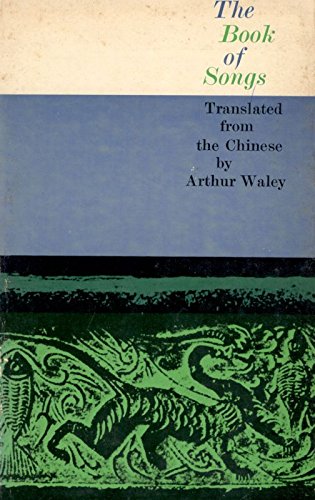
On "The Book of Songs" translated by Arthur Waley ***

This book of ancient Chinese poetry proved less interesting than earlier passages I'd read from the work had led me to believe it would be. The poetry included here definitely are song lyrics insofar as the pieces usually quite repetitive, with minor variations made in each stanza. As such, the work can be interesting. But as well as Waley does in terms of trying to provide context for the poetry through occasional introductions and frequent footnotes, much of it didn't really speak to me in our contemporary times (in fact, the footnotes often proved distracting, as they provided alternative translations or generally ruined the feel of the songs when I paid attention to them). There are poems here about serving the king, about sacrificing to the gods, about dynasties, about hunting, about farming, much of the material seeming quite remote.

The real beautiful pieces of the collection come in the first third of the book. Those are the love and marriage songs. The human heart, it seems, doesn't change, and many of the songs about losing one's loved ones seem to carry the same anguish that folks today would also serve up. I look forward to turning my attention to some more contemplative classical Chinese poets, who may well run down similar paths to these songs.


Tuesday, February 23, 2021

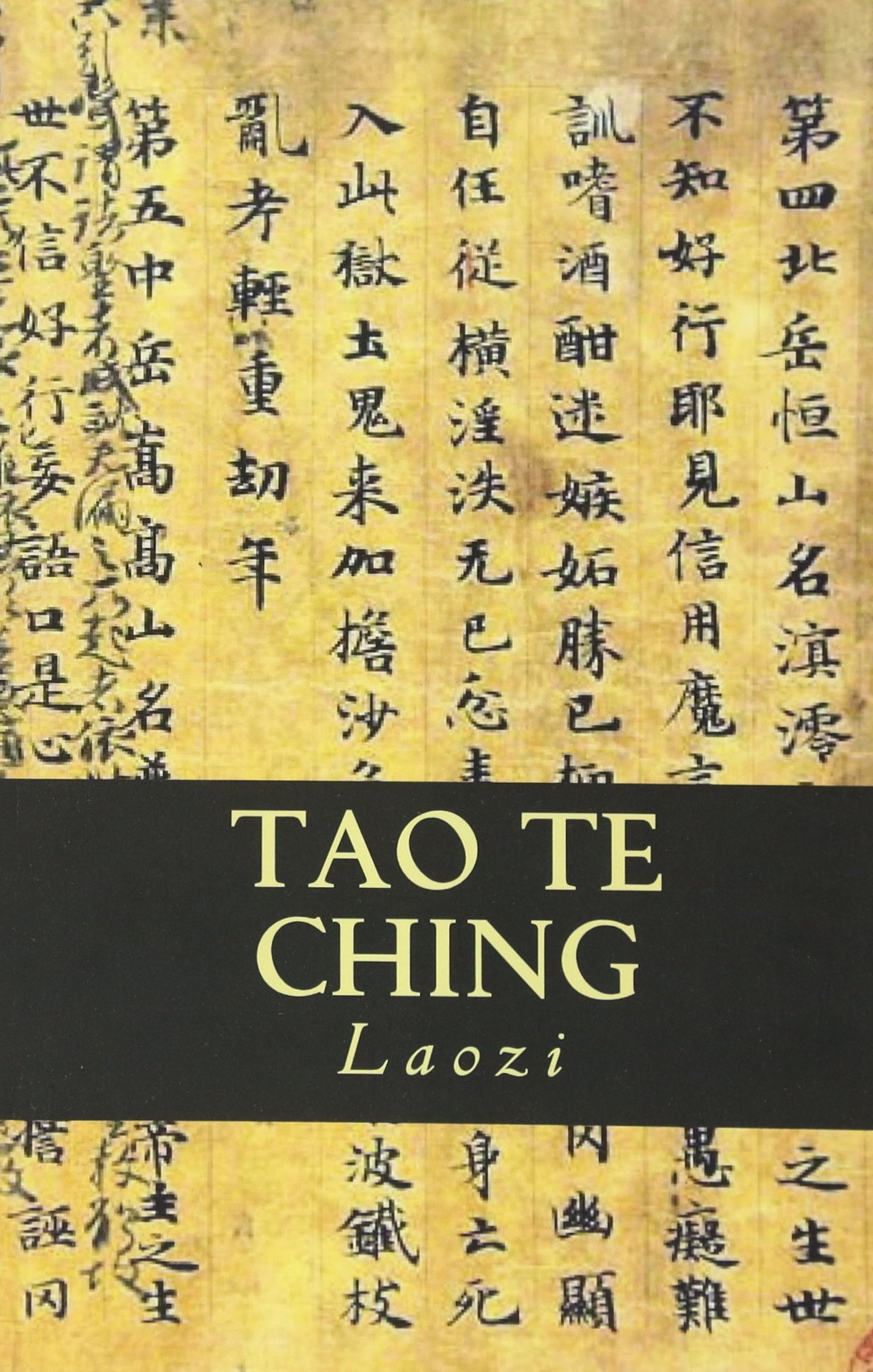
On "Tao Te Ching" by Lao Tzu *****

This Chinese work of pithy sayings, much like other works of ancient Chinese philosophy, is difficult to summarize. That said, I much enjoyed the reading. Each chapter, consisting of only a few sentences, posed much to think about, especially as the work very heavily poses sets of seeming contradictions: the best kings obey the people; the best warriors don't fight; things like that.
The Tao, I would take from the work in general, as being "the way," and the "Te" as being a sort of life force. The general idea throughout seems to be to remain humble, to not make a show of one's self, and in that way one will reach the greatest degree of value in society. As I said, any summary by a person who lacks a real understanding of the ideas behind the work is going to seem rather silly. If I were a wise man, I would write nothing at all about it.

Thursday, February 18, 2021

On "The Shorter Columbia Anthology of Traditional Chinese Literature" edited by Victor H. Mair ****

This concise volume of Chinese literature mostly dating to pre-1800 seems like a nice introduction to someone like me who is largely unfamiliar with Chinese literature outside of a few fundamental philosophical texts. Mair also aims to present lesser known contemporary translations, most of which seemed accessible and interesting.

That said, while I enjoyed the basic introduction, I found the book's layout and structure to be less than ideal. In terms of layout and design, the introductions to each of the individual pieces are set as footnotes rather than as headnotes, making for confusing reading. Sure, it's easy enough to figure out how the layout works after the first couple of entries, but the fact that the "headnotes" were set as footnotes means that on the few occassions where an introduction to a given reading is really long, the footnote runs across several pages; one then has to turn back several pages to begin the reading. The annotative footnotes can be useful and are appropriately set at the bottom of the page, though I found as I got deeper into the anthology that I read fewer and fewer of them, as many of them weren't essential for the understanding of the work and thus interrupted my enjoyment of the text; that said, as "optional" reading for further, they certainly are nice to have.

Another complaint I had with the general set-up was the choice to split the work up by genre. This, obviously, is the volume editor's choice, and it has some advantages, such as giving one a sense of the differing genres within Chinese literature as a whole. However, the editor doesn't really use the set-up to advantage because there are no general introductions to each genre outside of the extended footnotes at the start of a given reading. I would have preferred to have read the works in wholly chronological order, which would have given me more of a sense of the developing literary output over Chinese history, be it poetry, fiction, letters, drama, philosophy, criticism, prefaces, or whatever. The genre divisions were particularly frustrating when a given author wrote within several genres (some of which were related--lyric vs. poetry; poetry criticism vs. poetry; letter to another poet vs. poetry); thus, the book splits up his (and it generally is men who are the writers) various selections across hundreds of pages, with footnotes/headnotes referencing one back to some much earlier selection for a biography and more info. One doesn't get a feel for how a given author's criticism relates to his creative output or his work in another genre as a result. As such, I felt like I didn't really get as good a sense for Chinese literature as I might have.

Individual selections I found particularly interesting included the following.

I really enjoyed the passages from the Tao te ching that were selected, and I will gladly read this work in whole later in my study (in fact, I've already started).

I also really enjoyed much of the poetry that the editor selected. The poetry, in fact, is probably the only genre of traditional Chinese literature that I can say impressed me, as the rest seemed heavily folk oriented, pat, or too culturally centered to speak to a person thoroughly ensconsed in Western culture (one chapter is devoted to jokes, few of which made much sense to me, outside of the accompanying explanations, which of course made them less than funny). Of the poetry, I enjoyed, of course, the classic poets Li Po and Tu Fu. I also really liked the selections from the Book of Songs and hope to read more of that work down the road. What I came away with in regard to the poetry specifically was an understanding of how human feelings really cross time and space; many of the works seemed quite modern in terms of the issues the poets were dealing with, and yet the poems are often thousands of years old.

Li Shang-yin's Miscellany was a particularly interesting selection. Though not a poem in the anthology (it is in the genre Miscellany, because it is a list), the work is a set of lists on various topics that might as well be poetry, given how interesting most of the lists are--what is shameful, what is not to be despised, what is unlucky, and so on, more than forty lists in all.

In the novels section, I really enjoyed the passage from Ts'ao Hsueh-chin's Dream of Red Towers (more commonly known as Dream of the Red Chamber), which I'll likely given a full read of at a later time.

One nice thing about reading an anthology such as this is that I was able to read in a few genres, such as drama, that I'll likely not otherwise explore as I begin selecting invidual longer works to read. That's, of course, one reason I chose to read an anthology early on in my Chinese reading list and why I'll likely read the companion volume of modern Chinese literature sometime soon as well.

Tuesday, December 22, 2020

On "The Analects of Confucius" ***

I chose to read the James Legge translation available at Project Gutenberg. This is not the best version of The Analects, as became readily apparent in my reading. Other versions, some available online, offer substantial commentary, which is almost essential if one wants to grasp all that is being said. There are heavy references to various ancient Chinese figures and historical incidents, such that without the commentary, one often doesn't really understand what is being said.

For an overall "feel" of what The Analects are like, however, Legge's work will suffice. The work isn't so much first person as it is a series of short chapters in which various Chinese figures come to the Master (or sometimes others) for advice about a given situation. The Master then dispenses his wisdom. It is the dispensation of wisdom that, in many cases, resembles a collection of aphorisms: "A wise man is . . . ; a fool is . . ." and so on. The early books focus most especially on filial duty, while the later ones focus more and more on government. These two ideas, however, are related. Much emphasis is given to being a person of high moral values.

One particular little anecdote/piece of advice really struck me in the book. Confucius notes, at one point, that if one knows that a particular action/life course will lead to great wealth, one should pursue it with one's all, but since one is never assured that wealth is at the end of a course of action, one should instead pursue what brings joy. It's another way of saying, do what you love, and the money will follow, I suppose, but I hadn't ever quite seen it put this way. We don't control the future, so we should think of the present when setting goals. There is no point to pursuing riches that may or may not come if we don't enjoy what we do in the here and now, as the latter is all we can really be assured of.

Friday, November 27, 2020

On "China" by Harold M. Tanner ****

This basic history of China lays out the political and cultural history of this huge nation that I know little about. It's strange in a way, how much more I've read about Japan and how much more I feel I know its culture (even before I did a Japanese reading list, I had read many works by Japanese writers, whereas I've read virtually no Chinese literature). That isn't to say that I know Japan well. As with China's history, the history of Japan is one I've read on multiple occassions and have quickly forgotten outside of the twentieth century. I don't know why that is exactly, but I suspect that there are various reasons: (1) Western history is drummed into us in school growing up, while the history of the East is only touched on; and (2) the history that most touches on us and our world directly is the one that we remember best--hence, why I can remember twentieth-century history in addition to that of the West but not so much the East.

One thing Tanner does a good job of in terms of setting up his account is denoting how multicultural China really is. We tend to think of the nation as a single people, but in fact, while the Han dominate the country, there are many other ethnic groups who have been integrated into the nation--and that over centuries: Monguls, Manchus, Tibetans, Urghars, Turks, and so on. Tanner does a good job of showing how many of these ethnic groups have dominated the nation at one time or another--and how they are different from one another.

In a sense, Chinese history until the twentieth century is fairly repetitive. It is a tale of the rise and fall of various monarchies, usually with periods of destablization and disunity between said monarchies. An epigraph about one-third of the way into the book sums up the first third of the work (and arguably sets up the pattern for the next third of the work):

"They say the momentum of history was ever thus: The empire, long divided, must unite; long united, must divide. Thus the House of Zhou reached its end and the empire as partitioned into save warring kingdoms. Thus these seven were absorbed into the House of Qui. Then Han and Cho destroyed Qin and waged war on each other until the empire was reunited under the House of Han, reinvigorated by Guangwudi and passed down the generations to Xiandi, the last of the Han, after whose generation the land was partitioned into three kingdoms."

After these would come the Sui, Tang, Song, Yuan, Ming, and Qing dynasties, with a similar pattern as noted. The Mongols would rule China under the Yuan dynasty, the Mings under the Ming dynasty, the Manchus under the Qing. Each conquering peoples would, in fact, often take on various Chinese customs in order to better fit in with the peoples and the former noble classes, including most especially Confucianism and to a lesser extent Taoism. The Mongols included a number of Nestorian Christians. Indeed, while religion was very much a background item in this book, I would be curious to know more about some of the religions that less associated with China in the present day, like Eastern Christianity and Islam, because they clearly had their adherents at one time in the land.

Things change quite a bit in the nineteenth and twentieth centuries. The weakness of the later Qing dynasty meant that the country was in large part ruled over by local warlords whose in-fighting left the door open for manipulation by colonial Western powers, who established areas of control over commerce and the subjugation, in many ways, of the Chinese nation. China moved during this stage toward the establishment of a republic, but the inability of political leaders to bring the nation into true unity and to throw off Western powers left open the door for a growing Communist movement (which itself had been part of the movement toward the Republic). Consigned to the rural areas, Mao Zedong and others built a loyal following that eventually established political dominance and the eventual of exile of the republic to the island of Taiwan. Most of the political moves during this time were to a large extent motivated by a desire to reestablish Chinese hegemony over its own territory, and the Communist movement essentially succeeded.

After pushing landlords out of much of their property, the Communists forged various programs to encourage economic growth of the country. Communal farms were given quotas of various sorts and people rewarded for them. Excess production was allowed to be sold on the market by individuals, which led to further growth. But there were also various problems that centralization created. Rosy but inaccurate reports from locals regarding production eventually led famine.

The Communist Party largely dissuaded people from dissenting with the powers that be, except again for brief periods when moderate criticism and openness was encouraged. Those who participated in such, however, usually rued the day for expressing such opinions, for when the dissent grew too intense, the Communist Party would change tactics, closing off free expression and cracking down on those who had previously expressed dissatisfaction (even though they were doing so with government approval and support, as a means to improve the system). A particular intense period of such crackdown was the Cultural Revolution, wherein various young peoples forged the Red Guard who in turn accused many of turning on the State. Like our own "Red Scare" of the 1960s, but with consequences that were even more deadly, the crackdown got out of hand, as people began to turn one another in so as to avoid being turned in themselves even as no one had in fact engaged in nefarious activity or thought.

Economic liberalization, which had kept moderately under wraps under Mao Zedong, took on a fiercer pace after his passing. China encouraged foreign investment and reaped the rewards with larger, more modern cities (Shanghai went from having one building over twenty stories tall to having over one hundred in a span of something like twenty years)--but also with growing economic disparity.

I read this book in part as a precursor to a Chinese reading list I am finally starting on. The sections on culture, in that sense, will be very useful. Writers and works I will want to consider for the list (if I can find them) are as follows:

I Ching [already read]
Dao De Jing
Sun Tzu, Art of War [already read]
Confucious, Analects
Daniel K. Gardner, The Four Books (Analects, Mencius, Doctrine of the Mean, and Great Learning)
Wu-chi Liu and Iring Yucheng Lo, Sunflower Splendor: Three Thousand Years of Chinese Poetry
Victor H. Mair, The Columbia History of Chinese Literature
Mengzi (Menchius), Mengzi
John Minford and Joseph D. S. Lau, Classical Chinese Literature
Wai-lim Yip, Chinese Poetry
Book of Songs/Classics of Poetry
Li Bo (poet)
Tu Fu (poet)
Shi Nalan, Water Margin
Luo Guanzhong, Romance of the Three Kingdoms
Wu Cheng'en, Journey to the West
Cao Xueqin, Dream of the Red Chamber
Xiaoxiao Sheng, Jin Ping Mei
Bai Hua, Bitter Love
Wang Shuo (contemporary novelist)

On Chinese literary history, I might try Herbert Giles's 1901 History of Chinese Literature.