Showing posts with label Bret Harte. Show all posts
Showing posts with label Bret Harte. Show all posts
Wednesday, September 28, 2011
On "The Right Eye of the Commander" by Bret Harte (2968 words) ***
This old story by Bret Harte has a certain magic-realist feel to it. Perhaps it's the Spanish names. Perhaps it's the trinket seller who is also a magician of sorts. The commander, having lost his right eye, lives on in a California fort during Spanish times. The visit of a stranger proves useful in that the commander is left with a new eye, one that, while he can't see with, seems to be able to see into others. Read the story here.


Friday, September 16, 2011
On "Tennessee's Partner" by Bret Harte (3622 words) ***
I'm highlighting this 140-year-old story mostly for its beautiful language and its humorous turn of phrase. That the writing has been around so long and still seems fresh is quite an achievement. Tennessee partner is a man who quite literally lives for his friend. When that friend gets into trouble, the partner is there. But what's really cool are Harte's observations about the community and about the jury rigged up to try Tennessee. One gets a sense that Harte doesn't particularly take much liking to the American, or at least American western, legal system: "they were ready to listen to any defense, which they were already satisfied was insufficient." The tale is full of such bracing observations like these. Read more of them here.
Thursday, February 24, 2011
On "A Protegee of Jack Hamlin's" by Bret Harte (10,943 words) ****
Jack Hamlin is a little sketchy. He's a gambler. But his heart is in the right place. Such is a common character in Harte's fiction. John Oakhurst is another such character. But while Oakhurst is almost wholly good, donating excess winnings to charity and not taking from losers who can't afford to lose, Hamlin isn't a completely white knight. He's concerned about his reputation (as well as others' reputations). And he likes to do a little sleeping around when it's convenient.
So enter a woman that Jack meets on a boat. She's fallen for an unsavory guy who has abandoned her. Jack is here to save her, which he does--sending her to school, setting her up in the arts. But he's still Jack, and he's a bit scared that this woman's reputation will be ruined, as well as his own. So he leads a double life. And it is that double life that makes this story one of Harte's better ones. Harte, here, focuses on surfaces and on reputations, the way that those often mean more than substance. I'm reminded of contemporary politics, how a few great soundbites often triumph over substantive debate and informed decision making. Read about other such disappoints by reading Harte's old story here.
So enter a woman that Jack meets on a boat. She's fallen for an unsavory guy who has abandoned her. Jack is here to save her, which he does--sending her to school, setting her up in the arts. But he's still Jack, and he's a bit scared that this woman's reputation will be ruined, as well as his own. So he leads a double life. And it is that double life that makes this story one of Harte's better ones. Harte, here, focuses on surfaces and on reputations, the way that those often mean more than substance. I'm reminded of contemporary politics, how a few great soundbites often triumph over substantive debate and informed decision making. Read about other such disappoints by reading Harte's old story here.
Thursday, March 25, 2010
On "The Outcasts of Poker Flat" by Bret Harte (4049 words) ****
Here's a story about facing death, slowly and meanly. Poker Flat is a mining camp, but some of the local residents don't like the looks of certain others. A few are hanged. But in the end, the kinder thing to do with most is just tell them they've got X hours to get out of town. And so that they do, wandering out into the wilderness toward another. One of these is John Oakhurst, a seemingly honorable man who has just a little too much success at the poker table for the other townspeople. With him is a set of supposedly neer-do-well women and a scoundrel of a man. Near the end of the first day, they meet with a young man Oakhurst knew from a poker game, a man who Oakhurst treated kindly and who now feels like he owes Oakhurst a favor. They also meet with snow--a good lot of it, enough to keep them from moving forward. And that's when things get interesting. Read the story here at Bartleby.com.
On "Selected Stories and Sketches" by Bret Harte ***
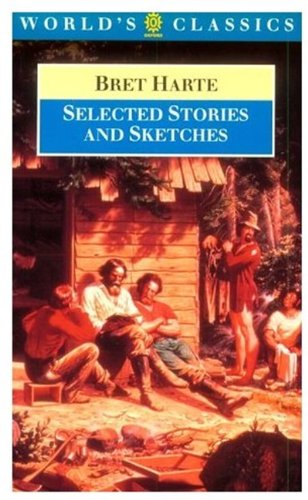
Some have accused him of sentimentalism, and the accusation seems accurate. Often, in reading a particular story, I got to its end and felt let down. Some characters are just too good. Some characters are too evil. And endings often just drop off the page, a day done, everything made right, and isn't that character of righteous action oh such a good person? When Harte is at his best, the righteous aren't so nice, and the bad are more self-interested than illogically evil, and the world is a tough place in which to dwell. Watching characters manage in that is much more fascinating than letting them dominate as we would expect or desire.
Subscribe to:
Posts (Atom)

 Posts


