skip to main |
skip to sidebar
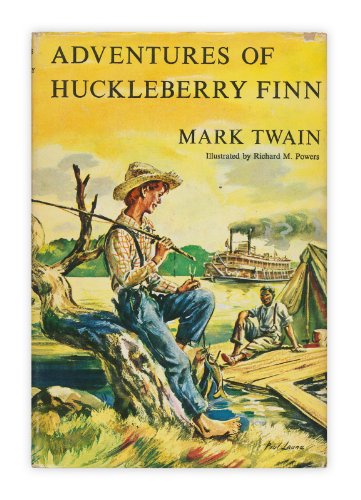
One of the few books virtually every American has read, the novel has stood the test of time, mostly. I read the book for the first time around age thirteen, and then I read it for class around age fifteen. I hadn't read it since until . . . a year or so ago I was reading for an audio recording, and the text I was to read that day was Huck Finn. The section, as I recall, was one of the chapters having to do with the king and the duke, and I couldn't help laughing at points and having to go back and rerecord. I have to read this again, I thought.
Now here I am reading all these American texts written between 1870 and 1920, mostly books I failed to read while in college but that are iconic nevertheless. Sneaking in a reread of Huck Finn onto this list seemed quite a perfect fit. Twain, writing over one hundred years ago, still seems fresh in the twenty-first century. He plays with dialect. He plays with an unreliable point of view. And he's still funny.
As with most critical assessments, I do find the latter third of the book a little disappointing; once Tom Sawyer shows up, the novel gets rather silly, and the slave Jim, always a bit too childlike so as to be a bit disturbing, becomes downright stupid. And yet, it's possible to read these latter sections as part of Twain's point. Jim, not assessed as a human being by most of the slave society around him, isn't treated any better by the boys; he is infantilized by the racist society, and what for him is a matter of freedom and slavery, life and death, is just fun and games to Tom.
The most humorous passages, though, revolve around the king and the duke, a tiresome duo that take up the middle third of the book. While funny, there's something sad about the dirth of quiet moments in the book once they show up, as the most beautiful passages are those in which Huck and Jim simply float down the river, and we get to listen and look in.
The book may be downloaded here from Project Gutenberg, and the audio here.
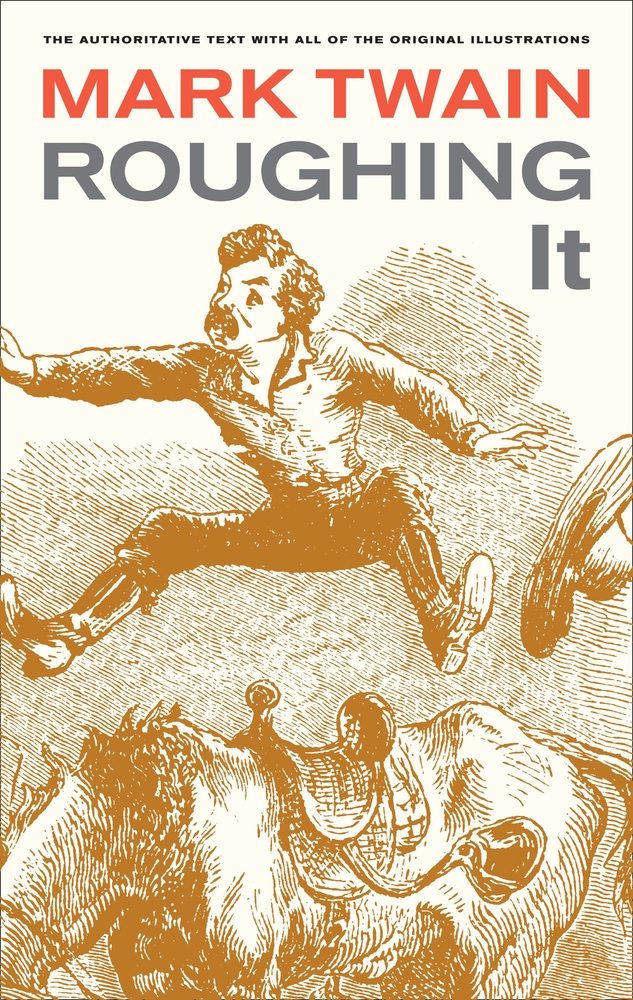
This nineteenth-century travel book has much to offer, even at over one hundred years old. Twain's wit is at full strength in many of these passages, and from them, you get a feel for the humor of the old southwest. Also here are long descriptions of life as it was lived in the 1860s west.
The book is Twain's account of going to work with his brother in Nevada, back when it was still a territory. The two of them got government jobs of some sort, but little time is spent describing those. Instead, one gets accounts of stage travel before the days of railroad (a grueling and long trip it must have been), of silver mining and claiming, and of newspaper writing. Midway through the book, Twain opts to visit California and live there for awhile, and then he moves on to Hawaii. Admittedly, by these later portions of the long text, I was becoming restless. Sans a strong plot, the episodic nature of the writing eventually begins to wear one down, even when well written and at times funny.
Some of the historical information, as well as some of the tall tales and myths, is interesting as well. Twain goes on at length about the relatively recent faith of Mormonism, which was at its polygamous stage with regards to marriage rights. He tells the story of John Slade, a rascally gunshooter who manages to threaten his way into government--and eventual death (I could see those chapters becoming a movie, though a very violent one). He tells tales such as one about a buffalo who chases a man up a tree and then follows him right into it (clearly a "true" story since the man lost his hat and the buffalo staggered off--and neither of those items are present any longer).
The text is in the public domain and can be read or downloaded here.



 Posts


