Thursday, December 31, 2015
On “A Room With Many Small Beds” by Kathy Fish (877 words) ****
Kathy Fish tends to focus on the small. She’s one of those elegant crafters of flash fiction, so I was curious what she would do with this slightly longer piece—ten moments placed side by side and merged into a bit of a story. Here, a girl spends time with the father’s girlfriend, with all the attendant mixed feelings over the loss of her mother. Read the story here in ThreadCount.


On “Dave Barry's Complete Guide to Guys” by Dave Barry ***
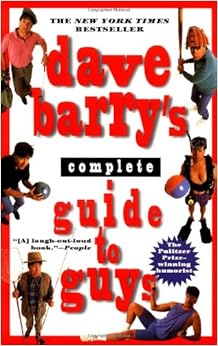
I bought several of Barry's how-to books (Claw Your Way to the Top came first, a book on business) and his first book of columns, Bad Habits. And I laughed a lot. By age twenty, however, when I read a book of his on home improvement, the love affair was ending. His second book of columns did not seem so funny, and his book on U.S. history only moderately redeemed his more recent work for me. And now, over twenty years have passed since I last picked up one of his works.
This book I got for free from the Little Library in our neighborhood. I figured I'd give Barry a try again. It looked entertaining and funny, and it proved a great book for the light reading needed while on family vacation, since much of that vacation was spent corralling little boys at a water park and did not lend itself to deep reading on the philosophical underpinnings of why humans gather themselves into urban civilizations. Having not read reading quite so light in a long while, I now know how and why some people can manage to get through books so quickly: large print and easy to read equals short time.
The book itself, however, was something of a disappointment. Barry is a humorist. This means that his main objective is to tell jokes. There wasn't a lot to glean here other than laughs. And as I've gotten older, making me laugh has gotten relatively tougher to do. Far Side cartoons, which in my late teens were hilarious, now stir mostly a nod from me. Barry likewise might occasionally make me smile, but only one hard laugh was generated in its two hundred plus pages.
The book is about guys, as opposed to men. Here, Barry is onto something, which he does a good job of laying out in his first chapter. Guys go with the flow. They do not generally accomplish important things with their lives. They do stupid stuff. They avoid work as possible. They are not particularly moral or immoral. They are, essentially, like grown-up kids.
What follows are a number of chapters full of cliches about male behavior, some of them gleaned from personal life, some from news stories, and a number of them common ideas that have lingered in the air for generations. All's well and fine, I suppose, to make fun of males--Barry after all is one--but at some level it becomes a bit tedious and insulting. A guy's idea of housework is . . . A guy's concept of a relationship is . . . And so on. To some extent, I wonder how many of such insights are even true. My wife, indeed, is pickier about cleaning bathrooms than I am, and I have to admit that from my second apartment on as a single man, I largely avoided decorating and eschewed furniture as much as possible, though not for the reasons that Barry might pose. I did not find such stuff necessary and didn't want it weighing me down, as opposed to simply not thinking about it (I had, in fact, made an effort with my first apartment and decided I would not do so again until I owned a place and was certain to stay put). And as for relationships, I can attest to being slow to commit, but again, it was not because I never even thought about them with girls I may have gone out with, and I can say the same of many of my male friends.
About the only set of criticisms that rang true for me were those on home improvement and the feelings of inadequacy I feel as compared to “men.” I am one of those guys who wants desperately to fix up the house but who often feels overwhelmed by a set of skills I never learned or was taught and who does feel somewhat less manly because of that lack.
But of course, Barry isn't looking to tell the truth or to make great insights. He's trying to make us laugh. However, it might just be that with more life experience, I find myself less likely to laugh a stereotypes and more likely to laugh at things that do provide true insights. After all, if laughter is at least in part a reaction to surprise and discomfort, it takes some revelation of truth, perhaps previously unknown, to elicit it.
Tuesday, December 22, 2015
On "The Brother" by Robert Coover (13:36 minutes) *****
My favorite section from Coover's "Seven Exemplary Fictions" involves a retelling of the story of Noah's flood. In this case, a brother has been hired to help Noah build the boat. He works on it until it is done, thinking Noah mostly just a crazy man. Noah gives no real explanation for his actions, so when the brother finds that it is beginning to rain and that everything is disappearing under water, there's a rather grim pity we feel for him.
I could not help but think of the biblical story itself. Noah is regarded as a prophet in the scriptures, so my understanding is that his boat building was accompanied by warnings to those around and by preaching. The real tragedy in Coover's tale is that the brother is clueless--that there is no warning about what is about to happen. But then I think of how we are today surrounded by "prophets" who name an end date for the world that comes and goes. I have to think that one some level, people in Noah's day would have had a similar issue. Was Noah merely one of many predicting the world's end? Which person do we listen to, or should we just ignor them all? Is a proliferation of warnings, many of them false, any better than no warning at all? We live in a sad and pitiable world.
You can listen to Coover himself read the story here.
I could not help but think of the biblical story itself. Noah is regarded as a prophet in the scriptures, so my understanding is that his boat building was accompanied by warnings to those around and by preaching. The real tragedy in Coover's tale is that the brother is clueless--that there is no warning about what is about to happen. But then I think of how we are today surrounded by "prophets" who name an end date for the world that comes and goes. I have to think that one some level, people in Noah's day would have had a similar issue. Was Noah merely one of many predicting the world's end? Which person do we listen to, or should we just ignor them all? Is a proliferation of warnings, many of them false, any better than no warning at all? We live in a sad and pitiable world.
You can listen to Coover himself read the story here.
On "Aunt Julia and the Scriptwriter" by Mario Vargas Llosa *****
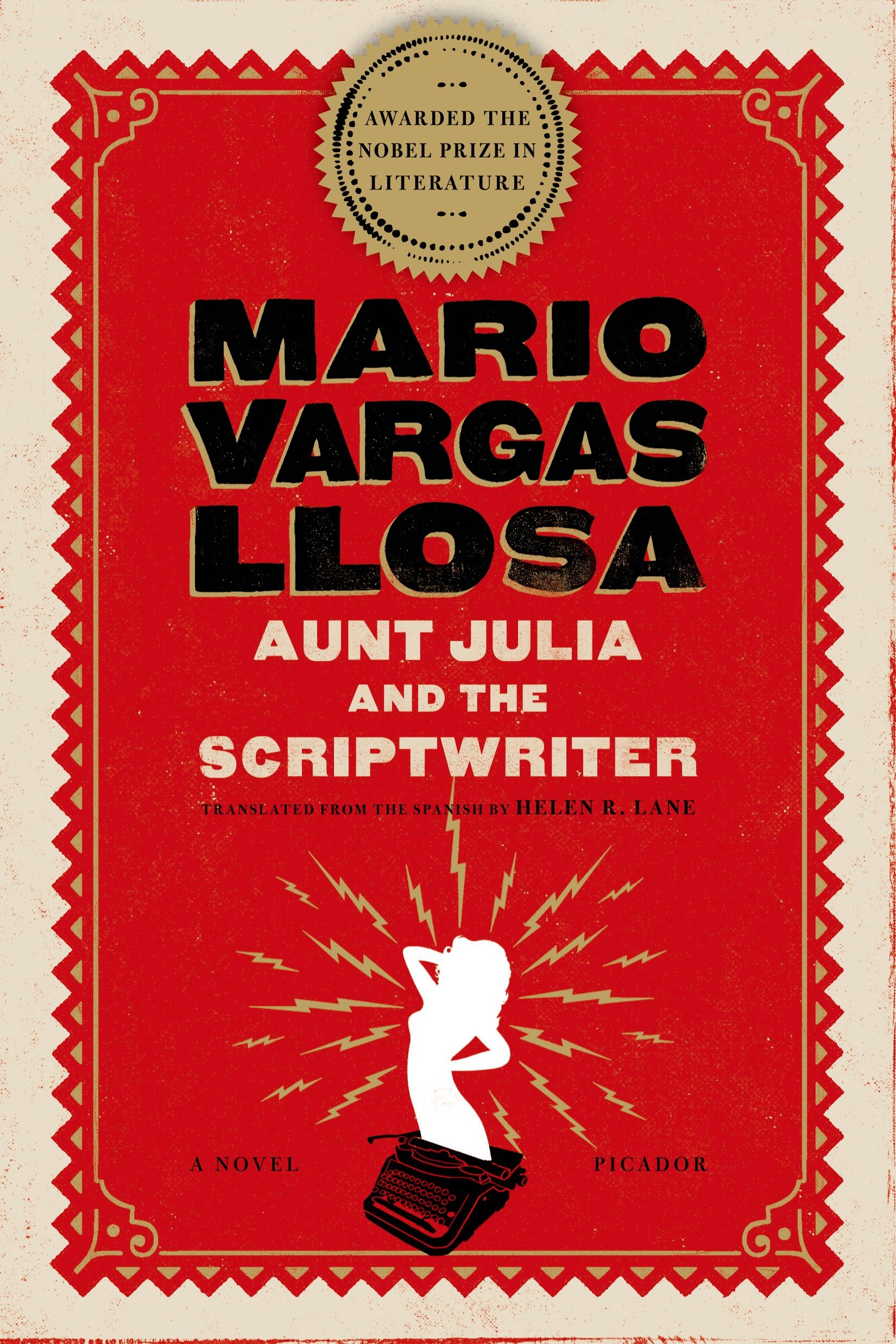
What are alternate chapters? Vargas Llosa's book is divided essentially into two parts. Odd chapters focus on the main story; even chapters focus on short stories. The main story involves an eighteen-year-old man in law school who has a job as a radio newsman in Lima, Peru. This young man falls in love with his Bolivian aunt Julia, who is in her early thirties and newly divorced. (The two are unrelated by blood, the aunt being the sister to the wife of the young man's uncle by blood.) As might be imagined, this creates a scandal. The book recounts how the two fall for one another and how they attempt to keep the relationship secret.
But it also recounts the life of another radio employee, who works for a different radio station with the same owners. This other radio station focuses not on news but on entertainment, notably soap operas. The Pedro Camacho, the scriptwriter, is the brain behind these operas. Earlier, the station had depended on imported Cuban scripts, but the Bolivian Camacho is an artist and a perfectionist whose devotion to his craft creates an equal devotion among radio listeners. Audiences grow huge.
It is summaries of the scripts for the stories that Camacho's writes that forge the alternative chapters. These stories are on their own very interesting, and I wish I could find one on the Net to share, but alas, it eluded me. The best stories come toward the front of the book. The very first focuses on a man in love with a woman, but the woman has opted to marry another man, one not really befitting her station--because, as it turns out, she has gotten pregnant by her brother, with whom she is in love. These seems appropriate for soap operas, but it's told with a high literary voice that appeals to someone like me. And true to form, the story ends, not with a conclusion, but with a series of questions about what will happen next. Later chapters focus on a seeming alien arrested by a police officer who has qualms about actually shooting the innocent creature, despite orders; and the rape and attempted murder of the owners of a hotel by one of its boarders. As the stories continue, they became less interesting to me, especially as I got more involved in the main story. But they also devolve naturally, as Vargas Llosa explains in the main text. Character names begin to be repeated between stories (even though they are not the same character) or changed midstory. And then, eventually, all the characters are killed off. Pedro Camacho works himself so hard that he has a meltdown.
Meanwhile, the narrator and his aunt are found out and ordered to stop. Instead, the narrator seeks out a means to get married, which is difficult, given that he is technically a minor under Peruvian law. The tale becomes a love story, as the two try to stay together against overwhelming odds.
And for what? The family is concerned because Aunt Julia is a divorcee and so much older. The narrator is so young and not finished with school. He's condemning himself to a life of hardship. I can understand the family's concern.
But the fortunes of people are not always what they seem likely to become. Camacho goes insane and loses all. The narrator, living for love, seems to come out all right in the end. So too does another radio employee who is largely considered an oaf, while another such employee struggles on along a similar path that he's always been on. Life is a soap opera.
Monday, December 7, 2015
On "The Balloon" by Donald Barthelme (1767 words) ****
One of many of Barthelme's stories available on the Web, this one is about a balloon that engulfs a city and the reactions of various people to it. Or so it seems. It's really about art and how people react to it and why it gets written in the first place, for these external presentations are often simply, as Barthelme puts it, "spontaneous autobiographic disclore[s]." Read the story here.
On "Sixty Stories" by Donald Barthelme ***
Overall, I found the collection fun and intriguing, by as I find with that genius Faulkner's novels, it didn't feel like much of anything added up. These are stories that often just drop off, without any kind of epiphany. Barthelme, I'm sure, was eschewing that element of the form, an element that in its ubiquity almost seems trite. And yet, I find a story without some kind of gravitas ending to be, well, an anecdote. It doesn't tend to stick with me, no matter how clever or absurd the premise and execution.
My favorite stories of this collection generally managed to do something that thing that was clever or absurd, and they were often funny in a smile sort of way. Others were hard to stick to. Among the one that were hardest to stick with, for me, were those that consisted wholly of dialogues. Not only was it difficult sometimes to follow the conversations (often with non sequiturs) but the conversations often didn't seem to go much of anywhere. Now, if I managed to become engaged in the topic of the conversation, and sometimes I did, the dialogue could be quite funny in the smile sort of way. A masterpiece of this form was "The Farewell," which consisted of two people talking about getting into an exclusive institution--only it's not so exclusive as it once was. We see a good deal of awkward and mean competition between two "friends."
My favorite piece in the collection by far was one drawn from what I believe to be one of Barthelme's novels. It was called "A Manual for Sons." It is essentially a summation of fatherhood--what "father" means. I don't know exactly what it is that Barthelme does here that makes the piece so intriguing. It's simply an definition essay on fathers, but the way that he goes about setting out that definition, with its specificity and, many times, ridiculous appeals to history or anecdote fascinates like poetry.
Characteristic of the collection is the very first story, "Margins," which is about two men discussing character and handwriting analysis. If handwriting shows who we are, why bother reforming ourselves--instead, reform our handwriting. The story is an exploration on inner versus outer, surface versus depth--the margins. How can or does one reflect the other? And yet, Barthelme seems to provide no real answer--there's just a lot of talk. And one is left nodding the head, saying, Interesting. Maybe even beautiful. But so what?
Thursday, November 26, 2015
On "Doppelganger" by Mark Crimmins (247 words) ***
Here's a fun one about the person who looks like you. Such has happened to me quite often--dentists claiming I walk by their office every day around noon, roommates angry at me because they wave hello to me on campus and I don't wave back, and so on. Well, here's one thing that could happen, here, at Pif.
(After today, Short Story Reader will become irregular in presentation, rather than every three days or four days or five days, as I have been gradually slowing down. I'll still try to update folks on my reading and present great stories, but life has gotten hectic in the past two years such that I no longer have the time to devote to blogging as regularly as I once did. Look for entries about once every week or two or three. Thanks to all those who have been regular readers through the +7.5 years.)
(After today, Short Story Reader will become irregular in presentation, rather than every three days or four days or five days, as I have been gradually slowing down. I'll still try to update folks on my reading and present great stories, but life has gotten hectic in the past two years such that I no longer have the time to devote to blogging as regularly as I once did. Look for entries about once every week or two or three. Thanks to all those who have been regular readers through the +7.5 years.)
Saturday, November 21, 2015
On "For The Wheels to Nullify" by Brent Rydin (422 words) ***
Here, storm is juxtaposed with relationships of various sorts. But the line that sticks out most is the one about how a storm chaser, which the narrator is, isn't brave--he's just some jerk hanging out on the outskirts where it's safe. So it is with the nonrelationship. Read the story here at Whiskey Paper.
On “Betrayed by Rita Hayworth” by Manuel Puig ****
Puig is a post-boom writer, as some Latin American literature scholars call those writing after Cortazar and Borges had hit their zenith. And his is a very different text to the magic realism that seems to hold so many Latin American authors imprisoned. I love magic realism, but it’s interesting to read someone who isn’t focused on that. Puig’s novel isn’t even in the objective realist tradition that some other Latin Americans I’ve read fall into. Rather, he seems to fall in line more with William Faulkner, James Joyce, and that ilk. And in that sense, I wish I’d had the time and the ability to concentrate on Puig’s text that I felt it demanded.
The book is written in various styles, but the bulk of it is written in stream of consciousness. Other styles include dialogue (sometimes only half of the conversation is provided to the readers), letters, reports, and diaries. The diaries are the easiest to follow, but they come late in the book. The sections are presented over the course of about fifteen years and involve different narrators. The result is that the book is rather hard to follow.
Was there a plot? Not much of one. Rather, we’re introduced to a village, a rural town, called Vallejos, and we learn about the people who populate it. With so many people and such indirect means of presentation, however, gleaning what’s going on is a task. In essence, it’s like we’re one of those people listening to half a conversation and getting sections of gossip but never the whole story. Only with great concentration will we glean what’s really going on.
Or not. Because of course much of what is going on is in the imagination or in the guise of falsehoods and rumor. So reality is twisted per whatever point of view you are getting the story from.
Vaguely, we learn the story of Mita and Berto and their son Toto. Toto loves movies. Berto looks like a movie star. Toto grows up to become (at least insofar as he becomes a teenager) a rather intelligent young man, a nerd of sorts. His cousin Hector lives with the family, and Hector is a brute, as are many of the young men who populate the novel, whose main goal seems to be to beat others up and to add as many girls to their list of conquests as possible.
With a title focused on a famous actress, the book obviously flaunts its connection to film--or rather characters’ obsession with the movies. An “essay” that appears in the book, which is about a film one of the characters has seen, appears to be almost entirely a summary of the film. Characters discuss movies, actresses (wholesome women versus bad women in film), and how to make it with a gal in the dark. Film’s role in lending the lives of these people meaning is everywhere.
The writing throughout the book is stellar. I’d be tempted to read another work of Puig’s, but I might just need to reread this work first--give it the due attention it deserves. I suspect I might need to do that for any other book of his.
Monday, November 16, 2015
On "The Punch Line" by Jared Yates Sexton (2596 words) *****
Ostensibly a story about drugs, this piece makes the subject new again by putting it in a dentist's office and selectively dropping out details. Sexton hits the right tune here, doing, as one fiction writer once noted to me, well by not mentioning certain things better left unsaid. Sometimes the eggregious seems more eggregious when we don't have it described for us--and sometimes we don't really want to know. Read the story here at Juked.
Wednesday, November 11, 2015
On "Lost in the Funhouse" by John Barth (about 9,100 words) *****
The best work from Barth's collection of the same name is a metafictional masterpiece. Barth essentially tells a story of a kid named Ambrose going to a funhouse, but in the process he also tells readers how he's writing the story or failing to. What we have is an instruction manual of sorts. "Character is built this way," Barth tells us, and then goes on to show us within the story. The result is something comic and instructive. Bring techniques to the fore, Barth still manages to keep the story compelling--perhaps because it is the way in which the writer himself begins to become lost in the "funhouse" as his character does. The parallel is sharply drawn--and amusingly. Read the story here.
On "Lost in the Funhouse" by John Barth ***
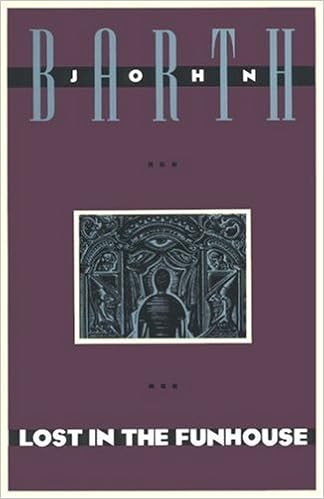
Here's what I liked about Somebody Sailor, as I recall: Barth's musings on middle-class life. There was, of course, a whole other plot involving Sinbad that becomes mixed in with the work, and while somewhat interesting, it was less compelling to me than the realist fiction of everyday life.
Something similar happened with this book for me. I was drawn most to the stories about Ambrose and his family. One explained how Ambrose got his name. One involved Ambrose being locked out of his brother Peter and Peter's friends' "club," in which the older kids discover a few things about sex. And the last involved Ambrose going to an amusement park. Each had some metafictional musings, as does the collection as a whole, but they remained subjugated to the purposes of the story as a whole. Such is not as much the case with the other stories, and as a result, my interest often waned before getting far into them.
Here's a rundown of some of the devices included: there's a story ("Night-Sea Journey") of a life that is essentially the tale of a sperm crossing crossing to its egg (or so I read from a secondary source--the tale could be easily read as one of a person swimming for life). There's a story telling the story of itself ("Autobiography"), which proves hardly as interesting as the conceit sounds. Other stories recount, in varying form, Greek legends--one discovering how to write as story, one exploring stories within stories (the techniques of "Menelaiad" is fascinating, as we get to a point where there are seven quotes within quotes, but the story itself hardly kept my attention).
The one exception to these other stories that really intrigued me was "Life-Story," which told of a writer trying to write the story that we readers are currently reading. All the conflict and crisis occurs right in there, as we witness the write dissatisfied with his work trying desperately to bring a decent story into being.
Friday, November 6, 2015
On "Cocktail Hour" by Kate Braverman (6379 words) ****
Bernie Roth returns from finding out that he is no longer needed at the company he works at and once owned to find that his wife is leaving him, and neither his son nor his daughter are the people he thought they were. In fact, this whole story revolves around the ways in which things are often not what they seem--we are all actors playing our parts. I'm reminded a bit of the stories other men have told me who have lost wives to divorce, often without any real warning. They didn't fight, they say, but the woman one day said that she is not who she was pretending to be all these years. How much do we give up of ourselves to please others? And what are the consequences when we stop? You can read the story at her website here.
On "Lithium for Medea" by Kate Braverman ****
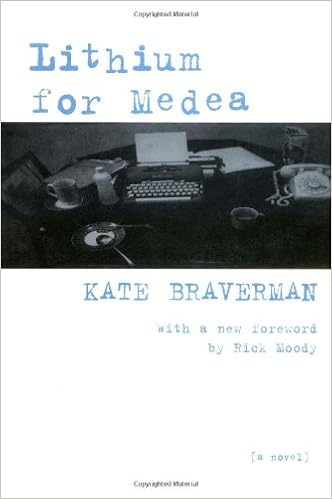
I'm also a bit taken aback by what I was writing at the time, which seems in many ways not unlike this first novel of Braverman's--a tale of family troubles with a dying mom (instead of dad). I feel as if I was probably conjuring Braverman while in her class, though I had not read this book. And I can see also how Braverman's ideas about writing come through in this work. You write good sentences and then you string a plot in afterward--you write the air, and then put a net on it. That seemed true hear. There was lots of air, lots of little chunks of things, that somehow got wrapped into this plot. Such makes for a work in which plot is not a centerpiece. We're not dying to know whether dad will live so much as to know what the next turn of phrase will be. That's why one reads Braverman--for the poetry.
And here, the language, of course, is lovely, as Braverman's language usually is. She makes metaphors seem so effortless and natural. But also what I was struck by with this text is how she uses the short sentence. The sentences are much shorter than I would expect, than I remember, for something so full of poetic language. It's as if she mixes her Hemingway with her Nabokov, and it is wonderful.
Sunday, November 1, 2015
On "Just Fine" by Bill Roorbach (1333 words) ***
This story has a great hook in its first line. And that's often enough to keep me reading on. "Jeremy Kellog came home with a railroad spike protruding from his head." What follows is an absurd commentary on parents and children and the inability for the two to understand one another. Read the story here at SixPenny.
Tuesday, October 27, 2015
On "Labyrinth" by Amelia Gray (2026 words) ****
It's been a while since I featured an Amelia Gray story. Sometimes I check out her tweets, which are almost always amusing (one critic even claims they're better than her stories). And she's come quite a ways since I first came across her work online: two short story collections, then a novel from a major publisher, then another novel. And now this: a story in the New Yorker, the cream of the cream. Congratulations! This one features Gray's typical fascination with the absurd, though it's set in a mundane location, one that when we think about it, really is rather absurd: a corn maze. Only this one isn't just a maze--it's a labyrinth, full of the threat of evil just around the bend (again, another typical element in Gray's stories, as if extraordinary trouble lies within the ordinary). Are you hero enough to follow it through? Jim is. Try it here at the New Yorker.
Thursday, October 22, 2015
On "The Babysitter" by Robert Coover *****
This story, which I read my freshman year of college, blew me away then and still does to this day. I didn't read it for a class. I read it because it was in my textbook for a class, and I read the first line and couldn't stop. I've read other Robert Coover, and none of it compares. This is his climax.
Just a short time after that first read, the story would be adapted into a movie, which I eventually watched and was a shade disappointed in. It's not really a story that lends itself to being adapted. It has no straight through-line in terms of plot, and at the time I first read it, my goal was to try to fit all the disparate pieces together. But of course, Coover isn't intending this. This story is everyone's idea of a babysitter--and so she is sexy, mean, a threat, a nice girl, and much more all at the same time. As we read, plots come into being, some disappearing, others merging into others. It's a world of alternate worlds. If you haven't read this masterpiece, you can find it online here.
Just a short time after that first read, the story would be adapted into a movie, which I eventually watched and was a shade disappointed in. It's not really a story that lends itself to being adapted. It has no straight through-line in terms of plot, and at the time I first read it, my goal was to try to fit all the disparate pieces together. But of course, Coover isn't intending this. This story is everyone's idea of a babysitter--and so she is sexy, mean, a threat, a nice girl, and much more all at the same time. As we read, plots come into being, some disappearing, others merging into others. It's a world of alternate worlds. If you haven't read this masterpiece, you can find it online here.
On "Pricksongs and Descants" by Robert Coover ***
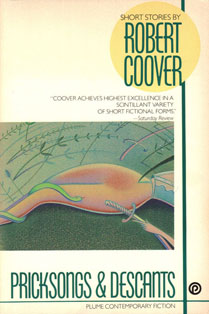
Unfortunately that novel got lost in its strangeness, becoming so inordinately weird that I lost interest about two-thirds of the way through (though I did finish it). I didn't return to Coover again.
Until now. And I wish I could say that I was mistaken in failing to read Coover for all these years. I can see how his work might have appealed slightly more in my early twenties, but I could also see myself not being that much more moved. That isn't to say I was not interested in his techniques--and in fact I still find those fascinating. Long before I had a computer or before the Internet was a widely used public utility, Coover was talking about the use of hypertext in fiction. I thought the ideas intriguing, but I didn't quite know how they would work or what they meant, not having the technology to refer to. The article, for those interested, is available here at the New York Times.
However, this Coover book is, as it is probably meant to be, deliberately alienating in many places, and I was left as if I were watching a showman, but in doing so, the showman fails to be a showman because I continue to see him as such throughout.
The stories in this collection are very much self-conscious. They are, many of them, a rerendering of fairy tales. They consider the process of storytelling itself, how we come to create narratives and what that means. They are also very male-centric stories, focusing often on sex and the female form. But the book is called Pricksongs, so what should be expected? Perhaps, Coover is intimating the sexual desire and story go hand in hand. Given how much best-selling fiction is romance or erotica, that's probably true.
The book opens with a prologue that makes the tie-in to fairy tales explicit. From there, the collection moves to a story called "The Magic Poker," which might qualify as my second-most favorite of the book (perhaps, "The Elevator" could also take the position). Coover is explicit here in saying the story is a story, telling us that he is the author and that he is about to introduce a character or that he regrets introducing a character because he seems to have little to do with the story, and so on. Vaguely, it involves two sisters who find a magic poker--one attracted to it, one repulsed; one who turns it into a prince and one who does not. The poker stands in for the frog the way you might expect the male anatomy to stand in for the prince here.
"Seven Exemplary Tales" features a prologue of its own and seven very short stories--some of them again, retellings of famous other stories. "The Elevator" discusses a man who plots revenge for constantly being accused of flatulence, when in fact another man is the one responsible. As with "The Babysitter" it ends up including several plotlines of possibility--sex with the woman who runs the elevator, revenge, the elevator dropping everyone to their deaths, being let off on the wrong floor or at a floor from which there is no return, and so on. "Quenby and Ola, Swede and Carl" recounts the tale of a family who lives in a touristy fishing area and the man who comes to fish with them, told as per usual with Coover, out of order and with seeming conflicts in terms of what actually happens. "A Pedestrian Accident" focuses on a man who is hit by a truck but is told as a kind of farce.
Another theme of this Coover book is performance. "Romance of the Thin Man and Fat Lady" recounts circus performers, for instance. And the final story in the collection involves a magician, acting as a kind of epilogue for the collection, one in which the magician can perform some great feats but in which he will inevitably disappoint, as indeed, the collection as a whole seems to do.
Saturday, October 17, 2015
On "Dead Reckoning" by Vincent Scarpa (5861 words) ***
Bereft of family and job, Frank is looking for something to console him, for some kind of meaning to interrupt his life again. Frank is a firefighter who has the fire turn against him, whose way of life has become his means of death. And it is only in consoling others--saving others--again that he has any chance to live. The question is how he'll do that. Read the story here at Swarm Lit.
Monday, October 12, 2015
On "On the Way to the Killing Spree the Shooter Stops for Pizza" by Tom McAllister (2401 words) ***
McAllister imagines what goes on in the head of a mass murderer before the actual incident. As he notes, no one really knows or can figure it out. And in this world, even McAllister's sinister young man isn't all that deep thinking. Depressed, bored, full of feelings that things don't mean much, he opts to become one of the slayers before becoming one of the slayed. Read the story here at Sundog.
Subscribe to:
Posts (Atom)

 Posts
Posts


