Wednesday, February 22, 2017
On "The Randomness of Love" by Xujun Eberlein (5659 words) ****
There is a freedom that single people have that is not entirely understood until a person is married. A single woman or man sometimes can hang out with a set of married men, but place the person with just one man or woman, the situation suddenly has an element of danger. The married person is on guard. It is this guard that Eberlein explores in this story and the way in which lust and love can spring from inconvenient places. Read the story here at Storyglossia.


On "Culture Crash" by Scott Timberg *****
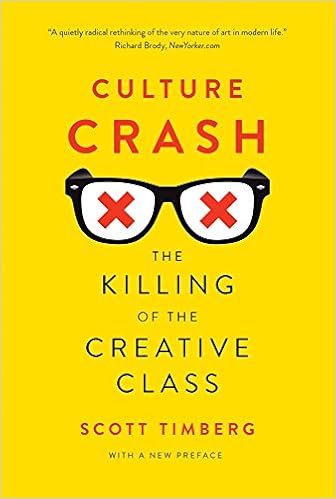
I find Timberg's basic point to be annoying, anxiety creating, sad, and enthralling. The annoying part comes from the fact that I feel as if Timberg is playing the role of the curmudgeonly artist. A former journalist who is watching the death of newspaper reporting as we know it, he mourns for his job and the loss of professional news journalism. We are losing something in that, that is for certain, something that print newspapers did provide, and it is to be mourned, and in some ways it is alarming.
But technologies change, and so too do jobs. We don't need bookstore clerks in the numbers we once did or music producers or publishers. Timberg would say that these folks are what enabled the creative culture to exist. But I would say that on another level these hangers-on were also parasites of a sort. Still striving to become known for their art or unable to ever become known, they hang on at the edge of the scene, making a pittance to survive on because they love it, or conversely they become very successful and help to promote a set of artists they love, making larger amounts of money (instead of small amounts of money) off of them, much larger amounts than the artists themselves. Now, many of those art-supporting jobs are going away. But were those jobs necessary for the artist? I am reminded of something I read about how copyright first came into being not as much to protect authors (sure, that's the noble reason we always give) but to protect publishers. It was the publishers who took the financial risk but also who made most of the money. And I am reminded of how technological change brings about societal change--just as keypunch operators of yesteryear aren't needed today, so too some of the creative class jobs of today won't be needed tomorrow. But the world will go on, and art will still be made--just differently. (The idea that one makes money off someone else's art seems to me to be something somewhat odd anyway--something that really hasn't existed except maybe in the past two hundred years. Other models existed and worked: artists worked for patrons in the Renaissance times, for example.)
But I am admittedly part of the hanger-on class, and the idea that my kind of work is going away is also a source of anxiety. As it becomes harder and harder to make a living publishing books, it seems certain that the job of editor is going to become less easy to come by. I hope that I can hang on long enough to get to retirement before the whole business model collapses, or (better) that we can figure out a new business model that works better for the new Internet age. At one time, I worked in bookstore retail. Now, that kind of work too has become much harder to come by, and the idea of one day returning to bookstore work as a retiree, as I once thought I might, seems fanciful. I mourn the loss of these things just as Timberg does. And I mourn the jobs I like and liked and wonder what would I do if . . . I'm reminded of the father of a classmate of mine who made big bucks as an engineer but whose job came to an end with the Cold War's end and who because of his age and the relatively narrow field of engineering he'd been in for so long was unable to find new work; luckily, he knew a bit about cars and was able to get by as a mechanic for a while until retirement a couple decades later ("get by" also being an operative and important term here). Me? I don't know what I'd do. Our society has become one where any career one pursues seems bound to become outdated within a decade, where one has to constantly be returning to school (and taking out the attendant loans) just to keep a job, and where one is bound eventually to become defunct, as happened near the end of the Cold War to another man my father's age, who returned to school to learn a specific computer program for which jobs were plentiful--but by the time he graduated with his certificate a year later, the market was flooded with such people and no job was forthcoming.
And that of course is also why the book is enthralling, that concern with change and art. Timberg begins his main text by looking at scenes that worked for a time, how they came to be and why, and what made them special--the poetry scene in Boston, the art scene in Los Angeles, and the music scene in Austin. Boston poets could work jobs as teachers but also at publishers and other small venues; living was relatively cheap. However, as big publications open to poetry became few, most poets moved wholly into the academy. Los Angeles had no real art scene until the pop art of the 1960s and 1970s. Then, a set of artists happened to move to town with an aesthetic and a gallery or two opened that fit with that aesthetic, and for a short while the place burgeoned, with more artists and more galleries and more and more. However, a lack of museum space and other supporting materials led artists eventually to leave, and the art scene would go into hiatus until the 1990s when more of that infrastructure was present. Austin would become the mecca for alt-country, in part because Willie Nelson would reside there. As rejected musicians found a home in this cheap city, and someone else started a music venue for them, a scene developed that would eventually attract out-of-town talent. More venues, more artists attracted yet more venues and artists--it is a upward spiral when working correctly.
Each city had relatively low costs of living at the time and jobs that fit well for the creative professions and for those trying to do creative work. Hollywood provided day jobs, or the Ivy Leagues did, or government did. In each place, a college was nearby, allowing young people to take part in the scene and to make up a large portion of its audience. And finally, institutions were essential to keeping the scene going.
Next, he looks at where those jobs are going or have gone. He begins with retail clerks at media stores (bookstores, music stores, and video rental stores). Fewer of these are around. They were founts of knowledge, but now even that knowledge is something that is something of an algorhythm on a computer database in terms of getting recommendations. It IS sad. I miss those stores too. And as Timberg notes, they really were/are the life of a city--where people often go/went to hang out and to meet similar thinkers. Now, what's left are bars and coffeeshops. I miss the large big-box music stores, as well as the smaller stores (in Athens a number of indies still exist, luckily, though they mostly sell vinyl now). I miss going to a video store and scanning the titles--sometimes I wouldn't even rent. Barring illegal downloads, such stores, if they're good, are often the only place to find obscure or older films. Now, only one such store is left here in town, and I consider us blessed. When I visited Boston a couple of years ago, it was bookstores that I most often dropped into--and I was reminded of how such stores used to populate other towns but no longer do (where I grew up, only Vroman's remains of new bookstores--and that includes chains; and where used bookstores once lived in every nook and cranny, there might be a sole one left somewhere). I don't visit clothing stores or other retail outlets with the same kind of curiosity and desire to stay. So yes, of course, we lose something in losing these stores and the people who work in them.
Where do creative people go? Well, many of them end up freelancing. Writers and journalists leave staff and become their own employers. The problem? Freelancing rarely pays as well and has no benefits. And as there are fewer and fewer regular gigs, there are more and more freelancers, which means competition is rife and wages depressed. Freelancing is not the panacea that so many business writers like to make of it. Sure, some people hit the big time, but most don't do that well. Timberg uses the example of Kodak, which employed 140,000 people; compare that to Instagram, which employees 13; where do those tens of thousands of others involved with photography go for work? We don't need 140,000 freelancers! And of blogging, which is a favorite example of these freelance cheerleaders. Sure, a few people make thousands off their blog, but most bloggers write for free--and many of those free writers work as hard or as passionately, given the time allowed, as the successful. (In writing of how much of a crapshoot this is, I'm reminded of a publisher's story about how a certain scholarly book that was expected to sell a modest thousand, if that, took off and sold over 80,000 copies because Elon Musk tweeted about it. A lucky break can make all the difference. But this isn't something an artist or freelancer has much control over, no matter how hard he or she works.)
Next, Timberg turns to the indie music scene. As with many of the jobs that he writes about, technology was at first a great aid to such workers. It allowed them to become DIY entrepreneurs, putting out "cheap" CDs and not being reliant on a corporation. But DIY artists generally make substantially less than those signed to labels. And many aren't good entrepreneurs. The benefit of labels (and publishers) was that artists could be free to just do art--they didn't have to do as much self-promotion. (In this sense, the industry that supports the arts, I suppose, is actually useful--not just a parasitic branch living off the work of others but rather letting those others focus on the work they want to do and taking over the parts that they aren't interested in or good at.) But in our new culture, the winners are few, and the rest of the artists and workers are left with crumbs. The entire economy, from manufacturing and now down to the arts, is based around a few real successes (the 1%) and a whole bunch of nonsuccesses. There isn't much in the way of middle ground. Some statistics were sobering: In 1982, 26 percent of concert revenue went to the top 1 percent of performers; 2003, 56 percent. And 90 percent goes to the top 5 percent. Or this statistic: if it takes one thousand units of sales to break even on a record, only 4,700 of the 75,000 records produced in 2010 did so (compare that to 2005 when 8,000 of 37,000 broke even.) Or this: One tech-savvy singer with 2 million YouTube views and 400,000 Spotify streams managed to make a whopping $3,000 of her recorded music in one year. There ain't much money in streaming even for those who do it well.
The issue is not wholly that record companies have gone belly-up and everything is pirated, though that certainly hasn't helped. The issue is that government has let big business dictate the law and the terms, which in turn has hurt artists. For one, there's the monopolization of radio stations by Clear Channel, made possible by a deregulation act of Congress in the 1990s. Now, most "local" radio stations are actually just streams from a centralized network (much like most "local" newspapers are now streams from a centralized news service). There's little space for newcomers (though this is kind of a return to radio of the early 1970s, back when major labels dictated a lot of what got played, before indie rock and small labels became a phenomenon in the 1980s and 1990s). For two, if record companies were both the parasites living off artists and the enablers of artists, today's parasites and enablers are tech companies, and the tech companies pay a whole lot less, if anything at all. The artists may be able to more easily release materials into distribution via these new technological avenues, but unlike radio, these avenues don't really encourage people to run out and buy the album if they like it: they can just stream the song again, for less than a penny. Hence, virtually all the profits go to the tech companies. This whole discussion made me really sad and a little angry--but even now I keep thinking about the origins of the copyright law, and it seems to me in many ways that things never really change and that what Timberg is bemoaning is something that's pretty much always been true, though to differing degrees by decade.
Timberg next turns his attention to architecture, where the unemployment rate among professionals was around 9 percent at the time he was writing, and for those newly out of college around 13 percent. Pay is not good either--and never really was: beginning teacher salaries that stay at beginning teacher salaries. But this chapter, which also discusses graphic designers, is really about how the recession killed off work for many such professionals and how the recovery has not brought that work back at the same price point. Everyone is struggling to find work, and when they do, it is for less pay. I feel so blessed to have had a job during the Great Recession, but it doesn't make me any less anxious to know there are so many out there that were so negatively affected.
Another chapter focuses on the lack of outcry about the loss of these creative jobs. I'm not sure I completely agree here. Sure, we hear more about the loss of manufacturing jobs (that's what Trump based much of his campaign on), but it's not like the death of journalism or the killing off of physical bookstores or the pittance that Spotify pays (as denoted by Taylor Swift's refusal to have her music on it) is without reporting. I know the these various professions are hurting. Granted, as Timberg notes, some people do take the loss of such professions less seriously. When a chamber orchestra goes belly up, some people will say that if the orchestra couldn't support an audience, then we don't need it. On some level, though, they're right--there has to be a cutoff at some point. We can't just keep supporting something because it's always just been there. On another level, though, Timberg makes a great point. Some of these arts were never self-supporting--they've always depended on patrons, going back centuries. To expect all arts to support themselves is to create a culture that cares solely about quantity, about money. And there is a loss in that regard, for some work is valuable not just for its own sake but for what it brings to our culture in the long term, in the form of ideas that come to have bearing much later than when they first came into being. I think of how things work in publishing and how, for example, a publisher might put out a book about some obscure terrorist organization that only a couple hundred people have an interest in reading; a decade goes by, and suddenly the terrorist organization makes a big splash and now folks are scrambling for information about it--that's why we shouldn't just publish works about PewDiePie and the Kardashians or about what's hot now. That obscure research has value--sometimes we don't know how much value until decades later. If we are concerned about bottom line only, then those kind of works will never come to be, and when the need for that work arises, we'll be left blindsided until someone who starts from scratch can come up with it in a hurry, and that someone might well not have the perspective granted to one who is not writing at the heat of the moment, when we tend to view things with hysteria.
My concern with Timberg's argument is that there's so much focus on what we're losing, on the world that was. But as I noted earlier, technologies change--and that is true in the arts the same as it is true in manufacturing. We have to adapt. The issue as I see it isn't to fight against such progress but to find new ways, new models, that help us further the arts and that provide jobs for those pushed out of their old jobs. Timberg notes that only the rich will be left with the ability to live off their art. I would counter that if art really does become democratized so that everyone can do it, then everyone who wants to will be doing it (though in some cases the cost of technology might act as a barrier--even as it did in the past: that's why only the rich back then could fund a movie or by extension make one, employing various others in the process); the rich won't be living off their art--they'll be sponsoring it or doing it as a hobby, the same as other poorer people will be doing it as a hobby, assuming they can afford the technological means. The issue is really one of control over the means of production (and distribution). As human capital becomes cheaper and less necessary, it is only those at the top, with the ability to move culture around, that make money off the arts--or manufacturing or whatever task has to be done. That's the issue, that technology arguably is getting to a place where our productivity is increasing to the extent that workers no longer have enough to do in a single job to be able to make a living at it. We have to figure out ways to make up for these increases in productivity. Shorten the work week, for example, but somehow insist that yearly wages for that work remain the comparable (it's been done--as work weeks shrunk to forty hours from the fifty or sixty that were typical a century earlier). Or find some means by which people can accumulate even more. If I as a printer can do the work that it used to take two people to do, for example, either my sales need to double so that I can keep my employee or I need to cut both our hours by half while keeping the price for our product the same.
In some ways, the creative arts really are the future. How do we make them pay, or how do we pay for them fairly, is the question. As the professions surrounding those arts become defunct--typists aren't as necessary because writers can edit and draft on computer and don't have to type everything over again, book reviewers aren't as necessary because any enthusiast with a blog now has a platform from which to dessiminate their enthusiasm for a work, and so on)--it is the task of conceiving the actual art that becomes the real source from which machines derive their part of the labor. (This is not to say that I don't respect a professional and learned book reviewer, who usually has more and better things to say.) At this point, I don't see satisfactory books being written by computer or movies being made by software--the machines help speed the process, but the ideas still come from us human beings. In a future where machines do almost everything except come up with the creative idea--the seed of the art--it is those who have the seed who should be paid. I guess the issue here is that only so many ideas catch on. Ask any musician or writer. One can labor for years, producing new work, with little attention from the public; then, one day one song or one book somehow resonates with others, and a career is born (or sometimes not, as any one-hit wonder can attest). That's no way to guarantee a living wage for vast numbers of people.
The same is true in manufacturing to some extent (only a few ideas catch on and become things people want to buy). Three-D printing will soon make it possible for anyone (with enough money to buy such a machine, which itself is likely to drop in price) to manufacture a good in his or her home. The real work then becomes not the manufacture (or even to some extent the heavy details of the design, which could also be done via computers) but the initial spark of the idea. But this raises another question, beyond distributing income when only a handful of ideas catch on: how does one get paid for even a good idea? Patents and copyright were the government's way to guarantee such payment. However, computer technology makes sharing and piracy super easy, where once costs of entering a market were what kept a single person from stealing (and it's a lot easier and efficient to go after someone making thousands of copies illegally than to go after one person who makes a single copy in his/her garage multiplied by thousands). This is another place where new models are needed--to guarantee a fair wage for the creators.
This brings us to newspapers, the subject of one of the longer chapters in Timberg's book--and a sad one to read. Timberg notes rightly how newspapers are the voice and soul of a community--or were. Now, the Internet siphons off most of the profits. Internet advertising pays pennies to the dollar against print (about 6 percent by my reckoning), and as time goes on, aggregators are getting more and more of the hits rather than the ones actually providing the information, meaning the revenue ends up going to some entity that merely copies stories rather than actually produces it itself. The top ten sites, Timberg notes, accounted for 31 percent of all Web traffic in 2001; by 2010, they accounted for 75 percent. The proliferation of sites has also meant a breakdown in objective sources (which is really a return to the newspapers of the 1800s, which often took very clear political stances to appeal to a narrow band of readers rather than, as became common in the twentieth century, trying to avoid clear stances by being neutral so as to avoid offending anyone and thus gain market share). That means that we tend to read what we already agree with--even if it's fabricated. You know, fake news, which became an issue in this past election. One statistic that made me laugh: 29 percent of Republicans in Louisiana blame Obama for the lousy Hurricane Katrina response in 2005, four years before Obama even took office.
However, as Timberg brings to light, the death of newspaper journalism really began before the Internet took hold. It began in the 1990s, as corporations bought up local and family papers in order to turn them into profit-making centers. The papers actually made record profits in the 1990s, even as they began to substantially trim and lay off staff. And instead of investing those profits into the papers themselves, those profits went to Wall Street investors, which meant that papers were not truly prepared for what would happen to them as digital really took hold. Now, often, papers even outsource their local writing to India and the Philippines for pennies per story. As a This American Life episode recounted, the way these stories get written is often via someone grabbing a transcript of a city council meeting and simply writing out a summary. The person doesn't know the people at the meeting, doesn't know the community, doesn't really have anything at stake or know what those stakes are in the local setting. You end up with a sort of factual document without much in the way of substance or proffered understanding. (Timberg's accounts of newspaper layoffs during the high day of profit reminded me of a job I had that was lost to a buyout. We, too, had been making record profits, so it seemed a good time to sell the company to another. Years earlier, before I came on staff, the company had been in big trouble financially and had to lay off a slew of people. It seems like in corporate America, as a worker, you have reason to fear losing your job whether the company is successful or not, as either one can be cause for a layoff. And that's rather frustrating when one works really hard to try to help the company be successful. Instead of sharing in that success, one finds one's self out of a job, while investors up on Wall Street get a nice windfall. At the same time, I own stocks as part of my 401k and want to see a payoff too, so in another way--my very small investor way--I contribute to this system.)
Much of this shift in culture Timberg lays at the feet of cultural creators themselves. As criticism moved into the academic realm, it began to lose sight of its audience and of the questions it once answered. Rather than being concerned about what's good, "good" itself became a loaded concept (based on class and power). Critics began instead to criticize the canon and to uphold the popular. Thus, concerns over obscure, complex, and deeply laden works of writing, music, or film were replaced with more generic concerns over cultural works as a whole--and the more popular, the better. Madonna studies (as in the singer) replaced works about Beethoven or about some obscure blues singer from the 1920s, since the former had more appeal. Works by Tom Clancy had the same gravitas for critical study as works by Herman Melville. And so on. If we can't say any cultural thing has inherent value (beyond popularity--and the money that comes from it), then we can't really argue for keeping the (less popular) arts alive and thriving. It is no wonder that some think colleges should only focus on professions that will make "things"--that is, things that bring money. Timberg raises an interesting point about value here, about how what we value affects how much we're willing to pay for it. But I'm still a bit befuddled by the argument with regard to criticism. How can one say, really, that Madonna's has more or less value than Neil Young's work? Perhaps the death of the critic is problematic insofar as there is a death of expertise that has occurred. Anyone now can claim to know that Stephanie Meyers is a better writer than Mark Twain because there is no gatekeeper to say what has value or not, even though that person may not know a thing about literature or writing. Without an understanding of the history of literature or art or music, one has no framework in which to make such an argument, so it becomes merely a matter of taste. For me, that is the critic's role--to put such works into that cultural framework. So a good critic might value the popular, but he or she knows the full panorama of the art. Value, for me, then becomes a case of how a work speaks to and within context. This is subjective in its own way also. This leaves the door open for someone to argue that Meyers beats Twain--but only in an informed way. It's problematic to me for someone to say that Twilight has no value at all, just because that person doesn't like it. The issue I have with old-school criticism is that it props up a kind of esthete elitism. Whether it's popularity with the masses that is one's guide or popularity with a priesthood of critics, it's still popularity, still taste. I'm not keen on either being the determining factor of what is good.
However, Timberg in his final chapter raises another issue that is concerning: the winner-take-all benefits of our contemporary society. He brings out how technology has enabled people to reach much broader audiences but at the same time stripped our local communities of local art. Live performances die in favor of recorded ones. We need only look at the way in which movies displaced live theater. With that also came financial disparities: without film, actors working locally might make similar amounts to other people; movie actors--successful ones, that is--make multiple hundreds more than the viewers watching them, while other actors have to have day jobs. We see this effect in almost every art. Best-seller lists, for example, used to have much more diversity, but now, because of discounting, the effect of being a best-seller is multiplied. A stat he quotes: five of 1978's best-sellers were from authors who had had top-twenty best-sellers in the past five years; in 1990, that number was nine of the top ten. Indeed, I noticed this difference in creating my World War II best-seller reading list based on Publishers Weekly listings. The list was very diverse, but when you get to the 1990s, something like eight of the ten number-one best-selling novels for each year over the decade were by John Grisham. Winner-take-all indeed. Music has similar issues. And movies, where cheap technology has made making movies on a shoestring much easier, have moved more and more toward big-budget movies in terms of production by major studios so that more revenue can be made and the films can be distributed overseas. So small film-makers have seen their product lose out on distribution. About the only "art" that seems to be newly thriving, Timberg says, is cooking, which he says isn't an art, something I might disagree with him on on several levels. It has the advantage of having to be made locally, I suppose, but then one could also argue that chain restaurants do away with middling success in this arena as well--if you want to argue that point. And that gets back to how what we have today in the arts is in some sense a matter of how you see it. Back in 1978, for example, fewer people had access to publication than they do today, so in a sense, authors are better off; on the other hand, most of those authors don't make enough to support themselves. Same would go for music and musicians, or movie makers. Distribution is actually easier today than it was in the past (unlike what Timberg argues), as is production, but getting your work noticed among the glut of available creative work is much more difficult--perhaps because there is so much more of it. I don't know that in this sense "winner-take-all" is a bad thing, if more people have the ability to share, even if fewer can make a living off it.
Where winner-take-all is scary is when it moves into general economic trends, which Timberg certainly references. And technology certainly has its hand in this, as evidenced by his example of an actor. In 1965, for example, Timberg notes, the average CEO earned twenty times that of his employees; today, the average is 380 times more. Since the recession of 2008, 95 percent of the economies' gains have gone to the top 1 percent, and more then 60 percent to the top 0.1 percent. The lower 40 percent actually saw wages go down by 6 percent in real terms. In the sense that technology favors a few, distant though they may be, over a wider diversity of local talent, such trends are very disturbing. (Think of how a local musician might have more opportunities for paid work from live performances if recorded music from a number 1 star produced on the other side of the country wasn't available to take his or her place--at dance parties, weddings, clubs, restaurants, etc.) The middle class is slowly dying, with more and more of the wealth going to those who already have it. And yet, what stands out in most of our minds are the breakthrough stars--the everyman folks who somehow manage to make it big, the Jeremy Lin basketball players who show us that if we're just given a chance, we could be a star too. But only a few will be stars--and only a few are even given such a chance.
In some ways, Timberg's angst with regard to the last thought reminds me a bit of growing up in Los Angeles, the home of the Hollywood dream. There is this feeling that if you fail to make it big (at something), you're a loser. And everyone is trying to get into that winning slot. It can be depressing. So while being around so much art in L.A. was exhilirating growing up, in other ways getting out of that area and away from that mindset was a boon for me.
In the conclusion, Timberg pleas for the ways in which the arts actually improve society as a whole and should be valued for themselves. This is one of the issues that grad students I went to school with wrestled with--twenty years ago. What exactly is the value of the arts? And how do we decipher good from bad art? Unfortunately, while much of what Timberg has to say in his book provides good cause to be alarmed, this final section for me ends up not wringing true. Timberg essentially idealizes the twentieth century, especially from about 1920 to 1980. But I'm not so inclined to believe that the so-called creative artists had it so good then either or that it is it so much worse now. Earlier this evening I watched a brilliant film called Primer. It was shot for seven thousand dollars. It made maybe half a million. The film could not and would not have been made in the period Timberg writes about. Sure, studios didn't insist on making big budget knockouts or only distributing them, but complex films by novices still weren't likely to get made--and back then, technological costs would have stopped an indie filmmaker from even being able to do so. Great art is still happening. And while it's hard now to make a living as a musician, it was hard then to make it as a musician as well, when if you weren't lucky enough to get a recording company to back you, you were mostly out of luck or were going to spend a bundle to make and release the work yourself. Timberg looks at those who succeeded then and paints that as being typical. Me, I'm not so sure. There's a reason poets and writers ended up in the academy. The creative arts have always been jobs that are risky financial ventures for their purveyors.
Perhaps the bigger question is how is it best for our society to show the value of art? Should money--whether big money or simply mediocre money that lets you survive--have anything to do with art, and if so, to what extent? The real issues of life are not those of economics. Money is what allows us to survive. If art somehow can be squeezed away from concerns about getting by or getting rich, then it will be that much deeper and richer for it. And arguably, much as is happening in the foodie culture that has found popularity of late, it will be local--made and consumed by our friends and neighbors. And it will be made because someone has passion, much as Timberg had to write this book, a book that gave me much to think about and respond to.
Saturday, February 11, 2017
On "The Janitor in Space" by Amber Sparks (1551 words) ****
This story is typical of the pieces that first drew me to Sparks's work--that ability to make me see things fresh. Here, one of the most mundane of jobs is placed into what we usually think of as one of the most exciting. The janitor cleans up after dirty astronauts in zero gravity, ruminating on some bad things she's running from and on the beauty of loneliness. It isn't so much a full story (some of Sparks's work is less story and more oddball intrigue) as a set of thoughts. Read it here at American Short Fiction.
On "The Unfinished World" by Amber Sparks ***

That weirdness is present from the start in "The Janitor in Space," which I'll save discussion for in the next post.
"The Lizzie Borden Jazz Babies" is about two sisters whose desired lifestyle is curtailed by their parents, whom they think of doing a Lizzie on. But it's really about how siblings grown apart from one another as they age--and together.
"The Cemetery of Lost Faces" is a more traditional story insofar as it's more filled out, but narratively it isn't--chopping up space time to tell us about death and murder: of animals and relatives. Taxidermy plays a large role.
"The Logic of a Loaded Heart" performs a difficult trick. It's a story in the form of word problems, about a kid with problems, a man with problems. The next story plays a trick to: "Thirteen Ways of Destroying a Painting" is a science fiction piece. A woman travels back in time to destroy a painting she hates, but to no avail. Each time she returns to the future, the painting is still there--sometimes in a slightly different from, but still present. I like how the old kill a butterfly idea gets turned on its head here.
"Lancelot in the Lost Places of the World" didn't really grab me, nor did the next two stories. The first, I'll save for another time, but the second, "Birds with Teeth," is about anthropologists and is available online here at the Collagist.
In many ways, Sparks's stories at times seem like exercises--challenges she has managed to meet. Such is the case with "For These Humans Who Cannot Fly," which is about a widower who build little death houses for people. The story, however, begins with a quote from Jan Bondeson about some rather mysterious German structures. It's as if Sparks is answering the mystery here.
"Take Your Daughter to the Slaughter" introduces a set of stories that seem based around fairy tales and fantasy. This particular one focuses on a werewolf hunt, told like any other tale of girls going hunting with dad's. However, the fact that these are other sort of humans makes it rather grizzly. "We Were Holy Once" is a piece of lyricism that didn't speak much to me, but it spoke to the editors of Granta here.
"La Belle de Nuit, La Belle de Jour" reads like a retelling of Hans Christian Andersen tale. This one's about a family whose father marries a witch. The witch fills the daughter's mouth with stinging insects so that it is hard for her to speak. The sons are turned into birds. The daughter sews sweaters with magical powers to break the spell.
"The Fires of Western Heaven" is a lyrical piece about the World War I era, a setting that will be repeated in the novella that ends the collection. "The Process of Human Decay" performs an interesting trick by focusing the narration from the point of view of a cadaver, a dead person, as it dies, bloats, is buried, and learns of various things that are not done after death as it would wish.
The title story, a novella, follows two major storylines, one of Set and one of Inge, until of course they meet and fall in love. Both have lost parents of a sort. Inge grows up in a dilapidated estate with a man named Albert. Set, upon whom the narrative seems to focus more and which proves to be the more interesting side of the story, grows up among a set of siblings--one an explorer, one a collector of bobbles, one a slayer of conventions. Amid this family, Set begins to suspect that he is in some way not really alive, not really flesh and blood, in the same was as others. Obviously, he ends up in Hollywood, a filmmaker and playboy. Inge becomes an adventurer, a world-traveling photographer. Sparks first came to my attention as a writer of the quirky, but in this collection, it's her longer pieces such as this one that appeal most, where the stories might not be as quirky but where they maintain a lyricism that is flushed out and beautiful.
The closing story is part of that lyricism, about "The Sleepers," whose dreams never come to be. It can be read here at Necessary Fiction. Sparks remains a writer I will keep an eye on. I expect a novel down the road.
Wednesday, February 1, 2017
On "Welcome, Lost Dogs" by Vanessa Blakeslee (6740 words) ***
One of the longer stories from Blakeslee's Train Shots collection, this one focuses on a woman's search for her lost/stolen dogs. Like many stories about third-world environments, the locals aren't exactly trustworthy. Read the story here at Southern Review.
On "Judaism--Religion of Moses or of Men?" by Philip Neal ****
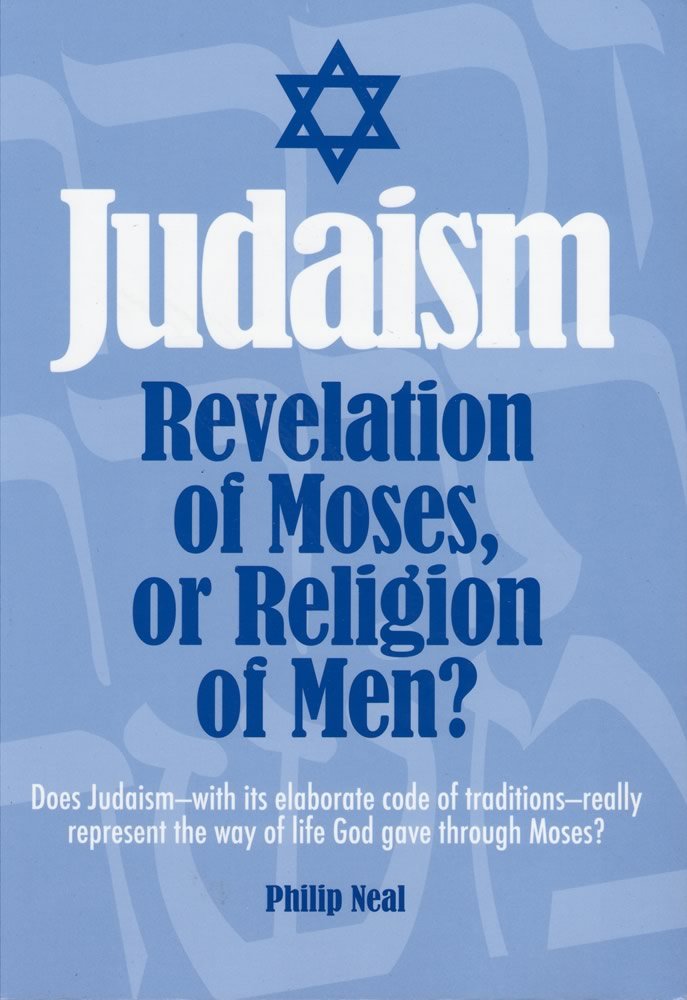
But the historical information here is really good--or at least seems to be. Neal has a tendency to quote other scholars as proof rather than returning to primary texts, which lends a certain dubiousness to some claims (but I find this is the case with scholars who dismiss the New Testament record as well).
The first chapter focuses on religion in the first century. He notes that the average Jew didn't pay much attention to religious issues, so much of the controversy between various sects was not a mainstream concern. Of those sects, the Pharisees were the most popular among the common people. They believed heavily in adherence to the so-called oral law. They came to prominence during the period when Greece took over the Promised Land, as they were the main proponents behind separating from Hellenistic influence. Indeed, Pharisee in itself means separate. In the synagogues where Pharisees held sway, almost any creed was acceptable, leaving much room open for debate and discussion.
The scribes forged a significant set of the Pharisees and held a large amount of influence among them. The scribes were the scholars, the Pharisees their followers. The scribes set out strict interpretations of the law, while the Pharisees were concerned with maintaining purity (or at least the aura of it).
The Sadducees also had some influence (even though it was the Essenes who made up the second largest sect, their influence among common folk was little, given that they lived in separate communities). The Sadducees were the aristocrats, largely of the priestly ranks. They were "moralists" as opposed to separatists. They opposed the oral law. But they abrogated much of the teaching of scripture to the Pharisees and scribes, and come around 66 BC allowed Pharisees onto the Sanhedrin. (Neal seems to side most with the Sadducees, ignoring until much later in his book the fact that they had become largely corrupt and greatly Hellenized, such that their understanding and use of scripture was questionable in its own right.)
The rest of the chapter goes into length with regard to Jesus's condemnation of the Pharisees and gives an explanation as to his statement that the Pharisees sit in Moses's seat. The latter is given in two parts. One is the understanding that I've had, having to do with the reading of the law in the synagogue--when one does that, one is said to be in Moses's seat. But Neal also connects it to Moses's judgment of and decision making regarding Israel (the Beth Din), stating that Jesus in a way recognized the Pharisees' authority over the community here, as they made certain decisions for it. Though the second explanation is compelling, I find the first explanation more consistent with other New Testament statements.
Next, Neal steps back into the history of the lead-up to the first century. He goes back to the time of Judah's exile, explaining how Ezra, as a priest and a scribe, helped to bring back the state's religion as the temple was rebuilt, teaching the people the law. This became particularly important as many Jews no longer knew Hebrew, so they had to rely on translation and interpretation to understand what was being read. In time, after Ezra passed from the scene, the various learned scribes, whose job had been primarily to copy scripture, became the teachers of it, equal in many ways to the priests, who also taught the scriptures. Scribes were seen as a sort of replacement for the prophets, whose time was at an end. As the scribes taught, they began to add interpretations to the scripture, forging a "wall" around the law, so that people would not get even close to disobeying it. This oral law (the wall around the written law) was not written down, however, because it was "secret." Because only the learned scribes knew it, they had power; writing out those laws would have compromised that power, giving all access to understanding.
In the next chapter, Neal recounts how the Jews came to be influenced by the Greeks and how this further changed the Jewish religion. The Greeks set out, within their empire, to spread their culture, even if during the early years of the empire they did not force people to change religions and such. Some elements of Greek thought that were different were an emphasis on individualism (thinking for one's self--different philosophies and views) and logic (whereas Jewish thinking emphasized allegory). These ways of thinking then spread into Judaism, as the ideas that forged the Midrash were transformed into the ideas that formed the Mishnah (although my understanding was that neither of this were written down until several hundred years after Christ, so I'm not sure why there were be a distinction based on this). The explication of the law (and concomitant expansion of the oral law) now went one step further.
Greek culture appealed most especially to the aristocratic class--namely the priests. As such, the priests became Helennized, leaving off much concern about remaining punctilious to the law of God and the sacrificial system as set out in the Scriptures. One might even call them "secularized" in a way. In response to this, a set of conservative Jews looked to uphold the older Jewish ways--the Hasidim. It is from the Hasidim that the Pharisees would spring.
The Greek takeover of the priesthood took real hold, however, when the Greek leaders deposed the Jewish high priest, Onias, probably murdering him, in favor of his brother, Jason. (Onias's son, the legitimate heir to the office, would, as it turns out, flee to Egypt during the time of the Maccabees and set up a second temple, which itself would be destroyed about the same time that Herod's temple in Jerusalem would be destroyed.) But back in Jerusalem, where the true temple was, Jason himself would shortly be replaced with Menelaus, who was not even of the Aaronic line. As such, the legitimacy of high priesthood would from then on become questionable. When the Greek ruler Antiochus Epiphanes outlawed the practice of the Judaic religion--bringing pagan customs into the temple and even sacrificing swine on its altar--the Jews rebelled. A portion of conservative priests called the Hasmoneans opposed the Greek rulers, and with the leadership of the Maccabee family, overthrew them. As the rulership alternated and fighting continued between the Greeks and Jews over the next many years, a compromise was reached, and the Jewish priesthood was restored--but those who returned to power were the Hellenized priestly caste, not the conservative caste. Hungering for power, the Maccabees now compromised with these rulers, and eventually one of these Maccabees, one of these Hasmoneans (not Onias's son), became both the chief priest and the ruler of Judea. The Jewish state was reborn, separate from the Greek state, but the legitimacy of the priesthood had been done a great disservice. The high priestly line of Zadok had been cut off. It was from this priestly, aristocratic caste that the Sadducees derived.
While there were among the priests those who took a sincere interest in upholding and teaching the law, many of them were caught up more in the politics of the day and were thoroughly Hellenized (even inviting Rome in 63 BC into what had become an independent Jewish state in order to settle differences with the Hasidim/Pharisees). Meanwhile, the nonpriestly cast of Hasidim, consisting of scribes and those who would become Pharisees, considered themselves the keepers and upholders of the law, more than the priests had proved to be, though they added to that law their "oral law," the interpretations meant to keep the people ritually pure, separate from Greeks and others, which the Sadducees opposed. Because the aristocratic priests/Sadducees had sided against the commoners when the nation was under Greek rule, commoners trusted the Pharisees more. And Pharisees tended to dismiss the priestly office as less important than individual learning and knowledge (better a learned scholar than an ignorant priest) and saw themselves as the rightful heirs to Mosaic power.
Once the Pharisees were allowed onto the Sanhedrin, the decision-making council of the Jews, they began to gain political power as well. They set up a uniform system of education for Jewish peoples, most especially in the scriptures.
Once Rome took over Palestine at the bequest of these warring factions of Jews, both Sadducees and Pharisees lost much of their political power, becoming merely rival religious entities. Rome then put its own people in power, leaving the Jewish figures, including the high priest, to be mostly figureheads. And while the Sanhedrin, by Jesus's time was controlled narrowly by the Sadducees, the Pharisees, having more popularity among the commoners, generally ruled with regard to what was allowed on the council and often ruled with regard to how certain temple duties were performed (by the Sadducees, who largely did them).
The Pharisees also came to dominate the synagogue, a system of worship that had been set up during the exilic period when there was no temple. The Pharisees came to see the temple as rather unncessary—that the oral law was a kind of temple in its place and that learning was more important. They also set up academies to teach young men the Scriptures and the oral law. The synagogue thus became central to Jewish life, and once the temple was destroyed, the Pharisaic makeover of Judaism was complete. Over time, scribal teachers became rabbis. And as the oral law became more and more complex (and Jews scattered over time and place), the need to write it down for study and preservation increased, such that pen was put to paper around 200 AD as the Mishnah. The Mishnah in essence separated the Jewish people from others for fall time, uniting them even in their scattering. But even this writing was to be adjusted and added to with commentary on it. Whereas earlier oral laws had been commentary on the Scriptures, eventually the commentary began to be about the commentary itself.
The next few chapters focus on “disproving” the oral law, scripturally and otherwise. While the first part of the book was really what I was looking for--history--this second part largely becomes a religious tract. Neal shows how the oral law could not have been transmitted from Moses and how many would agree with that statement (after all, the Talmud is full of commentary about commentary, some in disagreement). The oral law was a progressive creation, responding to time and place, adapting the law as needed (not in itself necessarily a bad thing, I'd think). But in doing this, the sages lay claim to completing the law, whereas the Psalms themselves say the law is already complete. And the law, the Bible shows, was already in place before Moses, so the idea that Moses brought it also raises issues. In trying to spell out every facet of the law, the Jewish sages have failed to see its heart: that the broader point is to love, and applying that intent to the general principles tells us all we need to know about the law. This obsession with each cranny of the law has led to commentary upon commentary such that the Bible itself is almost fully ignored in favor of the commentaries. As such, general laws become abrogated--harder where they need not be and superfluous where it was never intended. Hence, adultery is wrong if it's with a Jew, but if you do the deed with a Gentile's wife, then it doesn't count. But don't dare open a can on the Sabbath, because you're creating a “receptacle” and thus doing work; better to open the can before the Sabbath, but if you much open a can, cut it open at the bottom as well so that it can't be a receptacle and thus doesn't count as work. (Work is defined as a creative act in Judaic sages' views, wherein the smallest acts count.) Rabbis become more powerful than God in defining right and wrong, and the Talmud becomes an authority that people must believe or face condemnation. Gentiles are looked down on and even dismissed as subhuman, unworthy of knowledge (though curiously the Pharisees were a missionary-type group, so this seems something of a contradiction).
One interesting historical vignette, Neal recounts, has to do with the removal of Herod Archelaus from power. The Roman removal of that Herod essentially placed it in charge of Jewish law enforcement. So while the Jews could exact minor forms of punishment, control over capital punishment transferred into Roman hands. (Other reading of mine on this topic tended to see the holders of such power at this time as being uncertain, calling into question why the Sanhedrin even went to Pilate to put Jesus to death. Such sources also call into question that idea that the Jews were looking for a Messiah--or that such an idea even really existed at the time, whereas Neal see the Pharisees and scribes as very much interested in the question but so consumed by petty internal struggles for power and conceited in their own wisdom that they could not accept or see what the masses saw.)
The main text of the book ends with a discussion of the "church" versus Judaism, showing how the church does not fully replace the Jewish people as God's chosen but rather is to act as a means to bring about eventual Jewish understanding, wherein God grafts the Jewish people back in, as Paul denotes in Romans. Neal's discussion, as an exegesis of scripture is quite interesting here. Following this are various appendixes on Jewish law and Christian views of the law and Judaism.
Tuesday, January 31, 2017
On "Angst" by David Eagleman (347 words) ***
Think your life isn't important enough. What if the universe really does revolve around you? Might not be as appealing as one thinks. Read the story here.
On "How Would You Like to Pay?" by Bill Maurer ***

So what are we to take from the idea that people can use their cell phones to transfer money around, for example? In that question is the problem that I have with Maurer's book. He doesn't go much deeper than, Yeah, people can do this. More interesting questions are why such technology hasn't taken off.
Of course, as Maurer points out, it has--in Kenya. There, there's a company call M-Pesa. It functions as people's banks and Western Union resources in a nation where people in many places lack access to formal banking facilities. That's, of course, why it took off there. In other nations where we'd expect such a service to have more of a draw, people have access to banks and to credit cards, both of which ironically are sort of older technologies (though plastic has only really been around since the 1970s apparently). (But that still doesn't quite explain why people haven't switched over, which would be an intriguing question to try to answer.)
Another interesting idea: That it was only about 150 years ago that money was monopolized by the state. Before that, money was often issued by various vendors: railroads, banks, stores. Such money helped make transferring goods among/to people easier. But something that Maurer doesn't address is how American money, coming into its monopoly state near the beginning of the 1900s would seem to coincide somewhat closely (by two decades) with the passage of the Sixteenth Amendment, that is, income tax--an interesting coincidence that I think would be worth treating out.
With the shift in technology, specialized, nonstate money is making a bit of a comeback. We're talking not just Bitcoin but also coupons, gift cards, and discount tokens. And we're most especially talking about cell phones, for while systems like M-Pesa offer formalized ways to transfer money via phone, more informal means also exist. For example, if I buy a top-up card for twenty dollars, send the code to someone too far away for me to drive to, and then tell them to buy a book for my daughter at college there. Barter in a way has taken place, but also the top-up card has stood in place of currency. The person gets minutes but spends cash to buy a book. This usage is what has freed up people in developing countries to "bank" in a way in minutes, where banks haven't been readily available.
In the end, the author concludes, money is unlike other "technologies" because money is about relationships--how we relate to others and to our world.
One thing I can say of note here is how beautifully the book is designed. It was that--its diminutive size, its color photos, its font, and quirky chapter numbering--that first drew my attention to the work. Then the topic itself seemed like it would be something interesting.
Friday, January 27, 2017
On "Teeny" by Nelly Reifler (2643 words) *****
"Teeny" focuses on a girl who is charged with taking care of the vacationing neighbors' cats--but who for some reason shies away from actually doing it, even as the cats begin to waste away. Read the story here at Failbetter.
On "See Through" by Nelly Reifler ****

"Teeny's" details I'll save for a separate review. It's definitely a story worth reading.
"Baby" tells the story of an extremely smart child who calls into question the mother's reason for living. We get the idea that the baby's philosophical dialogue lines are actually in the mom's head. But such does not stop her from reacting in the most horrible of manners.
"Rascal" revolves around a young man who motorbikes around the country, camping out and meeting new people. The idea seems innocent enough, until the rascal discovers that he can use the knife his mother once gave him to gather goods from other campers. While there may not be maliciousness intended, the rascal's inability to discern what the limits of acceptable behavior are is troubling.
The next three stories take a different turn, focusing on death and disease. “Julian” tells the tale of a boy whose father is dying and whose cousin comes to visit and makes explicit how scary that is. “Memoir” is about a village where the plague or some other disease has broken out and to which people fear to travel. The girl at the center of this tale has some strange sexual proclivities as well, which left me a bit befuddled, that combination of wasting away of doctors and townspeople while she's jumping the bones of random older men. “Splinter” is a more traditional piece, telling of a little girl who manages to get a thorn stuck in her head, while vacationing with her divorced father in Greece. The latter is befuddled as to what to do and angry that her mother has saddled him with the child precisely because of things like this. The stories climax involves a dwarf--not the kind of person one reads about often and certainly not, by the end, in such a matter-of-fact way.
“Upstream” puts the metaphor of the salmon swimming upstream to full use. It recounts the tale of a young boy watching his parents' marriage dissolve as his father continues to have various deliances with his college students. The boy becomes fascinated by monsters but also by fish, a memory of his last family vacation to the Northwest.
“The River and Una” also uses a fish metaphor but not with as much success. This story reminded me a bit of some of my own early or poorer work—melodramatic and full of expected troubles: an absent father, a runaway sister, a mom who can't deal with said sister, fights between them, and then a dying sister who has gone too far (or was pulled/pushed too far).
“North Curve” seemed a great set-up for a story but disappointed me in ending too soon. I wanted to know more about this woman who grows up to work as a prostitute near where the brothel where her father died. “Summer Job” is about a girl who works at a dirty magazine store owned by a relative for the summer and her phone conversations with a boy she's never met.
"Auditor" returns to the writing about the awkward and scary people on the edge, only in this case, the person has actually gone over the edge. The auditor is a woman who dislikes friendly people and who one day can't take it anymore. Her seeming regret for her action suggests that she has perhaps learned to mitigate her tendency to become annoyed.
Finally, the title story revolves around a woman who works at a porn shop. I'm not exactly sure what to call such places, but they are the locations where women perform/strip for customers behind glass. I liked how Reifler narrated this one, with accounts of the different men, but I wasn't sure, in the end, how the stories added up.
Wednesday, January 25, 2017
On "Second Encounter" by Xujun Eberlein (2981 words) ****
The last story in Eberlein's fine collection, this piece focuses on forgiveness and on the way that time and space can make for odd friends, as a victim confronts his one-time would-be assassin. Read the story here at Paumanok Review.
On “So You Don't Get Lost in the Neighborhood” by Patrick Modiano ****
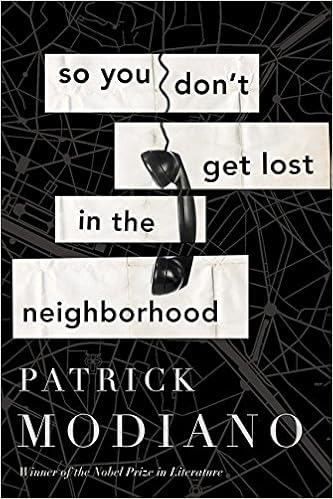
The book centers on a novelist who receives a phone call from a stranger who has found his address book. The stranger wants to meet to hand the book over, but it turns out, upon meeting, that the stranger has read the author's work and is curious about it. Most especially, he is curious about a certain man who appears in the author's first novel, a man whose name also appears in the address book. The author doesn't recall the name--or at least, that is what he says. The stranger is doing research, writing something of his own. He asks the author to look over a dossier of materials.
The author is persuaded to do this by the stranger's daughter, who is silent whenever the stranger is around but friendly when alone with the author. She seems to have her own agenda.
The author looks through the materials and comes across one name that stirs in him a memory of the man the stranger was asking about and a host of other memories. This one name is that of a young woman, a teenager, who takes care of the author for a year or so when he is a child. Why? And why do they get separated? And what exactly did this young woman go to jail for? These and other questions are items the author then becomes obsessed with through chasing down his memories. In fact, we come to think that the author knew exactly the information the stranger seeks, for the author's memories reveal that he has gone in search of the woman and that the man is intimately involved with his reason for the start of that search. That, however, does not mean that we are easily able to figure out why these two people are looking for the man--or why the author himself has had the experiences he has, or even whether he has (for one of the themes of the book revolves around how people remember things differently and why the obfuscate the past).
Wednesday, January 18, 2017
On "The Anointing" by Jamie Quatro (3553 words) *****
One of the most impressive stories from Quatro's collection is this one. What I like so much about this story is that it takes faith seriously, at the same time that we can see the main character struggle with it. The protagonist's husband is a doctor who had gotten addicted to prescription narcotics and lost his license and who is now is a near constant state of depression. Hoping to resolve the problem, the protagonist goes to her church elders for help and healing--anointing. By the story's end, we're not sure who needs help more or whether the calls for help will work. Read the story here at Guernica.
On "I Want to Show You More" by Jamie Quatro ***
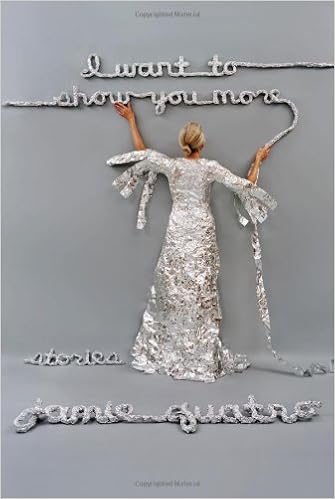
The lead story is a short one about a woman having a phone affair with a stranger, which becomes the setting for many other stories throughout the book.
The next story, "Decomposition: A Primer for Promiscuous Housewives," expands on this theme. Here, the lover takes on the form of some kind of body, a wax figure, that decomposes in the couples bed and then elsewhere in the house, constantly reminding the couple of what was. There is no escaping the affair, even as it fades into oblivion.
That kind of odd metaphorical realism extends into the next story, "Ladies and Gentleman of the Pavement," wherein a woman runs a marathon with a statue tied to her back. In fact, that's the vogue: everyone carries a statue while running--a burden, a work of art. One is not allowed to run without it. At the end the connection between art and running becomes more apparent. One must finish the race, as hard as it is, but there seems no way to do so without compromising.
Beginning with the next story, "Here," the collection takes a more traditional turn. "What Friends Talk About" is yet another story involving a woman's affair with a phone caller. In this one, she takes her children to the park to play so that she can have phone sex with her audio lover.
"1.7 to Tennessee" revolves around an eighty-nine-year-old woman who opts to walk a letter protesting a war to the post office. The story reminded me in some ways of Eudora Welty's tale (the name of it escapes me at the moment) of an older walker along the side of the road. Along the way, the woman meets various people and thinks about her past.
"Imperfections" is a very short piece that again returns to Quatro's frequent focus: a mostly nonphysical affair. Here, a woman meets up with a man in person, along with his wife, but works the situation around so that she and the man are, at last, alone. Does the hope measure up to reality? Does it matter?
And "You Look Like Jesus" is yet another piece with a focus on an affair that is exclusively via technology--this one online, over the Internet. A woman recounts the photographs she sent and received from her paramour, the pictures she won't show her husband, the pictures she eventually deleted, one supposes, probably in an effort to save the marriage.
Quatro is at her best with stories involving straight-up religion (without the kink). "Better to Lose an Eye" takes a rather standard look at hypocrisy among Christians, but what is not standard is the point of view. Lindsey's mother's boyfriend shot her mom, leaving her a quadriplegic with a tracheotomy. Now Lindsey has been invited to a pool party, and she's too embarrassed to go with her mom in tow, especially knowing all the questions she's going to be asked. But grandma insists. It's hard not to feel for a girl in this situation--or for a mom.
“Georgia the Whole Time” continues with the theme of disease that works through many of the stories in Quatro's collection. In this case, a couple has to find a way to break it to their kids that mom's cancer has returned and that she's likely to die.
“Sinkhole” won an O'Henry Prize, but the story didn't much speak to me. It returns to some of the oddball pieces that kick off Quatro's collection. Here, a boy who is a magnificent runner has a “sinkhole” in his chest that allows him to hear God and that he feels must be healed, a healing he finds via relations with a girl.
“Sinkhole” introduces a set of stories that explicitly deal with religion that end the collection. Here, the motifs of sexual deviance, religion, and running come together. And it is here that the oddities of those early stories begin to make sense, for the suggestion seems to be that religion involves a kind of oddness of thought, an oddness that pulls us toward transcendence, the way that sex or death supposedly do (as George Battaile would have argued). “Demolition” is about just that. It starts as a story about the loss of faith--or the finding of “true” faith. A deaf man joins a church and then leaves it. Meanwhile, the church's stained glass begins to fall apart, but seemingly for no reason. The church congregation decides to do the most “logical” thing--get rid of the building and go into nature, the deaf man as their guide.
In “Relatives of God” a woman thinks back on her phone sex affair with a certain acceptance, an end, I suppose, to a collection that focuses so often on the mix of feelings attached to such an affair.
Wednesday, January 11, 2017
On "Spirals" by David Eagleman (583 words) ****
God is omniscient. He knows why we are here, what our purpose is. But what if this weren't so? What if we were created by creatures who were actually less knowledgeable than we are? What would be the implications of that? Find out one possible outcome here.
On “Command and Control” by Eric Schlosser *****

The Titan II accident dealt with in detail began with a routine maintenance operation, a man dropping a wrench and it hitting the missile, tearing a hole in it such that fuel began to pour out. It ends with an explosion. In between are tens of hours of terror, consternation, and planning. The escaped fuel leads to heavy amounts of toxic gas in the silo, enough that the command center feels a need to abandon the structure, this despite the fact that they sit behind several blast doors that can supposedly withstand a massive explosion, but gas seeps, and nuclear explosions are, well, you know, sort of big, big enough that one doesn't want to test such doors.
Outside, Air Force personell discuss what to do. They forge plans. Few of them actually do anything. The sherrif of the nearby town warns people to get away, even though the Air Force largely says that it has things under control. The sherrif knows better, from an accident a few years before involving a toxic oxidizer that killed lots of cattle and made many people sick. News crews arrive. Information given to the public is sparse.
Meanwhile, there's a general sense of dread and panic among the military people in the know. The fuel leak is slowly draining the bottom of the missile, making a vacuum. Above this vacuum is oxidizer, even more toxic than the fuel. It will crush the bottom of the missile like a tin can at some point, and the result will be an explosion. And above that are nuclear warheads, and one explosion might well set off the other. Over the course of several hours, a plan is forged. The silo doors will be opened in an attempt to disappate the fuel fumes and allow workers to go down and patch up the leak.
And then there's that explosion. When it happens, it is gut-wrenching. I'd thought the sheer number of characters Schlosser introduces would mitigate against one's feelings for them, but that is not the case with those who are hurt.
In between the account of the accident is a history of America's nuclear arsenal--and of the accidents in which it has been involved. One of the most harrowing involves another silo that catches fire in which fifty-three men are trapped and killed. Another involves the accidental dropping of a nuclear bomb over North Carolina in which every failsafe but the very last fails to prevent detonation.
But despite such accidents, thousands of them, the military continues to use the weaponry, even that which is questionable in terms of safety, and often it fights against safety precautions because of the added cost. Some accidents don't involve the warheads themselves but the early warning systems. In one case, a computer malfunctions and tells U.S. military people that the Soviet Union has launched an attack. Only because the head of the Soviet Union is actually in the United States at the time do experts realize that the computer has a bug.
And then there are the various military strategies the United States has during the Cold War. The main one involves essentially sending over so many missiles in retaliation for an attack that some places are being bombed three times over. The Cuban Missile Crisis is recounted, showing just how close the two nations came to war--but often that closely was mirrored by accidents like the one recounted above.
What's scary, Schlosser notes is that the United States probably has one of the safer aresenals. Other countries in possession of nukes don't have as good of a safety record, as bad as the American record is. And all it takes is for one of those thousands of accidents to get out of hand.
Sunday, January 8, 2017
On "Shower of Gold" by Donald Barthelme (3500 words) *****
Here's a fun and absurd story about a man who agrees to go on television to make a little money, which he needs. But in between, we're provided into people's opinions about the show and even into some information about the president. Read the story here.
On "The Jews in the Time of Jesus" by Stephen M. Wylen ***
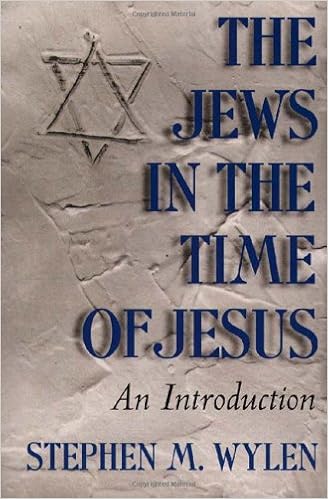
Wylen kicks off his discussion of the Second Temple period with a short summary of the Biblical narrative leading up to the building of the Second Temple. It's interesting to think of several of the biblical books as being written at the start of this period and as being a response to the events that are happening. Prophecy ends with Malachi soon after the Second Temple, much to the chagrin of many of the Jews. In its place comes apocalyptic works, most of which don't end up in the final scriptures (as Wylen relates, the Torah was the most accepted as scripture in the Second Temple period, the Prophets with a lesser degree of acceptance as time goes on, with the Writings not being finalized in the Jewish Old Testament until around 100 CE); the author credits Ezra as a likely authority in terms of editing the Torah and other books into their final form during this period (although this ignores the references to kings such as Hezekiah restoring the holy books--I would assume the Torah--to the center of practical application in their own time [other scholars see the time of Ezra, and the Great Assembly of Priests, as being the final period of Old Testament canonization, including all the Prophets and Writings]). It would only be after Jesus that scripture writing would return--in the form of the Talmud for the Jews and in the form of the New Testament for Christians. But even there, the writing would be more a matter of interpretation of previous scripture than of new revelation. Of further interest would be the introduction of the interpreters to the Jewish public reading of scripture, as most Jews by now spoke Aramaic and did not always have a firm grasp of Hebrew. These translations often took the form of true interpretations, though, as commentary often was added.
The next chapter turns to the Hellenistic world, especially as it affected the Jewish religion and as the Jewish religion affected it. That the Jews did not wholly assimilate to the Greek is unique among the Middle Eastern cultures, and this has a lot to do with the belief in one God, as opposed to a pantheon that could be easily added to (or "translated"--some Greeks saw the Jewish God as Zeus). That the Jews lacked idols was unique also. Jewish thinkers were seen as quite wise, and a good number of people converted of a sort (again, unique, as one doesn't convert when there are more than a single god--one just adds to the pantheon). These God-fearers did not circumcise (something the Greeks abhorred, unlike most Near Eastern cultures), but they adopted a belief in the one God of Judah; it is to them that much of the New Testament is addressed (as in Acts 15). Jews also moved out into the Roman Empire, losing sometimes the ability to speak Hebrew or Aramaic and thus getting most of their Bible from a Greek translation. Paul was probably most fluent in Greek, the author says, as evidenced by the Septuagint's influence on his letters (as we see in his choice of certain words and even some of his ideas). Fully 10 percent of the Roman Empire might have been Jewish, the author says. But these Hellenized Jews disappeared by the Middle Ages. What happened? We don't know. They may have been subsumed by Rabbinic Judaism or by Christianity. Indeed, the popularity of Jewish culture fell by the wayside as the Jews became more and more trouble within the empire. Their unwillingness to join in with civic rites because of the latter's steeping in paganism led to a separation and to some resentment, especially as the Jews began to push for more rights--and eventually participated in several armed rebellions. An interesting aside dwells on the Pharisees, who, the author says, were actually quite missionary in their attempts to convert Gentile believers to Judaism (the Sadducees by contrast were not); once Christianity became the official religion of Rome, it became illegal to proselytize as a Jew.
Much of the first century's Jewish history is dependent on the Macabees, the subject of the next chapter. While relations between Greek and Jew were quite cordial during the period of Greece's empire, for a short period they were not so. The Greeks generally let local people continue to administer their own affairs, but for this brief period Antiochus IV decided to forcefully Hellenize the Jews, removing the high priest for one of his own, outlawing the Torah, and forcing them to eat pork. Enter a small group of rebels called the Macabees who successfully led a revolt. What I did not know was that the original Zadok (Aaron-descended) line of the priesthood was moved, at this time to Egypt, where an alternate Jewish temple was set up with high priest Onias. When Jerusalem was restored to Jewish control, this priest was not brought back--the Zadok line ended. As such no high priest thereafter was seen as fully legitimate. (The Egyptian temple was destroyed by the Romans at the same as the Jerusalem temple.)
The lack of legitimacy for the high priest helped lead to the formation of various Jewish sects, each claiming rightly understanding of the Torah and the priesthood, including the Pharisees and the Sadducees. Two Pharisaic doctrines became central to later teachings of the Jews and Christians. First was the oral law, which would be the basis for the Mishnah and the Talmud. The other was the belief in the resurrection, which is most clearly discussed in the Old Testament in Daniel, a book the Sadducees would have rejected. Christ too would preach this doctrine. Greek ideas about the immortal soul would creep into Judaism (possibly around this time) and Christianity [in the next century] and change this doctrine.
There is, in the next chapter, some discussion of Jewish education. Simon bar Shetah is said to have introduced compulsory education for Jewish boys, though some historians doubt the accuracy of this claim. The idea is significant, however, because if this is so, then Jesus likely would have received formal religious (and literary) education.
The Sanhedrin's origin is unknown, but its power structure is recounted in the Talmud. Some doubt that this structure was actually in place until the destruction of the Temple, for it gives the Sanhedrin power even over the high priest. Nevertheless, the president of the Sanhedrin (the Nasi) became eventually Rabban (Our Rabbi) by title. This president was a Pharisee. (The Pharisees and Sadducees shared power on the Sanhedrin, but the Pharisees, having the majority, wielded greater power. So while the Sadducees made up the high priests, the Pharisees were the ones who oversaw the ritual functions of those priests and also interpreted the law and set up civil authority.)
In describing Judaism, Wylen says that it was not so much a religion (as we think of it today) as a "way," just as Christianity was called "The Way." Grounded in traditions and rituals that had to do with daily life, it was central to one's being. To Wylen, the idea of Satan comes out of gnosticism, for Judaism focused on one God only. Angels were a later creation of the religion and were still seen as below God. Satan was the lesser being that in Gnostic circles would have been the counterposing god of evil. [Of course, Satan is called the god of this world, so in that sense, it would fit with gnosticism. But the idea that Satan never appears in the Old Testament seems flawed, early Genesis being a prime example. But it is true that he does not seem to play as prominent a role as in the New Testament.]
Liturgical prayer, Wylen says, was not part of the First Temple set of ceremonies. Prayer then was spontaneous. It was only with the Second Temple that such prayers became common and that after the first century. [Again, I'd be prone to point to scripture, where Christ warns against repetitive use of prayers. But my bet would be the Wylen would say that such scriptures are anachronisms, creations of second-century writers, put into Jesus's mouth.]
Wylen sees the synagogue, whose origins he denotes are mysterious, as being largely a place for public reading of scripture and explanation during the first century. The popularity of the synagogue would take off after the destruction of the temple. The synagogue could also be used as a community center and hostel for travelers.
Concerns about ritual purity weighed heavily on first-century Jews. Whereas earlier generations had seen this largely as a priestly function, the Pharisaic teaching that all were priests of a sort meant that all people had to be ritually clean. And thus, ritual washings became part of daily life.
A chapter on the writings of the time discusses the difficulty of reconstructing history from them. We have writings of later years, which include the Jewish Mishnah; in the author's view, the New Testament; the apocrypha from the Second Temple period; apocalyptic writings from various Jewish sects; the writings of Philo; and the nonreligious writings of people like Josephus. Each has its agenda, and most were not concerned primarily with history. The Mishnah is viewed in Judaism as being the oral law put down in print by the rabbis. Lacking complete sentences and often without much logical order (it is "oral" tradition and thus based around that rather than around how we would write), one often has to know the whole to know the part. Nevertheless, its major themes delineate themes that were of concern to the Jews of the time, themes that in many ways go along with those in the New Testament, such as purity. The oral law was about delineating the "gray" areas of the law. The Mishnah notes what different rabbis think and what the majority thinks. In some ways, its being written out was a response to the destruction of the Temple. Although the rabbis claim it as oral law descended all the way back to the times of Moses, many date its teachings to the Second Temple period.
This scholar does not believe the Pharisees were as important as the New Testament and the Mishnah imply that they were, as both were written (in the writer's view) after the temple's destruction as that sect gained ascendancy. Looking at apocryphal writings we see works that concerned particular sects but that often spoke of events to come that were actually historical at the time (Wylen does not believe, one gets the feeling, that such a thing real prophecy exists), a discussion of the present evil, and a prediction of coming greatness for the people of the sect. Greatness was almost always seen as something imminent, not as something millennia into the future. (We can see this in Phillip's explication of Isaiah to the eunuch: the book is, for him, primarily about Jesus.)
Wylen raises similar problems with the trial of Jesus. Mishnah teachings would make the trial illegal (such trials had to occur during daylight hours and had to take place over two days--one day for trial, and one day for conviction--and would not have occurred on a holy day). So either the Mishnah is an idealized version of legal practice written two centuries later, or the history is wrong. Wylen sees the likely answer as both. He says it's more likely that the high priest was in cahoots with the Romans, since he'd have been appointed by the Roman-appointed Herod. The Romans would have seen any Jew garnering crowds and talking of a new kingdom (literal or metaphorical) as a threat. For Wylen, the idea that Pilate washed his hands to show his unwillingness to convict Jesus is a fiction, as the practice was a Jewish custom, not a Roman one, and Pilate was not otherwise one with a moral compass that would have kept him from killing innocent Jews. Also problematic are the crowds around Jesus, one for him, one against, and one absent--these, for him, are simply literary devices, like a Greek chorus. (One could probably find arguments against each of these points. First, the trial court was a kangaroo court and the claim of blasphemy it made is not, even in the scripture, seen as proper. The events occur the day before the first holy day, if one takes into account different ways of counting the Passover, a controversy at the time. Pilate may have washed his hands precisely because it was a Jewish custom, as he was before a Jewish audience when he did it, and his "conscience" scripturally is spurred by his wife's bad dream, not by personal compunction. Likewise, crowds can differ depending on situation, as they do even for politicians today. Crowds riot over Trump's election, both for and against.)
Wylen's chapter on the sects of Judaism is perhaps one of the most informative. He focuses on four main ones: Sadducees, Essenes, Zealots, and Pharisees. The priests were chiefly Sadducees; the Sadducees were the powerful and the high class, and they favored those in power (namely the Romans and Herodians); they controlled the Temple. They were not popular with the people. They accepted the Torah only as scripture and did not accept the oral traditions of the Pharisees. As such, they did not believe in angels or the resurrection. They did not believe in divine providence.
Essenes were a group that believe everything was divine providence. They eschewed civilization, living in the wilderness. They had their own solar calendar, not accepting that of the majority of Jews. They believed strongly in a world of good versus evil, Rome of which was part of the latter. And they believed in two Messiahs, one priestly and one royal, and a final prophet.
Zealots, Wylen sees, as being only in existence right before the rebellion around 70 A.D. As such, he sees the rebel groups we call zealots of the time of Jesus as not being an organized sect. Rather, if we believe part of what Josephus says (who saw them as an organized philosophical group), they were simply people who believed in no ruler but God and often were like Pharisees in their other views.
Wylen spends the most time discussing the Pharisees, for it is from them that Rabbinic Judaism descends. Seen as wise among the people and largely supported by them, the Pharisees were also likely despised by the masses and despisers of them, much the same that intellectuals are often looked up by to and look down upon others today (and vice versa). They believed in divine providence over history but not over individual actions, which means that they viewed repentance and obedience to the law as important. They were progressives when it comes to scriptural interpretation, often looking to apply the law to modern contexts and, thus, creating and sustaining an oral law tradition to accompany the written scriptures. This also meant that they accepted such beliefs as that in the resurrection. The Pharisees worked with Roman authorities rather than against them, but not necessarily as part of the governing elite. This positioned them well for power in the post-Temple period. The Pharisees did not separate themselves from other Jews but rather lived and worked among them--and attended synagogues. (Though one sect, the Haverim, were so picky as to separate themselves out from other Jews who did not follow the same practices.) Overall, the Pharisees did tend to separate themselves from Gentiles, however, because they came to see priestly laws as applying to all Jews--the nation is a called out as priestly one. Hence, laws concerning ritual purity, including various washings, came to be applied to all, and others laws regarding eating, tithing, Sabbath keeping, and marriage only to other Jews were also promoted.
Another chapter details the work of Hillel and makes various comparisons to the sayings of Jesus, showing how the two actually parallel each other in many ways. (The complication, of course, is that while Jesus postdated Hillel, Hillel's sayings weren't put to paper until after Jesus's sayings were, so who copies whom is an open question. But the easy point is that Jesus and Hillel came from similar traditions.)
The next chapter looks at various "roles" that one might play in the first century and how Jesus would have fit into each. For example, Wylen does not look at Jesus as being a prophet except in the form of a preacher, as the age of prophets ended several hundred years before Christ (he disregards the idea of New Testament prophets). For Messiah, Wylen looks at the meaning, "anointed one" and denotes that the anointed was always king and priest in Israel/Judah; the connotations that Christianity adds were not present for Jews in the first century, though there was an interest at the time in the resurgence of a Jewish state and physical king that would overthrow Rome rather than a king not affiliated with the Davidic line (as in Herod) (indeed, many Christians expected Jesus to found such a kingdom, as the Bible makes clear--it was only after his death that they began to understand his Messiahship in a different form, as a sin-taker). "Son of man" means simply one from Adam, a human being--it's a way of talking of yourself in the third person. But it, too, came to have greater connotations, such that the absence or inclusion of capitalization can suggest something different. Nor was Jesus a philosopher, which was a Greek idea, though some Jews looked upon wise Jewish teachers are comparable figures. Nor does Wylen see him as a rabbi, a concept that arose much later--or even a teacher of the law, as a rabbi would have been at this time (for to Wylen, Jesus mostly provides wise teachings, not biblical interpretations--this is the meaning of Jesus speaking by his own authority). So what was Jesus to a Jew at the time? Wylen sees him likely as fitting into the tradition of miracle worker/healer/charismatic rejected by the mainstream Jewish leaders, of which there are several later Jewish teachers who founded specific branches of Judaism (Hasidism, for example).
A final chapter looks at how the Jews and Christians separated and why. Both religions developed quite a bit in the wake of the destruction of the temple in 70 A.D., Judaism especially. Jewish leaders reorganized under the Hillellian Phrarisee Yahanan ben Zakkai, who put togher a new Sanhedrin of seventy-one leaders. The influence of the Pharisees became fully felt as it became the basis for the rabbinic Judaism that followed. Following Zakkai's death, Gamaliel II took over the leadership--it was his grandfather who trained Paul. The Bar Kokhba rebellion, some sixty years after the Temple's destruction, probably helped seal the separation, as its leaders was seen by much of the Jewish leadership as the Messiah, a hope that proved unfounded but that doubtless alienated Christians who already had a Messiah.
Another factor that lead to separation was the Birkat HaMinim--the curse upon the sectarians. I had always thought this was a curse upon Christians, but it was really a curse added to the synagogue worship service on all groups that were not mainstream. Wylen sees this as not necessarily directed at Christians, but I suspect that his views are motivated in part by his tendency to want to see the two groups as less antagonistic than they sometimes were in early times.
Roman politics played its part too. In 98, the Roman emperor Nerva, ruled that Christians did not have to pay the annual tax on Jews, thus recognizing Judaism and Christianity as separate. Although Christians were not free of said tax, they were not recognized as a lawful religion, unlike Judaism, and thus were not protected from other laws such as those allowing Jews not to participate in certain pagan rites. Just before Constantine took the throne, Julian the Apostate reigned. A thorough pagan, he actually gave the Jews permission to rebuild the temple. His death in battle, however, ended that hope early--and brought to power the one who would recognize a brand of Christianity as the state religion.
But the version of Christianity eventually accepted by the empire was quite different from that with its Jewish roots. Around the year 380, John Chrysostom became bishop of Antioch. He found that the church was still "Judaizing"--meeting with Jews in a synagogue--and put a stop to it. Such Judaizers were increasingly pushed out of association with those who came to be known as Christians within the empire.
I found this book very informative, one of the better secular accounts of first-century Judeo-Christian tradition. But as the author notes at the start, knowing for sure how some things happened is difficult. Even if one believes scripture fully, there is much background that is not completely clear, even with a fuller knowledge of history.
Subscribe to:
Posts (Atom)

 Posts
Posts


