This book made me angry. Revenge is not a feeling I usually get to "enjoy," but Chesnutt's book seems gauged to do just that, stir up feelings of animosity. It's essentially a text about the wrongs done to African Americans in one southern town, which serves as an microcosm for the South itself, during the latter days of Reconstruction, just years before the right to vote would be take from former slaves via state constitutions and laws.
In this small town, a white man marries a black woman in secret and leaves a tiny bit of his fortune to his colored daughter. His white daughter from a previous marriage gets most of the estate. But that's not good enough for her aunt, who arranges to steal the will and cast the black wife and her daughter out of home. The secret lives on with only the aunt.
Meanwhile, a set of newspaper men in town are tired of Republican blacks taking the political positions, tired of blacks getting "uppity," so they decide to take back the town for themselves. Even though the state constitution will change in two years, that's not soon enough. These men set out to create a riot that will displace the black leaders. In the course of the novel one after another black man will be taken advantage of, killed, belittled, pushed aside. When rage arises at the end, one can't help but feel with the oppressed people.
Written in the early 1900s, I have to wonder to whom Chesnutt was writing. This clearly wasn't a book that would have been popular in the South.
You can read the novel here at Project Gutenberg.
Sunday, July 11, 2010


Thursday, July 8, 2010
On "One of These Things Is Not Like the Other" by Stephanie Johnson (480 words) ***
Here's a story of loss and the manner in which it can affect seemingly disconnected people. I've never experienced something quite akin to this, but I have experienced the loss of a friend who was still alive, and that--that breakup--can be in some ways more haunting than a death. You think on failures, on what-ifs, on how maybe something you'd done differently might have salvaged what was there. People who have children abducted and then never know the final result; spouses who lose spouses to the MIA list in war--these is the themes of this story. Read it here at Wigleaf.
Monday, July 5, 2010
On "A River So Long" by Lynn Watson (250 words) ***
Beautiful writing here, and some kind of strange idea. This is a short short that does well what short shorts often do best--convey some sort of mystery in a moment. It's that mystery that makes this more than the sum of its parts. A woman and man spend the night in a hotel room, and later that night, the woman looks out on the Mississippi River, and some kind of transformational experience ensues. The river has power, as does the story, though in both cases, one isn't sure exactly why. Read the story here at 971 Menu.
Friday, July 2, 2010
On "The Suicide Note My Dad Forgot to Leave Me" by David Erlewine (165 words) ***
I read this mostly because of the title. But it's a really good piece beyond that. Thing is, while reading the details that are presented in the list that is this story, I was taken with the oddities and humor. Where the piece gets it's power, though, is in the title. These random thoughts collected as they are are interesting--string them up to this title, and they become very sad. Read the story here at 971 Menu.
On "Sister Carrie" by Theodore Dreiser *****
There are moments toward the end of Sister Carrie that reminded me of a work toward the beginning of my list of American writings between 1870 and 1920, and those moments help illuminate why Dreiser's book was hushed away while Horatio Alger's books were popular. Alger writes of a shoe-shine boy who works his way from rags to riches. Dreiser writes of a man on the way down. The former works hard for a living; the later, at some points, tries to but remains too depressed to move forward and too hard pressed by the forces around him to even manage to make a decent living. Meanwhile, a woman who has shown almost no substantial morality gets rich on her looks.
But although Dreiser's book may be a commentary of sorts on the saccharine view of some of the popular literature of its day, it's even more a commentary on American society and American values--as they were then, and as they continue to be to our day. Dreiser's work is nothing less than an attack on consumerism, capitalism, and the American dream. Each of the three main characters in some way values money and riches. That's is their soul. That is their occupation. That is the only motivation.
Carrie, the book's main character, is a case in point. She moves to the big city for some adventure and for a little spending money. She ends up in the dull home of her sister and her brother-in-law, hard-working lower-class Americans. If this were Alger's work, this family would be moving on up--and quickly. But this is Dreiser, and their life is a drudgery, and so too promises to be Carrie's life.
Carrie, however, is swept up with the glamor of the big city. She wants in--but not on some servant level. She wants to be as well off and well dressed (grooming is important in this book) as the rich people she sees wandering down the street. She wants to go to the fine restaurants, to the plays. She wants to be entertained. She wants.
So do the other characters. This is America, and what's more natural than a little lust to make things work properly. Drouet, an up-and-coming salesman and a lady's man takes Carrie in. She gets paid well for becoming essentially his mistress. She gets clothes. She gets to go to the theater. She doesn't have to work. Drouet knows to say just enough to string her along, promising marriage, some day, if he can ever manage to be faithful and ever manage to make the next big sale.
Enter Hurstwood, a man of even greater wealth and seemingly more depth. Carrie falls hard for him. He falls hard for her. The problem: He's married, only Carrie doesn't know it. But in the end, what does marriage matter when lust is involved? Hurstwood determines to have her at all costs--destruction of his marriage, double-crossing his friend Drouet, whatever.
In the end, the two of them get exactly what they want--only it's not what they envisioned. Happiness, says Dreiser, is something one finds only in one's dreams.
In keeping with what was the rising modernist period, Dreiser places "art" as a counterpiece to this lust. Toward the end, Carrie, with all she has ever desired but incredibly unfulfilled, begins to realize that there is more to life than material things. Somehow, art can fill our craving. Call it what you will, the modernists were an optimistic sort. If God is dead, art, which can do nothing for us save offer some happy distraction for our brain or, more rarely, some insight into bettering the human condition (but certainly not escaping death or meaninglessness), is certainly an empty shell of a replacement.
Dreiser's writing is dry. Toward the the start, I found myself dreading the read. He provides lots of details about the city of Chicago in his day, many not pertinent to the narrative. He goes off on philosophical tangents (the story is told omnisciently, something few authors would try now and even fewer could get away with). But for all that, the novel picks up, and by the end, I found it hard to put it down for need of doing something else. This one is well worth sticking out the early passages.
You can download the book here at Project Gutenberg.
But although Dreiser's book may be a commentary of sorts on the saccharine view of some of the popular literature of its day, it's even more a commentary on American society and American values--as they were then, and as they continue to be to our day. Dreiser's work is nothing less than an attack on consumerism, capitalism, and the American dream. Each of the three main characters in some way values money and riches. That's is their soul. That is their occupation. That is the only motivation.
Carrie, the book's main character, is a case in point. She moves to the big city for some adventure and for a little spending money. She ends up in the dull home of her sister and her brother-in-law, hard-working lower-class Americans. If this were Alger's work, this family would be moving on up--and quickly. But this is Dreiser, and their life is a drudgery, and so too promises to be Carrie's life.
Carrie, however, is swept up with the glamor of the big city. She wants in--but not on some servant level. She wants to be as well off and well dressed (grooming is important in this book) as the rich people she sees wandering down the street. She wants to go to the fine restaurants, to the plays. She wants to be entertained. She wants.
So do the other characters. This is America, and what's more natural than a little lust to make things work properly. Drouet, an up-and-coming salesman and a lady's man takes Carrie in. She gets paid well for becoming essentially his mistress. She gets clothes. She gets to go to the theater. She doesn't have to work. Drouet knows to say just enough to string her along, promising marriage, some day, if he can ever manage to be faithful and ever manage to make the next big sale.
Enter Hurstwood, a man of even greater wealth and seemingly more depth. Carrie falls hard for him. He falls hard for her. The problem: He's married, only Carrie doesn't know it. But in the end, what does marriage matter when lust is involved? Hurstwood determines to have her at all costs--destruction of his marriage, double-crossing his friend Drouet, whatever.
In the end, the two of them get exactly what they want--only it's not what they envisioned. Happiness, says Dreiser, is something one finds only in one's dreams.
In keeping with what was the rising modernist period, Dreiser places "art" as a counterpiece to this lust. Toward the end, Carrie, with all she has ever desired but incredibly unfulfilled, begins to realize that there is more to life than material things. Somehow, art can fill our craving. Call it what you will, the modernists were an optimistic sort. If God is dead, art, which can do nothing for us save offer some happy distraction for our brain or, more rarely, some insight into bettering the human condition (but certainly not escaping death or meaninglessness), is certainly an empty shell of a replacement.
Dreiser's writing is dry. Toward the the start, I found myself dreading the read. He provides lots of details about the city of Chicago in his day, many not pertinent to the narrative. He goes off on philosophical tangents (the story is told omnisciently, something few authors would try now and even fewer could get away with). But for all that, the novel picks up, and by the end, I found it hard to put it down for need of doing something else. This one is well worth sticking out the early passages.
You can download the book here at Project Gutenberg.
Tuesday, June 29, 2010
On "One by One" by Meg Pokrass (1110 words) ****
Coming of age in a quick and bad way. That's what appears to be happening to the narrator of Pokrass's short piece here--but there's an exuberance as well. After all, it's wonderful to grow up, to be bad, before everything starts to fall apart, as it does for one's parents, one's sister, one's self. Read the story here at Juked.
Saturday, June 26, 2010
On "The Good Subject" by Karen Ashburner (264 words) ***
Short shorts are sometimes just nice descriptions or interesting ideas. But sometimes, those ideas take on a meaning that probably couldn't be conveyed with the same efficiency or effectiveness in a longer piece. Such is the case with Ashburner's "The Good Subject," which is about a regular person. Sure, lots of stories are about regular people, but the point here is that the story isn't the point, that there is no story. Read the story. Here. At Opium.
Wednesday, June 23, 2010
On "The Passing of Grandison" by Charles W. Chesnutt (6736 words) ****
In this humorous sketch, a son sets out to do something adventurous to win the heart of his love. Adventurous, in this case, is to free a slave. But his father, being a slave owner, isn't to keen on the slave the son sets out to free by taking north on vacation. Instead, the son is settled with the loyalist of slaves, whom the son can't get rid of no matter how hard he tries to tempt him. Or so we are led to believe. In its use of double-spoken deceit, this one fits in with Chesnutt's Conjure Woman tales. Read the antics here.
On "The Wife of His Youth and Other Stories of the Color Line" by Charles W. Chesnutt ****
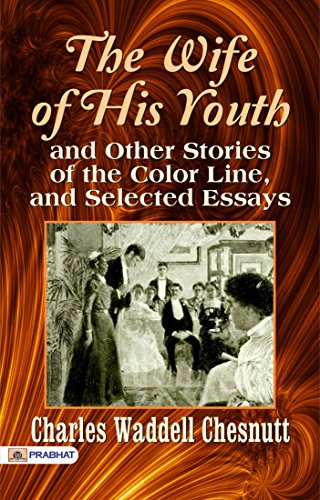
But the consequences of not following such a code also don't lend themselves to being treated particularly well either. Darker skinned people, the subject of the last few stories in the collection, find themselves shut out of funerals for people they love or herded off to jail for things they didn't steal. In each case, the prejudice that rests within post-Civil War society brings down the newly freed people and their descendants.
In college, I tended not to care as much for African American fiction because of its heavy political content. As I've gotten older, however, stories of social injustice such as these have appealed more. Call it perspective, perhaps, hearing what others say about people of given cultures or races and knowing also what is gendered in my own heart as a human being who has grown up amid such racism and how that affects my own thinking whether I wish it to or not. Stories such as Chesnutt's provide historical context for issues that linger to our present day, even if the prejudice is no longer as overt. You can download the collection here.
Sunday, June 20, 2010
On "Krazy Glue" by Hallie Elizabeth Newton (3494 words) ****
This story transfixed me with its voice. A woman sort of falls in love with a set of mixed tapes, a correspondence made up of someone else's love tunes. A woman goes to Mexico to change her life. A woman tries to glue herself back together. Much of this piece isn't in chronological order. We get bits about the time in Mexico, bits about past boyfriends, bits about her life, but by the time we get to the end, we know where all the pieces are, and we're ready to begin Krazy gluing ourselves. Read the story here at Dogzplot.
Thursday, June 17, 2010
On "The Goophered Grapevine" by Charles W. Chesnutt (4710 words) ****
This first tale in The Conjure Woman introduces readers to the general structure of all of the stories to follow and also introduces us to Chesnutt's main characters: Julias McAdoo, the former slave; and his Yankee employers, the frame story narrator husband and his wife Annie. Here, the narrator is considering whether to buy property down south when he runs into McAdoo while inspecting some land. McAdoo's tale of a bewitched grapevine intends to discourage the man from buying the property, in part one comes to believe because McAdoo would no longer be able to benefit from the land's scuppernongs himself. Nevertheless, although the land is purchased anyway, in true form, McAdoo comes out all right, given his storytelling prowess. Read the story here.
On "The Conjure Woman" by Charles W. Chesnutt ****

Monday, June 14, 2010
On "A Dunnet Shepherdess" by Sarah Orne Jewett (7032 words) ***
This tale by Jewett is to me the best of the four shorter Dunnet Landing works she wrote. I was reminded of Hemingway's "Big Two-Hearted River." Like that story, this one focuses mostly on the very physical landscape into which our main character interjects herself. We don't get much commentary. We get nature in the raw. The story starts with the main character's landlady's brother coming for a visit. On the sly, the main character slips out with William, the brother, to go fishing. A morning spent there, one almost feels as if the main character is in love with William, though no words are ever exchanged to that effect. But be forewarned, there is love--it's just not where one expects it at first. Sheep are involved. And an old lady. And mosquito lotion. And of course fish. You can read the story here.
On "The Country of the Pointed Firs and Other Stories" by Sarah Orne Jewett ***
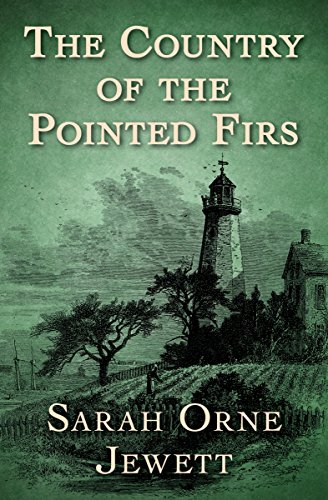
Jewett's writing reminds me most of the nature writers of the late nineteenth century. Her characters often go out to the woods and commune with it, find something from it, and return to the world refreshed. There is much attention to what exactly they see, as if Jewett herself had a nature guide with her when she wrote the story or traversed the hills (likely, she knew more about which species was which than I do--I'm the one that would need the book). "A White Heron" fits this perfectly. Initially the story of a girl who meets a boy who likes to hunt and "falls" for him, "A White Heron" becomes a story about a girl who falls for nature instead.
The Country of Pointed Firs--a work I'd long assumed was a short story because of its constant pairing with "other stories"--is actually a novella of quite some length. It tells the tale of a woman who goes to visit Dunnet Landing, a seaside town in Maine. As in much of Jewett's work, nothing much seems to happen. The woman meets locals, talks with them, hears their stories about this person who died or about how the current generation isn't as tough as the previous or how all the sailors have gone away, walks into nature by herself or sails there, collects herbs, learns about herbs from the woman she lives with, and so on. And yet, by the sheer beauty of her language, Jewett moves us forward, compelling us to read lazily on. And we do. And when summer comes to an end and fall makes its full claim on the senses and the visitor must go away, we too are sad. It's like we're leaving a town we've spent the summer in. And that is not an easy thing to achieve in mere words.
The collection I read included the novella, four other Dunnet Landing stories, and four random classic stories by Jewett. The novella is the main feature for good reason, as it introduces all the major characters and is probably the best of the works in the collection, save perhaps the classic "A White Heron."
Friday, June 11, 2010
On "His Face" by David Erlewine (186 words) ***
Here's a short piece about malevolence. Whether it starts off that way, I'm not sure. To what extent the wrongs are in the narrator's head are slightly unclear. But then, it appears to descend into something nightmarish and horrifying--for all involved. That we're dealing with children here and disease and death is what makes this piece so fascinating. Were we to know more, we might not want to look--or we might find it absolutely ridiculous. Kept short, the piece remains captivating. Read it here at 971 Menu.
On "English Is Broken Here" by Coco Fusco ***
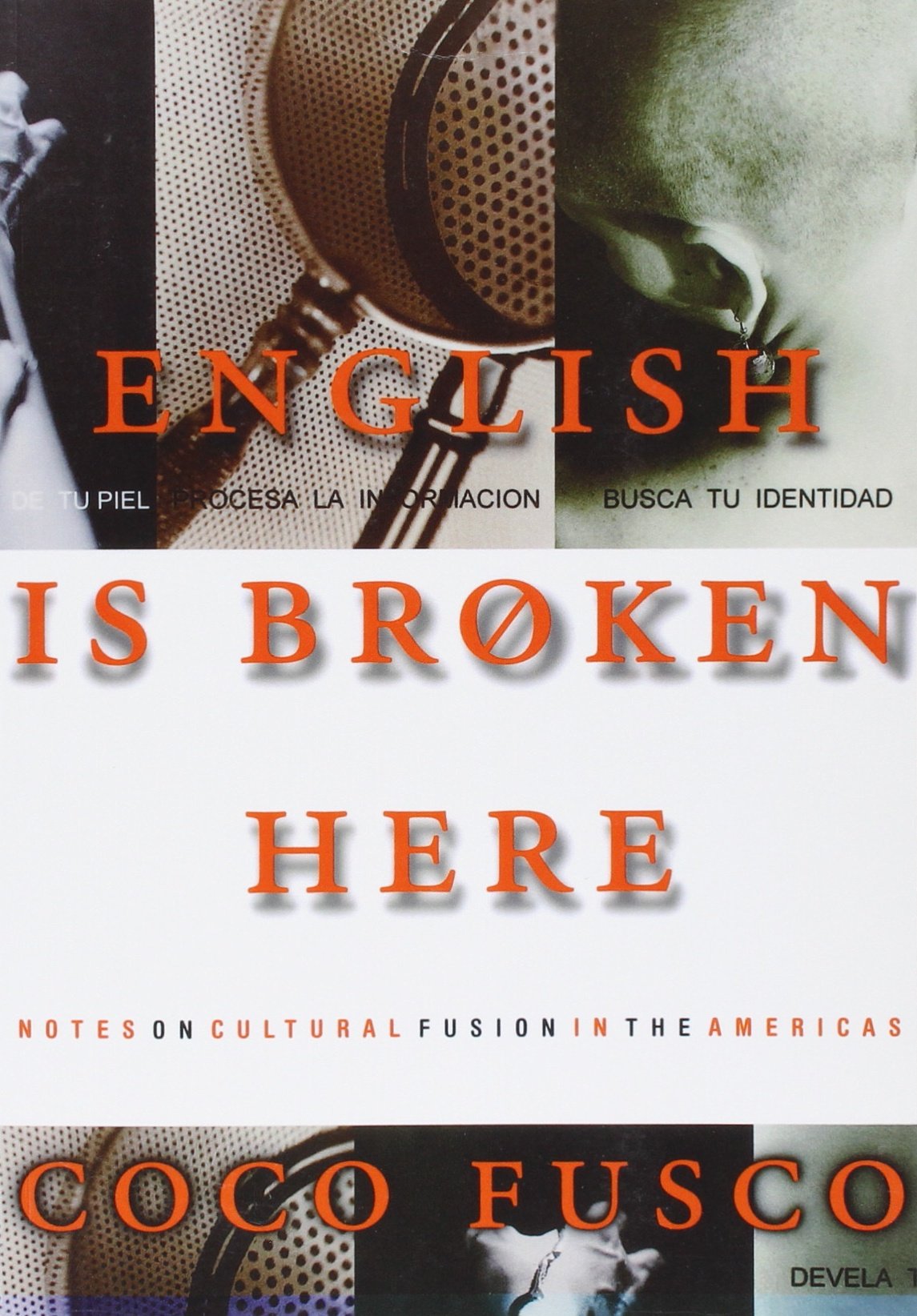
The most interesting to me of Fusco's projects is one that she writes about in "The Other History of Intercultural Performance" and that was the basis for the documentary The Couple in the Cage. The essay is a discussion of a performance art piece that she performed with Guillermo Gómez-Peña. In it, the two of them traveled the nation as an example of a couple of people from a recently discovered exotic tribe. The practice of caging human beings and placing them in exhibits was not unknown in the nineteenth century, and bringing this practice to the late twentieth sheds light on both the previous century and our culture today. The "performance" that the couple exhibits becomes, then, really a performance of the audience itself--how do people react to something that seems so utterly barbaric (i.e., caging other humans)? It's a fascinating film, and an interesting essay. Years ago, when I first came across this work in a class, I was also teaching at the time Kafka's "The Hunger Artist," and matching this essay up with that story was rather enlightening.
Tuesday, June 8, 2010
On "One of the Missing" by Ambrose Bierce (4679 words) *****
Probably the best of the soldier stories in Bierce's collection Tales of Soldiers and Civilians, save for the oft-anthologized "An Occurrence at Owl Creek Bridge," with which it has at least one particular technique in common, "One of the Missing" is a tale fraught with energy and tension. It's the story of a scout who gets the opportunity to shoot at the retreating enemy and who has the situation turned against him. He becomes the victim of another's freak shot and ends up trapped in rubble, his gun pointed--safety off--at his head. The rest of the story recounts his efforts to free himself. Read the story here.
On "Tales of Soldiers and Civilians" by Ambrose Bierce ****
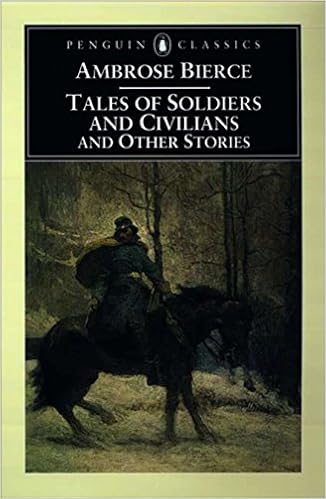
With that in mind, I listened to a set of ghost stories of his that were available online. And now, because I'm reading more extensively in his time period, I've opted also to read his classic Tales of Soldiers and Civilians. If I'd stopped at just reading the soldier stories, I've have thought I had missed out on an absolute classic. Unfortunately, the second half of the collection, the civilians, is mostly lackluster--familiar ghost stories or melodramatic stories about people dealing with death.
The soldier stories, however, fit quite nicely with the work of Stephen Crane and others of the naturalist school of fiction of Bierce's day. Sometimes, Bierce sticks in the requisite ghost, but here, amid soldiers wasting away, almost ghosts themselves in life, the phantoms seem as if they belong. Bierce seems intent on stripping away the glories of war and presenting us only the gory, sad plight that war drops men--or former men--into. His world is harsh, like our own can be.
The gist of the text I read can be found here at Project Gutenberg.
Saturday, June 5, 2010
On "Rubber Bands" by David Torrey Peters (486 words) ***
The menu is back--971 Menu, that is--which means I can highlight a few stories from the archives that were inaccessible for a few months.
Here's a story I like first and foremost for its idea. Take a beach and remove the sand and put in, instead, rubber bands. (I'm not giving away a lot here--that all happens in the first line.) Peters takes this concept and runs with it--or bounces. We learn all about what folks do. And just as he's about to close, he throws in a line that makes it seem personal, makes it seem like many a story one might tell--about the snowstorm you got stuck in or the tornado that swooped away your neighbor's garage. It's that kind of story. Nothing pretentious. Just talk. (I could see a much longer version being absolutely fascinating, if not too carried away by the situation.) Read the piece here at 971 Menu.
Here's a story I like first and foremost for its idea. Take a beach and remove the sand and put in, instead, rubber bands. (I'm not giving away a lot here--that all happens in the first line.) Peters takes this concept and runs with it--or bounces. We learn all about what folks do. And just as he's about to close, he throws in a line that makes it seem personal, makes it seem like many a story one might tell--about the snowstorm you got stuck in or the tornado that swooped away your neighbor's garage. It's that kind of story. Nothing pretentious. Just talk. (I could see a much longer version being absolutely fascinating, if not too carried away by the situation.) Read the piece here at 971 Menu.
Wednesday, June 2, 2010
On "The Saint of the Impossible" by David Levinson (7558 words) ****
Here's another breakup story. Even though there seem to be many such stories, good ones are hard to come by. Most good stories about relationships seem to focus more on a life long past the end or on a life as it's moving toward that end. Focusing on those closing moments themselves, however, is something a bit different. Perhaps writing a good breakup story is hard because the emotions that make such a story great fodder are also what tend to make such stories sentimental tin cans.
Levinson, however, is in control of his material. The story of an agent and his singer, a boy and his older lover, a has been and another has been, the piece speaks of what was and is no longer to be. Sometimes we tattoo the names of our loved ones on our bodies, but what are we to do with the tattoos once those names are just words signifying nothing? Read the story here at Slush Pile.
Levinson, however, is in control of his material. The story of an agent and his singer, a boy and his older lover, a has been and another has been, the piece speaks of what was and is no longer to be. Sometimes we tattoo the names of our loved ones on our bodies, but what are we to do with the tattoos once those names are just words signifying nothing? Read the story here at Slush Pile.
Subscribe to:
Posts (Atom)

 Posts
Posts


