
Sunday, February 12, 2023
On “The Way of the Didache” by William Varner **** I


Saturday, February 4, 2023
On "The Treasure of the Sierra Madre" by B. Traven ****

But is this book even a western? It's certainly an adventure story, but one could debate whether it qualifies as a strict western. It's set in Mexico, in the mountains but also in the tropics--and in the 1920s. However, in the broader view of what qualifies as a western it would be: it involves bandits, Indians, and a search for gold. Nary a car appears, though oil plays a big role in the start of the book.
The tale focuses on one Dobbs, who, as the story opens, is homeless in Mexico. He begs, gets more than he expects--enough for a restaurant meal. The next day, he asks the same man for money again. The man tells Dobbs he needs to be more frugal. Indeed, Dobbs takes up residence at a cheap place, just a bed. He gets work at an oil field. The employer pays him only a small portion of what he's owed when the job comes to an end--there's promise of more work, though, and he'll get paid fully then (fat chance!). He and another guy essentially threaten the boss to get paid their full wages. Those paid, they settle in at their cheap hotel. Oil work is drying up; they are unsure what to do.
That's when they meet Howard, an old-timey gold prospector. If they can get together $100, they could head to the mountains to mine for gold. Somehow, the two guys wrangle up the money--debts they'd forgotten they were owed--and the three men head into the mountains.
Howard, through a couple of stories, warns them about the ill effects of gold. One can never have enough. Once you have what once seemed like a lot, you'll want more. And you'll do anything to get it. This is obvious foreshadowing.
Once they hit the gold and grab what they can. Howard again warns them. It's one thing to obtain the gold. It's another to actually sell it and cash out. The story involves a lady whose husband is killed for the gold; she hangs on and continues prospecting, making a bundle. When she's ready to cash out, she meets a dashing man who knows of her riches and a marriage is planned. Shortly before the wedding, however, she disappears.
And so it goes. In a way, the gold itself becomes the main character for a while. The story seems to be Dobbs's, but Traven's limited third-person drifts from man to man and eventually to other characters who don't show up till near the end of the book. Gold comes and goes, Traven seems to note; the real treasure is in the respect one has in the community.
Sunday, January 22, 2023
On “The Roman-Jewish Wars and Hebrew Cultural Nationalism” by Moshe Aberbach and David Aberbach *****
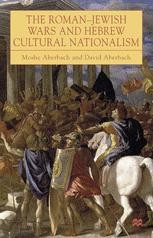
The work is split into two parts, one on the causes of the conflicts (and the culture as it existed before them) and one on the responses to the conflicts. The first part was the stronger section. Aberbach and Aberbach explore both short-term and long-term causes of the conflict. They include bad (particularly local) Roman leadership, high taxation and poverty, a corrupt priesthood, demographic changes in Rome (the Jewish nation was growing at a much faster pace than the declining Roman population), the differing religious cultures, and the differing responses to Hellenism (Rome turned itself much more heavily toward Greek culture, whereas Jewish culture internalized Greek culture into its own; in other words, one was more heavily transformed by it, while the other transformed it into its own).
The destruction of the Jewish nation as a political entity meant the preserving the nation became much more of a cultural endeavour. In ridding the empire of the Jewish temple, ironically, the authors show, Rome helped to ensure that Judaism would survive, because it was forced to transform itself into something not beholden to a particular place, in turn also helping to unify Jewish culture.
Sunday, January 15, 2023
On "Riders of the Purple Sage" by Zane Grey **

s book. Not those exact sort of revelations but ones like it--ones, dare I say, even more ridiculous. Here, plot takes precedent over feeling, character development, and logic. As such, this classic western seemed much like I usually imagined genre fiction being growing up; having now read a number of classic genre works, however, I've found that most are actually well written in almost every way. Not so here.
The riders are those who guard the cow herds of Jane Witherspoon, who of late lost her father, who was a rich man and from whom she inherited well. She is supposed to marry a man named Tull, as per the convention and command of the Mormon overseers of her local town. Her refusal has created a ruckus. What's more, she's been sort of carrying on with a non-Mormon named Venders, one of the few riders who hasn't quit her because of Mormon hostility and loyalty. As the book opens, Venders has been caught by Tull's men and is about to be beaten. In rides Lassiter to the rescue, a famous Mormon killer (that is, a man who kills Mormons). He's looking for a woman or the person who killed her, in order to seek revenge, but he just happens also to save Venders.
Jane had seemed to be into Venders, but saved, Venders goes off to save one of her herds, and Lassiter and Jane fall in. So much for the other seeming budding relationship. In fact, Venders ends up finding another gal, via a shootout with some rustlers, and spends most of the rest of the novel with her. Jane continues to lose cows to Tull and his group, who are intent on making her pay for not cowtowing to her Mormon overseers, and eventually things come to a head. I won't bespoil the rest of it, since plot "surprises" is pretty much all this book has.
Well, and this. Grey is pretty masterful at describing the landscape. That was the one redeeming factor--all those long passages about the scrub and the cliffs and the sage and the sunsets against them. It's a same such a setting had to be wasted on such an inane story.
Friday, December 30, 2022
On "Gunman's Reckoning" by Max Brand ***

I discovered this rather recently, as I started reading this list of westerns, a genre I haven't spent much time with. I'm reading mostly chronologically, so I had intended next to turn to Zane Grey, but I wanted to be devoted to that book, and Brand was available for free public domain download on my phone--I figured I'd read it in between the more serious other reading I was doing, that is, whenever I found myself in a waiting room with nothing but my phone in hand.
The text definitely is what I would have expected from a pulp western. It was rather silly overall, with lots of tough talk, lots of fighting, lots of plot twists, and characters who seem too over-the-top to be real. The book centers on one Donnegan, but it doesn't start off with him. Rather, we're introduced first to some hobo on a train who is out to murder a man who has broken up his gang. That man who is to be killed as it turns out to Donnegan, who remains a rather shadowy figure for much of the novel. He seems more like a sheriff in these early passages, but once he jettisons from the train, holding on to his life, he is seen for what he is: a hobo also, a wanderer of the world--but one with a keen ability to wield a gun, to see through people, and to manipulate people.
Donnegan finds his way to a house, where he meets a woman (Lou) whom he almost instantly falls for, even though they've barely spoken a word. He wants a place to stay, but that requires the approval of the woman's father (the colonel), who won't take visitors. Donnegan insists, and somehow the old man comes to view Donnegan as an asset who can help him reclaim a mine for himself and his daughter's fiancé (Landis) for herself. In fact, the woman is in love with this fiance, who in turn has gone to work in the mining town, fallen in love with yet someone else, and run off with the old man's fortune. Donnegan is on the trail to help. Sure, he wants the daughter, but since the daughter wants this other man, Donnegan, because he truly loves this woman, sets out to get this other man back for her. I can't say the motivation here really convinces me: men will do lots for folks they love, but for someone they've barely met and mostly to enable that person to have someone else? It seems rather crazy to take one's life in hand that way.
Sunday, December 25, 2022
On "Christian Antioch" by D. S. Wallace-Hadrill ***

Watson-Hadrill shows how Antioch grew in distinctive ways from the process of thought that came to be more acceptable in Alexandria and, by extension in Rome. Antioch, though influenced by ideas coming out of these places, turned much of its attention to the east--to Mesopotamia and Persia, where its ideas found slightly more accepting ground.
After a brief introduction on the background of the church, Watson-Hadrill focuses on six major themes: biblical interpretation, historiography, the nature of God, the use of Greek philosophy, Christology, and desert monks. With regard to interpretation, I'd long read that Antioch took a more literal view of scripture as opposed to the Alexandrian way of reading scripture allegorically. What Watson-Hadrill brought out was somewhat surprising, however. Certainly, qualifiers must be made, insofar as many Antiochenes still used typography and this is really not easily differentiated at times from allegory. But what came to me as a surprise is the fact that some Antiochenes read the scriptures really literally--to extents that some come off sounding like today's secular reading of scriptures. They might go so far as to reject the idea, even though its made explicit in the New Testament, that Noah's ark or the Red Sea were types of baptism. More to the point, they often rejected prophecies taken to be about Jesus or future events, stating that these pertained only to ancient Israel.
With regard to historiography, the writers Watson-Hadrill studies are mostly later ones. As such, he talks a bit about Eusebius's history as being an interpretation of Christianity as reaching its fullness with the adoption of it by Constantine. It is a story, in other words, of triumph. Later historians in the region would try to pick up where Eusebius left off, but by then, such triumph was clearly not the end of the story, given how much infighting there had been in the church. As such, one might pick up the history from where Eusebius leaves off, but no one picks up the same story.
The nature of God, philosophy, and Christology discussions get truly into the weeds, with the Arians versus the Trinitarians and various groups in between (Monophysites, Nestorians). I always find this discussion a bit frustrating if not over my head. It's frustrating because these theologians get so caught up in the philosophy behind theology and lose track of, it seems to me, the real message--the way one should act (in some cases, it's not even clear that they're really that far apart in terms of thinking--but that doesn't stop them from treating each other horribly). The Nestorians, we might say, largely emphasized the human side of Jesus, while the Monophysites emphasized his divinity and the unity of God. Interestingly, Wallace-Hadrill points out how the Antiochenes and the Eastern church focused more on Aristotle's philosophy than Plato's, even though they might not have known it. Rather than the "ideas" being real and everything physical being a copy of those ideas, as in Plato's system; Aristotle focused on the particulars being real and the "ideas" being abstractions. As such, one can read the trinity as three persons who are unified as "God" as a kind of concept, rather than as a concept that finds form in three manifestations (although, in asserting that last part, I'm really presenting the trinity as modalism, which of course is another heresy to most Christian thinkers and so not a precise way to think of the concept).
In a final section, Wallace-Hadrill focuses on the religious devotion of many of the Antiochenes, Syrians, and Eastern Christians. He makes a case that their form of asceticism differed from that of the earlier Gnostics insofar as it was not asceticism based on the evil nature of physical things but on a desire to get closer to God, in the same way that Jesus was close. It's a valuable distinction but also, like so much that the church in the third through seventh centuries argued over, one that is difficult to really see. After all, the Gnostics too, even if rejecting the physical as evil, were aiming to get closer to God and the spiritual; that, after all, was the whole point.
Saturday, December 17, 2022
On “Paul, Antioch, and Jerusalem” by Nicholas Taylor ***

The author essentially aims to show that Paul's relationship with the Jerusalem church varied over time. He did not contact Jerusalem early on and did not have a relationship with the church early on. Only when called to deal with how fellowship with Gentiles should be configured did Paul really start to deal with Jerusalem. This led eventually to the confrontation with Peter. After that, he tried to establish his own apostleship independent of Jerusalem (and Antioch, which had accepted Jerusalem's authority over his own) and created a number of independent church. In time, however, he came to some reconciliation with Jerusalem, or at least with the lead apostles, enough that he, as per agreed upon earlier, went forward with plans to collect donations for the Jerusalem church as a way of folding his own churches in with the lead church. This agreement was actually via/through Antioch, so Paul was actually doing something beyond or outside that agreement. When the timing proved to olate for Antioch's own donations, he had to go forward to Jerusalem on his own, which then led to troubles with the Jerusalem authorities and his eventual deportation to Rome and death. Or at least, that's much of what I got out of it. Taylor, as noted, seems to thread the needle a lot, showing how Jerusalem was never not in charge except that Paul was somewhat independent of it. It's a complex argument—much more difficult than simply saying Paul was on his own or Paul was not on his own.
The book itself is based on Taylor's dissertation. It doesn't appear that more than small changes have occurred between the two. The book is long on literary review and very definitely aimed at scholarly audiences, as his argument is one that would likely appeal only to those deep in the mud over what Paul's break or nonbreak with Antioch and Peter really consisted of.
Sunday, December 4, 2022
On "The Virginian" by Owen Wister ****

Here I am some thirty years later, and I read it, because Wister's book is known in some circles as the first true Western--a book with all the conventions of a cowboy novel--and actually written in the early 1900s rather than in the 1800s as I had once supposed. And it is a surprisingly good read--difficult to follow in parts but generally not too difficult, and in some ways narratively unconventional.
It is one of the few books I've read that is told from the perspective of a first-person narrator that is actually about a third person. Think Great Gatsby--which is really about Gatsby and Daisy and Tom and not so much about the guy telling the story--or to a lesser extent, On the Road, which in some ways is really about Dean Moriarty more than Sal Paradise, though Sal's ideas play a much larger role than in Gatsby. Here in "The Virginian," our narrator tells us all about a certain class of men that the Virginian perfectly fits and that is disappearing along with the American West. We don't learn too much about the narrator (he's from out east and doesn't really know much about Western ways, at least at the start), and many times in the narrative, the narrator completely disappears, as if he's simply recounting stories he's heard from the Virginian or his friends about the Virginian.
The Virginian is a southerner who for a long while has been a cow-puncher. One-half of the book revolves around his relationship with a man name Trampas, who early in the novel feels insulted by the Virginian at a game of cards. Thereafter, Trampas is forever looking to one-up the Virginian, and the Virginian constantly manages to put him down. Trampas is a brute, a man who only stops stealing cows from the ranch at which the Virginian works because after beinghired by the ranch. One day Trampas says insulting things about a lady from Vermont who has moved to the nearby town to be a school teacher; the Virginian defends her, even though he doesn't know her. He also, at some point, saves her from drowning. These incidents drive the Virginian to take an interest in the woman, even as Trampas again feels put out by the man. An ultimate insult occurs when the Virginian is put in charge of carrying cows east to Chicago with a crew; on the way back, Trampas attempts to abscond with the crew by telling them of the fortunes to be made in a mine. The train on which they travel breaks down; they're stuck. The mine is real temptation. The Virginian manages to keep his crew aboard by going frog hunting and then selling the cooked frog legs for high dollars to the various passengers and by telling a good number of tall tales about the great money to be made from frog legs. On his return to the ranch the Virginian is promoted to foreman.
Eventually Trampas quits, and cows begin disappearing again. Meanwhile, the schoolmarm is drawn to the Virginian but also repulsed. She has no desire in general to marry, but also she is disgusted by the way that our cowboy serves as the law in a place where there is no law--that is, the Virginian occasionally has to kill a man. Such an instance occurs when the Virginian and a crew are sent out to hunt down and kill a cattle rustler gang. They catch two, one of whom is an old friend of the Virginian's, and execution then proceeds.
Trampas is one who manages to get away, though the Virginian has no real proof. Meanwhile, Trampas buys a horse from a financially desperate man who promises to buy the horse back. Trampas treats the horse miserably and eventually kills it. This is the sort of man Trampas is. He also, in the process, realizes Indians are after him, and he departs; the Virginian is not so lucky. His schoolmarm finds him and nurses him back to health and finally falls for him.
This same Trampas executes the man who he has taken in as an accolade in order to escape from the lynch posse. And on the day of the Virginian's wedding tells the Virginian that he has till sundown to get out of town or face his death. And so we have the inevitable duel.
The book ends somewhat surprisingly on a quiet note, focusing mostly on the teacher and her Vermont family. One can think of it, I suppose, as an extended coda. In a sense, that's its proper function. After all, as the narrator states in the first chapter, he's documenting a kind of man who is disappearing from the landscape, as the West is being tamed.
Monday, November 28, 2022
On "Deep Time" by David Darling ***

We start with the big bang, an event for which there seems no logical first cause. The next several chapters then focus on one particle, as it comes into being and as it works its way around this fledgling universe. Darling points out how much happens in those first few seconds but how, in a sense, because of that, time really is different at this point, wherein things are so condensed.
Darling does his best to keep things simple. Unfortunately, writing about such a wide span of time in such a short work means that there's a certain glossiness to the whole, a blurriness, such that at times I found my attention waining. It didn't help that I read the work online as an ebook. I think reading in print, taking a bit more time and being a bit more comfortable, would have made the reading experience better and thus the book better.
Although Darling admits that the universe would seem to need some sort of physical law for the components to work as they do--for positive and negative to exist and attract one another--he mostly keeps to a naturalistic view of everything. When we finally get to Earth and the formation of life, we are given the story of the primordial soup from which life springs. And then, for a heartbeat, we see man emerge.
After man's emergence, Darling spends most of the rest of the book talking about the spaceship Voyager, as it wanders out of the galaxy and into the wide universe. What happens to it as the years pass and as the universe itself continues to expand. Eventually, the stars start to go out. A few black holes swallow up vast swaths of the universe, but still other parts continue to wander aimlessly, cut loose from their suns and centers, until they too fall apart and return to their particulate state.
Another option, the one now less popular, Darling also explores, that the universe is not ever expanding, that it is limited, like a balloon, and so at some point begins to contract. This idea gets shorter attention.
Darling ends with a pull toward Eastern philosophy, but with a Western slant. He hypothesizes how many himself could change the universe, especially insofar as the observer is never really separate from what is observed. We are part of the universe itself. Our mind is the universal mind. It seems a happy note to go out on, even if the picture of dead stars wandering and disintegrating add infinitum is a rather dreary future to look out upon.
Wednesday, November 9, 2022
On “Ramona” by Helen Hunt Jackson ***

The work is about Native Americans and the manner in which they are mistreated by the white Americans moving into California. It centers around the person of Ramona, a half-Indian gal, but the story starts off being about Senora Moreno and her ranch, which her son runs in name but which she technically has control of. (I'm about to summarize the happenings, so avoid reading on if you don't want the work spoiled for you.) The Morenos are Mexicans who lost a huge chunk of land to white settlers as well. Juan Can, the main helper on the ranch is growing old and broken, and one day Felipe goes to help him, gets a heat stroke, and is in grave condition. In steps Alessandro, an Indian, who has been requisitioned to help with the sheep shearing. He suggests the Felipe sleep under the stars, like the Indians. The treatment works wonders.
Meanwhile, Ramona falls for Alessandro, even as she once had an interest in Felipe. Senora Moreno opposes this love affair. Ramona shall not marry an Indian, as that is below her station, but at the same time, she would never be able to marry Filipe, because he is above hers. One wonders who would possibly be appropriate, since she is half-Indian and half-white. Moreno threatens to send Ramona to the nuns and also to cut off her inheritance. (It turns out that her father had left her a large dowry. Senora Moreno agreed to take Ramona in when Moreno's sister, who had keep the the gal, died. There is no love for her, however.)
Ramona runs off. Alessandro is a leader among his people and fairly well off, but the Indians of Temucula, whom he brings her to, it turns out, have been kicked off their land. The U.S. government doesn't recognize their property rights, and white Americans are moving in. Alessandro and Ramona flee to San Pasqual, where the same thing happens again.
Flustered and angry, the couple move to the high mountains, where the trails are difficult to navigate. At last, they should find piece. But the couple's baby grows sick, a white doctor offers no real help, and Alessandro goes crazy. Eventually, the leads him to mistake another man's horse for his own and he is shot as a horse thief.
Meanwhile, Senora Moreno dies. Filipe regrets letting Alessandro and Ramona be sent away, so he goes in search for them, which is complicated by the fact that they covered their tracks (even changing Ramona's name) so as not to be caught. It is shortly after Alessandro's death that he finds Ramona and brings her back to his ranch to take care of. He admits his love for her and marries her. He also concludes that California is no longer a good place for people of his ethnic background, so he sells out to Americans and heads to Mexico to live.
The work is in many ways very melodramatic, reminding me a bit of the plays one sees at Old West amusement parks.
Sunday, October 23, 2022
On “Primitive Christianity in Its Contemporary Context” by Rudolf Bultmann ****
Bultmann starts with Jewish (really Old Testament) ideas about creation and the afterlife, largely asserting that such ideas grew out of Canaanite and Babylonian religion. Only after Jewish society mixed with that of Persia did ideas about resurrection begin to take shape within the Jewish faith itself. This is a common assertion but one that is not without those who have claimed otherwise—one wouldn't know that there are disagreements with regard to where the teaching about the resurrection derived from reading Bultmann, however. Still, one of the most interesting points Bultmann makes is how the Jewish faith became increasingly future oriented, as its own national problems and eventual demise took shape. That future orientation would in turn, to an extent, set up early Christian teachings, even as Christianity would itself eventually take more of a focus on the present, once it became clear Christ's second coming was not in the near future, though the “future” would survive in the Christian orientation toward an afterlife.
Bultmann then explores Greek philosophy—most especially its growth out of concerns regarding the governorship of the city-state. As the city-state fell by the wayside, other views came to the fore, including Stoicism and the various mystery religions. Bultmann does a great job of showing parallels between these two sets of beliefs with Christian belief, including lack of tie to specific cultures, and openness to peoples of all classes. (Bultmann does not, however, seem at all cognizant of the belief among many scholars that many of the so-called mystery religions did not gain widespread appeal until the second century, after primitive Christianity would have forged its basic ideas; if that is the case, then such religions may have affected Christianity in the second century and later but likely had much less influence on the first decades of the faith.)
Bultmann also looks at the influence of Gnosticism on the church, drawing comparisons between the two systems, mostly looking at parallels, such as a belief in a redeemer and renunciation of concerns with the physical world. A final section looks at early Christian ideas and how all these varying influences helped to forge what became Christianity.
Saturday, October 22, 2022
On “Antioch and Rome” by Raymond E. Brown and John P. Meier ****
The basic point of view of the two authors falls in line with the common one that Paul represented some kind of radical break from Jewish adherence to the law among Christians and that Peter stood at the other end, as one aligned with James and who insisted on Gentile adherence to Jewish customs. That said, both see Paul and Peter as moderating their views as their ministries matured, such that they came to more closely resemble one another. Still, as the authors state up front, it was Peter's more moderate view (between James and Paul) that won the day, even if some of Paul's radical ideas were folded into the Christian church. This is not a view I share (I tend to take the “all is good” vibe represented in Acts and other Scriptures as real rather than as a gloss intended to put the best face on what was an intense rivalry and disagreement); nevertheless, there is much to appreciate about the book, insofar as the authors do a great job of summarizing much of the scholarship about the church in these two cities and, even more so, about many of the few early sources we have that might relate to these churches.
Meier posits four basic views among early Christians: a conservative strain that insisted Gentiles keep the full Jewish law, including becoming circumcised; a moderate conservative strain that insisted on some Jewish practices but not circumcision; a moderate liberal strain that insisted on neither Jewish food laws nor circumcision; and a liberal straing that rid the church of not only Jewish food customs and circumcision but also of Jewish festivals. Although the authors seem to posit that Peter was of the moderate conservative strain and Paul somewhere between moderate liberal and liberal and that Peter won out, it seems to me that if one takes such a stand, it was actually the liberals who eventually won out, as contemporary Christianity exhibits little of the Jewish faith outside of the use of its scriptures.
Along the way, Meier makes a good case for why Matthew was written in Antioch around 90 CE, and also explores similar dating, place, and authority for the Didache and the Ignatian letters, including which rescension should be accepted. Brown similarly explores the authorship and tie of certain other books to Rome, including 1 Peter, Hebrews, and 1 Clement. Although there is room for disagreement, the arguments are well reasoned and give one much to think about with regard to the development of these two Christian communities.
Saturday, October 1, 2022
On “The Incredible Human Potential” by Herbert W. Armstrong ****

The work seems most dated (and disappointing) in its discussion of the church. Armstrong admits that the church is the people, and yet at times, he pretty clearly ties the definition of the church into the legally incorporated organization he served as the legal head of. It seems self-serving and given that that entity has mostly ceased to exist in any recognizable form, it lends a lack of credence and applicability to some of the material.
But in other respects, he lays out the faith as many have understood it, a reading that is distinct among Christian sects: God's purpose for our lives, how human minds work, why there is so much evil, and what happens after death.
Tuesday, September 20, 2022
On "Jews and Christians in Antioch in the First Four Centuries of the Common Era" by Wayne A. Meeks and Robert L Wilkes ***
Libanius mentions the Jews offhandedly in a kind of historian context; I found myself more drawn to Chrysostom's work, which heavily focuses on them and their interaction with Christians, whom he sees as too easily drawn to the religious practices of. We are presented only with two (the first and last) of his homilies against Jews, but they, especially the first, are incredible in terms of showcasing the degree to which some older Christian--that is, Jewish--traditions persisted, despite the attempts of men like Chrysostom.
Thursday, September 15, 2022
On “From Jerusalem to Antioch” by Jerome Crowe ***
The gist of the book focuses on various ways in which church functions differed in the two locations—preaching, doing missionary work, the mode of worship, the specific message, organization. Most of the text recounts basic details that most people would already be familiar with. In Jerusalem, converts were Jews and met among Jews; they focused on a kingdom to be brought by Jesus, and all fit well within the system already set up. When things came to Antioch, the message had to change, especially as it moved into the pagan realm and out of the Jewish and Jewish curious realm. Now, the focus became philosophical, focused on the “one God” as seen via his son. Meetings moved from synagogue to houses, and so on. Much transformation obviously did occur, but the changes discussed don't seem very deeply analyzed. We get an accounting of how things were different, knowing that the reason was differing cultures, but not so much a discussion of why such changes were made.
Monday, September 5, 2022
“On Theophilus of Antioch” by Rick Rogers ***
Where the book grows most useful is in its final third, where Rogers does his true analysis of the subject. Here, he plays off the work of R. M. Grant, whose work he also summarizes. Grant's thesis on Theophilus largely claims that the man was a low-Christology adoptionist (one who believed that Jesus has no prebirth divinity and who was “adopted” as divine at the start of his physical life) of a Jewish stamp (much like the Ebionites). Rogers critiques this view, arguing that although Theophilus claims to be a Christian yet talks very little about Christ in his work, the work was largely intended for a particular purpose that did not require extensive discussion about Christ's role (indeed, such discussion may have turned off his intended pagan audience). As such, it's difficult to assess Theophilus's view of Christ.
That Theophilus was viewed favorably by later early writers such as Eusebius and Jerome, however, suggests to Rogers that he was “orthodox enough” and that his view of Christ may well have been more line with thinkers like Ignatius and Ireneaus. Indeed, Rogers points out, Theophilus's heavy emphasis on law keeping would seem to suggest a closer tie to emphases that the writer James makes in his New Testament letter rather than views outside the pale. (Rogers sees James and Paul not so much as opposites—Paul had his own way of emphasizing the efficacy of the law—but as writers who emphasized different aspects of faith.) Theophilus talks little of the death of Jesus allowing the forgiveness of human sin (indeed, doesn't really mention it), instead emphasizing, like James, that Christian faith (and the salvation that comes with it) demands an adherence to high ethical standards set forth in Scripture. Such emphasis would have played well to Theophilus's purpose of attempting to win interest from a non-Christian, who would have been more drawn to the ethical dimensions of Christianity than to the theological ones.
Sunday, August 28, 2022
On "Ignatius of Antioch" by Allen Brent ***
Why Ignatius would have traveled all the way to Rome is another question that Brent addresses. He sees it as a case where putting Ignatius to death in Antioch would have created too much of a stir. Sending him away, thus, avoids the potential for more violence and fighting. What would Ignatius have done that would have created such stir? Brent makes the case that the strife was all internal to the Christian faith--namely, how to run the church. Ignatius was a proponent of a one-bishop-rule system. By placing himself in the fray and refusing any attempts at pardon, he made a martyr of himself in order to bring unity to the church in the city. Guilt-riddled, men might see what he was willing to do and change their ways accordingly. (I'm not sure I quite believe this, but Brent makes a decent case using cryptic comments from the letters).
Ignatius's main arguments for a bishop, slated next to a council of presbyters and a set of deacons, is drawn, Brent argues, largely from pagan mystery religion and Grecian city-state political systems under Roman oversight. The metaphorical counterpart in Christianity is the Eucharist, in which authority sits in a U-shape. The bishop stands in for God the Father, the presbyters as god's council (a type of the apostolic council), and the deacons as types of Christ, who take the bread and wine into the congregation. Ignatius, in his journey to Rome, takes on a procession like that made within the mystery religions, in which again he stands in for God and his various greeters as stand-ins for the gods, all in an effort to bring unity to the church (as such a procession would bring unity to the state), with the sacrifice to follow at the end. Various quotes from the letters seem to somewhat back up this claim. Indeed, even if Ignatius was not modeling his argument on pagan rites, as Brent seems to be arguing, he likely was at least applying similar terms to make his point, even as the New Testament writers use traditions such as Roman athletic events to make their points.
Ignatius's letters, some thirteen or so in number, are accepted or rejected a spurious by various critics. Six are rejected by almost all, but the other seven are more so accepted. It is these seven that Brent devotes his time examining, and these seven that he argues actually are legitimate. One chapter is given over to countering the arguments of some more-recent scholars who reject some or all of the letters. Another chapter is devoted to how Polycarp's letter fits in with the Ignatian letters. Polycarp's one surviving letter is largely seen as authentic, but some scholars see the mention of Ignatius in it as a forger's interpolation. Brent seems pretty convincing in noting that probably the main reason we even have Ignatius's letters is that Polycarp gathered them, even as his letter makes mention of doing.
Brent also addresses why Polycarp would save such letters if they maintain a position in which pagan ideas are used to justify a version of church government. He sees the link here largely as both Ignatius's and Polycarp's fight against Docetism, the martyrdom of Ignatius being perhaps one of the greatest arguments against the doctrine.
Tuesday, August 23, 2022
On "The Church in Antioch in the First Century CE" by Michelle Slee ***
Slee also does a very good job of summarizing the scholarship surrounding her various assertions, both those for and against her positions. The effect is to give readers a full sense of the opinions out there, but it also to an extent takes from the overall convincingness of her case. Her opinion seems, in such context, merely yet another one rather than the distinctive answer. Indeed, I felt as if she were quite straining in her overall thesis by the end, because so many various "facts" have to line up as she sees them for her overall point to be true.
We have to, for example, accept that the Didache was written in the first century (the earlier the better) and that Matthew was written around 80 CE--and both in Antioch. Many scholars agree with these dates and the place, but if one doesn't, nearly the entire argument falls away. Further, one must accept that James and the Jerusalem church, after making an agreement with regard to how to treat Gentiles, went back on that agreement, thus splitting Paul off from the other apostles and most especially James. Slee even tries to make a case that the letter reproduced in Acts was not written in Jerusalem or at the conference at all--rather, it was created in Antioch by a Didachist faction and the writer of Acts introduced it into his account (the real agreement, which was nevertheless rescinded, was noted earlier in James's speech; because the speech and the letter don't line up precisely, one must be from some other source--as if there would be any point in quoting both if they did line up precisely!).
The center of all of this argument was tablefellowship, and more precisely the Eucharist. The Didachist was open to "Law-free" Gentiles; the writer of Matthew expected all Gentiles to become Jews so that they could share meals and was only recently even open to that. But what is a Eucharist? What does "Law-free" mean? What is Judaism (when no such unitary concept actually existed during much of the first century)? Slee didn't, for me, adequately define these terms. She admits that the Eucharist at this time wasn't well defined, which is likely, but it was unclear to me how it differed from tablefellowship in general or a love feast. If it is only the bread and wine portion of a meal, why would that be special at this time? And if the Gentiles are "Law-free," are they free to worship pagan gods or do other things forbidden in the Scriptures as long as they don't bring improper meat to the meal? The whole issue with tablefellowship with Gentiles was the idea that they were impure based on the possibility that they might be involved with pagan worship, even indirectly, in what they ate. The decree in Acts 15 was to mitigate that. So "Law-free" seems an awkward wording to use, since it imposes part of the law. And how exactly is Matthew a defense of a Jewish Christianity open only to fully converted Jews, when so much of the book critiques the Pharisees, even if it does not (as Slee brings out) critique the Scribes in the way the other Gospels do? (Slee sees the critiques as being actually about Christian factions.) Slee makes her arguments, but in the end, I found many of them unconvincing.
Wednesday, August 17, 2022
On “Aphraates and the Jews” by Frank Gavin ***
Despite all that, the Christian faith and Jewish faith were still relatively close, especially having a common origin. In the latter half of the book, Gavin looks in particular at a few of Aphrahat's Demonstrations to show how Aphrahat's words mimic those of the rabbis.
Sunday, August 14, 2022
On “The Formation of Christianity in Antioch” by Magnus Zetterholm ****
Zetterholm's basic thesis is that the parting of the ways of Christians from Jews was not so much that as it was a separating of Jesus-believing Jews from Jesus-believing Gentiles. This may seem obvious, but Zetterholm focuses on what the implications for such a statement really mean.
The book begins by looking at the role of the Jewish community in Antioch. As Zetterholm makes plain, that community was not a unified front. As with any immigrant community, Jewish peoples in Antioch fell into various factions. Here, Zetterholm uses social theory to make his point. (The long summaries of such theory are perhaps what makes the work very much one of scholarly tone and less interesting than it would otherwise be.) That theory essentially posits that such immigrant communities have varying sets of people: some aim to fit in more with the community to which they've moved, some become more inclined to focus even more on preserving the culture from which they have come. And then, there are folks of various stripes in between, who merge some aspects of the old home with that of the new. So some Jewish people gave up practicing “Judaism,” while others became much more devout, and still others continued some practices while abandoning and adopting others. Judaism, at this time, Zetterholm claims, although not the definitive religion we now know it to be still had unique characteristics that all the various sects would have agreed on, even if they didn't agree on all the particulars or the meaning of those characteristics.
Gentiles in Antioch would have been attracted to Jewish synagogues because of the community that such gatherings offered. Antioch as a city would have been a dangerous and lonely place full of crime and disease. The Jewish synagogue would have offered a reprieve from such a world in ways few others legal gatherings could have. The Jesus movement's impact within those synagogues would mean that some of the synagogues more open to Gentiles would have been affiliated with the faith being forged at that time.
Much ink is spilled at this point on the Acts 15 conference and Paul's letter to the Galatians, as it is in any work about Antioch. Zetterholm, like many, if not most, Christian writers posits a split between followers of James and Paul that would be relatively permanent, with Paul demandings Gentiles remain Gentiles and James demanding Gentiles become Jewish. (The disputes in the New Testament, I would counter, don't really show this.) Nevertheless, the implications of the differing factions do play out in an intriguing way as Zetterholm sees it.
The reason is that after the destruction of the temple and the imposition of the tax on all Jewish people, Gentile believers would have been placed in an awkward position. All Jews, whether practicing or not, were subject to the tax. Gentiles, by contrast, would have only been subject to the tax if they became Jews. As such, they'd have had strong reasons not to become Jewish. Within the synagogue, however, in some communities, they could not take part unless they became “Jewish” by taking on Jewish customs. If the opted not to become Jewish, as Paul had told them they should not be, then the couldn't be full-fledged members of the synagogue and, as such, couldn't be part of a legally recognized colegium. So either they had to become fully Jews (and pay the tax) or they couldn't meet with the synagogue and thus were subject to punishment for illegal gatherings—a penalty either way. Efforts to justify Christianity to Roman authorities (as per the second-century apologists), in his reading, thus become efforts to become legally recognized gatherings separate from Jewish gatherings. As such, criticism of the Jewish faith within such writings are part of an effort to help those Roman authorities distinguish the two from one another, but with the Gentiles now claiming to better represent the ancient faith written out in the Jewish scriptures. Thus, they are still a synagogue group of sorts, in the ancientness of their beliefs, but not of the Jewish stamp, in the rebelliousness of their subjects. When Roman authorities finally do recognize the different several centuries later, anti-semitism has become part of parcel of early Christian teaching.

 Posts
Posts


