Monday, May 30, 2022

On “The Columbia Anthology of Modern Chinese Literature,” edited by Joseph S. M. Lau and Howard Goldblatt ****

This is the second volume of Chinese literature put out by Columbia University Press that I've read. The first was classic lit; this volume deals chiefly with the literature of the twentieth century. The shame in that is that when the two volumes are put together, the one to two hundred years in between get short shift. Like the previous volume, I was not a fan of the manner in which this volume was put together. As someone who knows little about Chinese literature and who is trying to learn more about it, I would have relished a bit more attention to context. Why these selections? And what do these selections say about the state of Chinese literature at the time? This volume, rather, is set up like a literary anthology in which the editors' voices are relatively muted; the “literature” you're reading is the important stuff, even if you know little about it. There are no headnotes. Instead, there is a set of short biographies placed at the start of the entire book, forcing a reader to go back and forth between the selections and the bios for info. The bios give good life info and sometimes a little info about the selection itself, but it's hard to glean, from the bios and the overall setup, why the editors chose some works or how relatively important the writer or the piece is to the overall body of modern Chinese literature. I found myself no longer checking the bios by about halfway through the volume, as they began to run together.

Intriguingly, the editors chose to provide the volume in three sections, with three subsections each. First, the anthology is split up by genre: Fiction, Poetry, and Nonfiction. Then, it is split up by period: pre-Mao (from 1918), Mao, and post-Mao. Personally, I would have preferred the genres not be split out, so that the work would have been wholly chronological, but I can see the value in the generic splits. The fiction section is the longest, taking up 5/7 of the overall text, with the poetry and nonfiction each taking up about a seventh. Initially, I would have thought the fiction—short stories, not chapters from longer novels—too long, but the editors choice here seems to be wise. It is the stories that are the strongest section of the book. The poetry, I found, though often full of profoundly beautiful imagery did not seem on par, as a whole, to the classic Chinese poetry of years before, the images often not evoking a parallel track of thought about life. The nonfiction was also not so inspiring or interesting to me. As such, the stories proved to be the section that most seemed to reflect the concerns of daily life for modern Chinese.

What is evident in the pre-Mao section stories is the poverty that must have dominated China before the coming of communism. Such helps explain why the revolution came about. One gets the sense in some tales, which present a more communistic view, of the hope some held out for revolutionaries. But mostly, one gets the feeling for the overall povery of the population. The Mao section of stories present only a few of idealism. That's because so much of the literature that the editors have chosen comes out of Taiwan. But there's probably good reason—idealistic stories of Maoist society do not generally make for interesting reading, except maybe the first one or two times. The Post-Mao world is surprisingly open about the failures and horrors of the Cultural Revolution—neighbors turning in/on neighbors to keep from being turned in themselves, no one truly guilty of anything outside a willingness to sell others out for alleged lack of loyalty to save one's own skin; old revolutionaries who have come to see the folly of their hopes; local party leaders who use their authority to perform heinous acts.

My two favorite pieces in the book stemmed from this post-Mao period. The first, “The Tunnel” by Chen Ruoxi, concerns a lonely older man whose adult children are devoted to the party and who are making their way up various government positions. This older man cannot be and is not allowed to have a love interest, since that would interfere with inheritance and potentially with the children's party status. During the course of the story and his service on one of the party committees helping to aid the community, he finds himself falling for a widow, whose husband had been accused of being against the party and had been taken away. The father finds various amusing ways to have small trysts with this woman, sneaking out, for example, to see movies with her. But the family will NOT allow him to remarry—it is simply shameful for an older man and would hurt his children's own economic needs. One day, the couple opts to skip the movie and go for a hike in some lesser known part of the city. They find a tunnel and some alone time. The ending here is heartbreaking, just as the man's experience of being denied love would have been.

The other story, and a very short one at that, that stood out to me was Liu Yichang's “Wrong Number,” not so much for its emotional connection as for its technical trickery. The tale is one told twice, once without the “wrong number” phone call and once with it, showing how a few minutes—a dead butfferfly, if you will, to use the old sci-fi trope—can change the course of one's life.

Sunday, May 29, 2022

On “The Common People of Ancient Rome” by Frank Frost Abbott ***

This work had moments of lucid prose focused on the “common” people, but the majority of the early portions of the work focused on language and literature. In a sense, I understand why. We have mostly just what is written to gather information about such people. But in that sense, the work becomes one of linguistics and reflections on literary statements about the lives of such folks, itself not the most pedestrian discussion. I was fairly bored before Abbott got to stuff I was actually interested in—economics. Life, as Abbott notes, was quite hard for most common folks and luxuries few. Indeed, things we would consider staples, such as a well-balanced diet were not to be had. Bread and water might be your livelihood. Much of this I'd read elsewhere by now, for example, regarding housing and trade guilds. Still, it was interesting. Abbott closes with a couple portraits of Romans about whom we know a little from writings that survive. These were not “common” people, however, in my estimation, being friends to Caesar and various political entities. As Abbot''s work makes clear in its selection of things to discuss, finding info on common folk two thousand years ago is no easy task. Histories are written about the “important” people in our world.


Wednesday, May 18, 2022

On "Parthia" by George Rawlinson ****

Of the three books I've read on the Parthian Empire, this is the best. One focused on the political history of the empire and was difficult to parse without more understanding about the general history surrounding the events. One was really interesting and well written but had an agenda that made much of the information in it suspect. Rawlinson's text seems to strike a good balance, providing useful background info for the eventual political history that follows. But it doesn't just focus on events; it also gives information about the geography and culture, which gives one more of a feel for what those events meant to the folks living at the time.

As a work of history written before the 1950s, it does, alas, participate in some of the dated wording and colonialist perspectives that such older histories often do. Rawlinson, in other words, is too often willing to take on the views of Parthia's detractors, calling it a region of barbarians and critiquing its culture as less refined than those of the West. 

The book starts with a discussion of the geography of the area. Following that comes the bulk of the book: a recounting of the various kings and the wars in which they participated. Because so little information was recorded by the Parthians themselves, most of our history about the region comes from outsiders, most especially the Romans. Thus, the history to a large degree is a recounting of Rome's various wars with the empire--and usually over the kingdom of Armenia. My particular focus of interest was the warfare within Mesopotamia, so it was interesting to read about Cassius's disastrous invasion of Parthia--and then the later less disastrous invasions by Titus and another emperor (Severus, if I remember right). Rome never seemed to hold the land for long. Strangely, Parthia would often send royal family to be educated in Rome, which would give Rome the aura of holding "captive" Parthian royals and let it feel superior, even as Parthia often put the actual Roman army to flight.

Parthia was a rather loose empire, with many vassal states within it. The Parthian king was a "king of kings" insofar as many of the vassal states had their own rulers. One gets the feel that it had a more easygoing government than Rome did and that the people had more freedom (though, really, it wasn't likely the "people" who had the freedom but the vassal governments within the Parthia empire that had the freedom to rule over the people as they willed). That leant the kingdom both its strength and its weakness, insofar as the kingdoms ruled over were more often willing to fight for themselves but also, with less cohesion among the subject peoples, less unity between the various factions.


Sunday, April 10, 2022

On “Simon Peter in Scripture and Memory” by Markus Bockmuehl ****

The most intriguing idea contained in this book is that, as Bockmuehl argues, we may not be able to know exactly who Peter was or what he actually did, but we can note his importance and the degree of influence that he held over the early church by the shadow that he casts, the the ripples that he left in his wake. Bockmuehl the examines what those ripples would be, even as he admits that some of the literature about him may not be wholly accurate. It's a good point. Why, after all, would so many early writers fuss over Peter or try to tie their own claims to Peter were it not that Peter had some kind of heavy early influence. He must have been an important apostle.

Bockmuehl does this by examining first writings left behind in the Eastern church and then in the Western. As he notes, few in the Eastern church lay claim to him as one of their own, that is, as one who traveled extensively in the area. Rather, Peter is more often associated with the West, even in the East. And his martydom in Rome is acknowledged by quite a few early writers—hinted at if not outright stated. Bockmuehl also provides a useful website where he summarizes, or gives quotes from, the various early writings about Peter, which should be very useful to anyone else who might want to examine the evidence.

He closes his book by looking at Peter in two particular situations. First, he looks at Peter's conversion—or rather the narrative of it. Much attention is given to Paul's conversion on the road to Damascus, but we have no similar single moment provided for for Peter. Yet in Luke, Jesus tells Peter that he will be handed off to Satan for a while, and when he returns, he should take care to care for others. We never really see that moment. When did it happen? It seems to have occurred between the end of Luke and the start of Acts, wherein Peter is already strong in the faith. Bockmuehl guesses that the turn to Satan happened at Peter's denying of Jesus, which would make sense. The turn back would happen at Jesus's resurrection, when Peter saw Jesus, which would also make sense. John's recounting of Jesus telling Peter to “feed my sheep” three times works off this theme of conversion—insofar as it's the opposite of Peter's three-time denial.

Second, Bockmuehl looks at Peter's upbringing in Bethsaida, which is only mentioned once in Scripture. This was perhaps the most interesting reading Bockmuehl did in the work. We associate Peter with Capernaum, where he lived as an adult. Bethsaida was a far different area—mostly, from what we can tell, Gentile. As such, Peter would have been quite familiar with non-Jewish culture and likely would have spoken Greek (contrary to what many try to argue—namely that he didn't know the language), even though he likely grew up in a devout Jewish household. Such a background, of course, would have made Peter a very useful apostle indeed.

Wednesday, March 23, 2022

On "The Dream of the Red Chamber" by Cao Xaoqin ***

Credit working a second job and general length of the book for making me take so long to get through this one. Or perhaps credit the fact that this book, although a classic of Chinese literature, goes nowhere. It reminded me of the Japanese classic The Tale of Genji, insofar as it is largely about court intrigues and relationships among a well-to-do family. Single chapters are great. Indeed, I read an excerpt from this book in an anthology, which made me look forward to reading this text. But the episodic nature of the book and the fact that the writer often introduces plot points that go nowhere ultimately make this something of a frustrating read.

The early chapters of the book recount the disappearance of a young woman and the family's reaction to it. It's a great set-up (where'd she go? what happened? don't know), but eventually, we end up spending time mostly with the family of one Pao-yu Secundus, a fifteen-year-old with many female cousins and servants who sloughs off at his schooling and displeases his father. As a portrait of this portion of China at this time, it's intriguing. Pao-yu forges a close friendship with one other male at one point, who then traipses off to other places. He forges close relationships with his various maids and cousins. They get together to write poetry and start a poetry club. Families of the maids visit. One lower-class mother of one of the maids visits, gets drunk, and makes a full of herself.  One maid is given the opportunity to be the second wife to a rich older man, which she rejects, much to the shock of others. Pao-yu travels far off to a temple, unbeknownst to his family, indeed, hiding the very fact. Each of these things is told in discrete chapters, which alone are interesting enough. Together, not so much. Court life is tedious.

The book ends--or at least the version of the book I read--ends with Pao-yu meeting a doppelganger, another boy named Pao-yu, this one twelve years old, but otherwise similar in personality and looks and even class situation. He is even, at one point, somewhat mistaken for the other boy. Intriguing. But alas, it was just a dream. Not so intriguing. "And if you'd like to know what happens next, reader, you'll need to turn to the next chapter." That is, the book ends with the same ending that all other chapters carry, as if the author were writing a serial that was cancelled in its midst, with discrete chapters that feature the same characters but not always plot points that go from start to finish.

Monday, March 21, 2022

On "The Shepherd of Hermas" **

I wasn't expecting much from this work, and it delivered just about what I expected. I find it interesting so many early Christian writers thought this almost on the level of scripture. My interest in that stems largely from the fact that were this work actually in the cannon, what sense would I make of it--and why would one think it at such a level that it should be.

The work starts off with a set of visions or tales in which Hermas meets up with various angels--mostly women. He finds himself drawn to them; they give him instructions. He's warned about having lusting thoughts. At one point, he's even told that Christians have the opportunity to repent only once of a sin after baptism; after that, there's no more hope. That seems a strange comment and one that later portions of the work don't seem to confirm.

Although the visions were not particularly interesting to me, the next two sections had a bit more going for them. The second section consists of mandates, twelve of them. Think of them like commandments for New Testament believers. I couple of them seemed so close in meaning that I had a hard time distinguishing between them. Most were a bit long-winded, and so not as easy to ferret out or summarize as the Ten Commandments. Nevertheless, I'll try here:

  1. Believe God is one.
  2. Be guileless.
  3. Love truth.
  4. Remain pure.
  5. Have patience.
  6. Trust righteousness.
  7. Fear the right things.
  8. Remain temperate in right things.
  9. Avoid doubt.
  10. Put away sorrow.
  11. Trust the Spirit.
  12. Remove evil desire.

The last section consists of a set of parables, comparing the church and believers to this and that--trees, plants, cities, towers. These, on the whole, seemed much more approachable than the visions at the book's start.

Sunday, November 21, 2021

On "Tomorrow . . . What It Will Be Like" by Herbert W. Armstrong ***

I first read this book as a young teen, feeling somewhat obligated to do so and to "like" it, because it is a religious book. Coming to it again as an adult, I find it still difficult to assess critically, since Armstrong forged such an influence on my family's life when I was a kid. What would I think of it if I hadn't grown up around such influence? It's hard to say. Why reread it now? Because after this year's Feast of Tabernacles, I had a desire to study up on what the Bible says about urban planning in the millennium. I was hoping this book might have some ideas. In the end, there wasn't much on the subject, maybe a couple of paragraphs that remotely relate.

What I did find was a book that in some ways is very much of its time (1970s) and in others is rather timeless. That was the way that Armstrong often wrote. I found a lot of his standard catch phrases, the same quotes he liked to trot out constantly. He writes often in generalities that would be true of any time and place (there's lots of pollution in the world, etc.). But it's also interesting to think of this as a work of the 1970s, when concerns about overpopulation were rife, and when books like Futureshock were the rage. (It strikes me that such concerns still make up much of the publishing market, but somehow they don't seem quite as at the forefront as they did to me as a kid. Now, such ideas would be subsumed under works about global warming and climate change.) This book works off a lot of those 1970s fixations. Armstrong opens with two chapters about futurism: pessimistic views of the human future versus optimistic ones. Which will it be? And then, he lowers the scriptural appeal: Neither, because Christ will return (essentially saving humans from the reality of the more pessimistic assessment).

Much of the rest of the book looks at scriptures revolving around what this future world will look like. I found myself wondering, in some cases, what some not familiar with his other teachings would think or understand, because in some cases, the work seems to take that knowledge for granted. In some cases, I found myself thinking that the author goes on far too much about his views on top-down government and, most especially, who will do what in the millennium. One can certainly hypothesize about the role of specific resurrected patriarchs, but outside of David and the apostles, the scriptures don't actually say. Why spend so much time on the subject? There was also one passage espousing segregationist views that were very off-putting.

The book probably hits its stride most as it draws closer to its conclusion, in Armstrong's chapters on education and more especially language. The more scriptures take the central role the more grounded the work seems. But then, why not just read those?

A couple other surprising things about the book? First, its length. At barely over one-hundred large-sized-print pages, the work comes in at just a bit longer than the various pamphlets the church published. When I was young, one hundred pages seemed substantial; now, not so much. Second, its reading level. The work consists of short sentences and is very easy to read. It is set up to appeal to a wide audience, and in that sense, I rather appreciate Armstrong's writing skills and background in marketing. Maybe the writing seems a bit glib, but it certainly better conveys its points than the long-winded, highly qualified assertions I'm prone to.

Monday, October 4, 2021

On "The Sibylline Oracles" translated by Milton S. Terry ***

This ancient work consisting of fourteen books poses itself as a set of prophecies about world history and the fate of mankind. Parts were very interesting to me; others not so much, especially as the work gets to be rather repetitive and at times obscure. Not all the books survive and not all that do survive do so in complete form. The books, most scholars believe, were written over centuries by different writers with different agendas. Thus, some sections seem to be Christian in orientation, some pagan, and some Jewish--many merge aspects and views from these various traditions. It's interesting to read the differing views on the end of time as they develop within the books, though the varying writers makes for many inconsistencies in such views; because we don't know for certain who wrote what and when, unfortunately, tracing the development of thought within the collection is to some extent necessarily and unfortunately speculative. The translation itself that I read, available online here, was well done--with useful notes and the materials placed into polished blank verse.


Sunday, October 3, 2021

On "The Christians as the Romans Saw Them" by Robert L. Wilken *****

This book came up on a list of best Christian history books, and having found a good copy at a cheap price, I decided to try my hand at reading it. I was glad that I did. It is one of the most interesting takes on early Christianity I have read, one that seems like a very obvious study to undertake but that Wilken actually did.

Wilken focuses on the work of five individual Roman writers over the course of the first four centuries of Christianity--Pliny the Younger, Galen, Celsus, Porphyry, and Julian the Apostate. In the course of doing so, he shows how the reaction of Christianity changed especially as it increased in popularity.

One issue with early writing about Christianity from those outside of the communion of believers is that so little of it survives. Pliny and Galen both mention it only briefly, as during their lifetimes, the religion was hardly widespread. Pliny's letter to Titus regarding what to do about Christians was well familiar to me. In it, he calls Christianity a superstition, which was one of two main ways that it could be perceived by those outside its associates. Galen, by contrast, in his brief offhand mentions of the faith seems to equate it with philosophy.

Celsus and Porphyry both take the religion much more seriously as a threat to social order. Alas, neither of their writings survive in whole. However, we are lucky to have large chunks of their works preserved in the writings of others who wrote responses to their work. Although both writers see issues with the faith mostly in relation to societal order, the latter is more familiar with Christian teachings. Such would be even more the case with Julian, who was raised Christian. As such, each writer posed a greater challenge to Christian orthodoxy, even as Christian orthodoxy took on a stronger and stronger role within the empire. This intermix of arguments for and against Christianity, Wilkin argues, in the end, opened up new avenues in intellectual thinking throughout the Western world, avenues that continue to reverberate today.


Saturday, October 2, 2021

On "Worship in the Early Church" by Ralph P. Martin ***

Based on a single quote in another work, I had at one time had high hopes for this work, but after reviewing its table of contents, my expectations waned. Still, when opportunity to purchase the book at a discount price (it was not available at my local library), I took advantage. Having now read it, my lower expectations were indeed correct. The work is a good summary of various views regarding worship practices in the early church as expressed by various scholars up through the early 1970s, but as with so much of our understanding of the practices, much is conjecture and much of the rest is implied by Scripture such that any devout reader of the latter is likely not to pick up much new here.

Martin largely notes just that--that we don't know for sure a lot about these practices. He summarizes views of others. I was, in part, particularly interested in his take on service organization and on the introduction of the eucharist into that service. He does see some connection between the eucharist and the Passover, but interestingly he claims that diaspora Passovers consisted only of bread and wine. Thus, there was no lamb at the Gospel Passover (to his point, the Scriptures don't reference the lamb, though, as with so much from this period, the historical evidence elsewhere may not be so conclusive as to say that lamb wasn't served as opposed to simply wasn't mentioned). The other major point one gathers from Martin's reading of worship practices is that they became more settled as Christians settled into their second century of being.

One nice thing is that Martin's survey did provide me with other areas that deserve more study on my part, such as focusing on the nature of Jesus's prayers outside of his model prayer.


Sunday, September 12, 2021

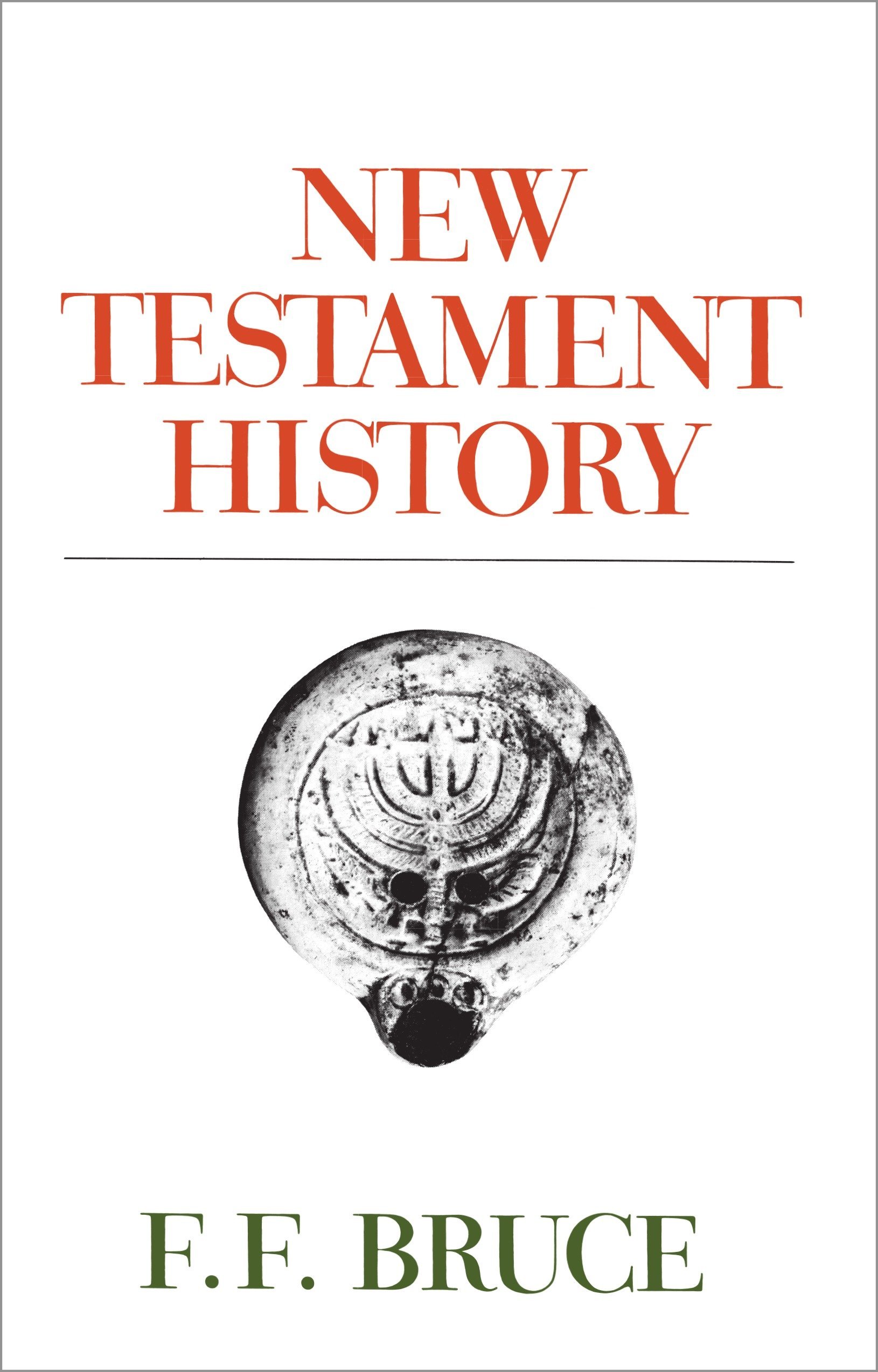
On “New Testament History” by F. F. Bruce *****

Imagine a Bible commentary presented in chronological format, and you'll have something of what this book by F. F. Bruce is like. Bruce lays out the context in which the early Christian church came into being, first by discussing the Roman and Jewish social and cultural world of the time, then by telling how John and Jesus did their work, and then by following the early apostles in their work. Going into this book, I thought I'd be underwhelmed. After all, much of this information is in the scriptures themselves—or so I thought. But Bruce doesn't just follow the biblical line, giving information that readers could easily glean from their own Bibles. Rather, the contextual discourse set up in the first third of the book continues through the whole thing, such that one gleans a fuller understanding of each of the events presented in any scripture that Bruce touches on. Although much of this information was familiar to me, some of it was not, and I feel I could return to particular biblical passages with a greater understanding. That said, this isn't a book with a particularly strong thesis, so any arguments one might have for or against the work are likely to be with sections than with the work as a whole, which is instead rather encyclopedic.

Wednesday, September 1, 2021

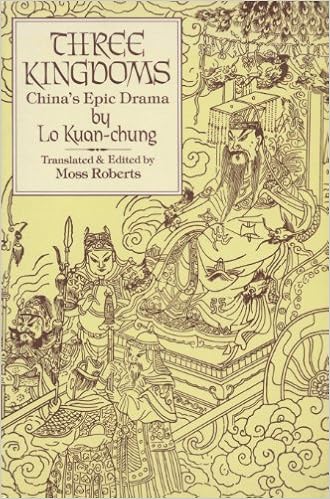
On “Three Kingdoms” by Lo Kuan-chung, translated and abridged by Moss Roberts ****

This abridgment of the full text amounts about one-quarter of the original's size and about three-quarters of the original story. Roberts presents key scenes and summarizes large portions for the reader. In all, one gets a full sense of the essential plot, which seems an amazing feat really, when one thinks about how complex this novel is.

The story recounted here essentially involves the three kingdoms period in China, just as the Han dynasty was ending and three kings fought for control of the land, leading eventually to the short-lived Sung dynasty and the domination of China by the Mongols.

In the book, the Hans are beset by a disloyal general in the north lands Tsao-Tsao. Although he proclaims his loyalty to the emperor, he is most certainly looking to gather power to himself. Poised against him is a southern kingdom that has broken away and Liu Pei, the book's hero. Liu Pei aims to restore the Han dynasty.

The book, however, starts on a more personal note. Liu Pei becomes friends with two men with whom he forges a pact—namely, that they will always look out for each other. These two men thus forge Pei's main helpers during the course of his attempt to restore the empire. However, the pact proves also to be Pei's downfall, as the killing of one of the men means that he has to take revenge for his death by attacking a potential ally, even though his real enemy is Tsao-Tsao. Indeed, it is Tsao-Tsao who got the potential ally to kill the friend, knowing it would distract Pei.

Roberts discusses the various themes in the book and the way in which Pei represents both ultimate duty and honor but also how that intransigence to such order can lead to one's downfall. The other characters have similar links to larger ideas that are played out in the plot of the book.

Sunday, August 15, 2021

On "The Travels of Marco Polo" by Marco Polo **

Polo traveled from Italy across Asia and back during the years that the Mongol Empire reigned over most of the territory. The version I read was the Yule edition, which coming from the nineteenth century was likely a bit too old to keep the reading interesting.

The Yule edition was heavily annotated, such that the notes were often two or three times the length of Polo's original text. Polo's text itself might have been fairly interesting, although it would have been extremely repetitive. Many a chapter recounts how a given region was infidels, etc. Polo uses nearly the exact same wording each time. Of course, the annotations are necessary because many of Polo's place names are now out of date, such that it's hard to know what location he is writing about. However, the nineteenth-century place names are also many times out of date, such that the annotations weren't much help. And this truly seemed a scholarly edition insofar as the notes recounted numerous opinions with regard to what Polo actually meant every location that he wrote about.

A case in point would be Madagascar. Polo talks of giraffes and other creatures that are not at all on the island. Most scholars l think he has the wrong place and meant another location. After all, the big southern island would have been off his route anyway. Of course, Polo wasn't averse to writing about nearby places that he'd heard about. This really is a kind of geography book in many ways and was likely fascinating to readers of the time.

This isn't to say that there aren't parts that are fascinating even now. His account of Japan, I found a bit interesting, even if most scholars dispute his historical accounts of the battles that he describes. Another particularly intriguing account was of a nation that consisted of two islands. On one island only women lived, and on the other only men lived. The men would visit the women's island for three months of the year. Children lived with the women until the age of fourteen, at which time the boys moved to the men's island. Not many people, even in Yule's time, though the account accurate or true. Finally, there is the religious variety that he encountered, something we often don't think of now when we think of Asia. That is, in Polo's time, while there were plenty of Buddhists and others of so-called Eastern religious affiliations, in his time, there were also a fair number of Muslims and Nestorian Christians scattered across the continent all the way across China.

Sunday, August 8, 2021

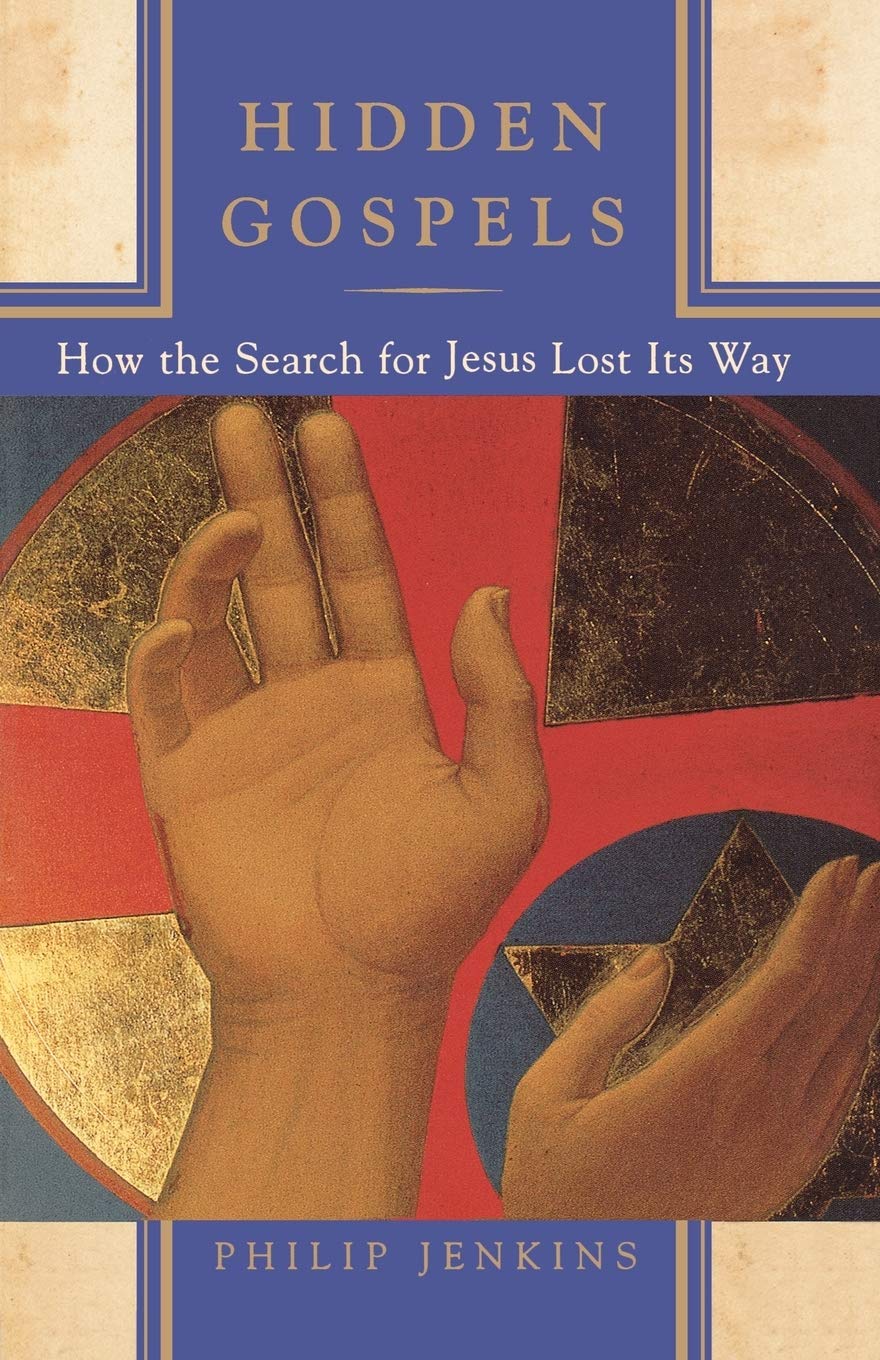
On "Hidden Gospels" by Philip Jenkins ****

Jenkins's book is a corrective to and a rebuke of such cutting-edge scholars as the Jesus Seminar, who claim usually that the various Gnostic gospel discoveries shed more light on the historical Jesus than we had previous known and than that is available in the canonized New Testament writings. Jenkins is skeptical of such claims and more or less defends conservative religious views on the subject of how we should know who Jesus is and which books we should accept as "historical." While he makes a number of excellent points, he largely defends academic positions that place the writings of the Gospels fairly late (post-Temple destruction), which in my view compromises the authority the canonized Gospels have. After all, if it took fifty years to get around to actually writing about Jesus, then by then it seems like a good deal of mythologizing would have taken place. Thus, why could not these other gospels, not accepted, have been just as legitimate points of view that were mostly banished by the growing power brokers within the early church? Furthermore, he largely sees current doctrine as an accurate reflection of real church teachings of the first century, only faintly acknowledging the influence of Gnostic teachings on it.

Jenkins shows quite convincingly why such scholarship has proliferated and received so much attention. On the former score, the increase in academic programs in religion in recent years has meant that more graduate students have had to find fodder for original research. Gnostic gospels, Qumran scrolls, and other newly discovered documents are prime candidates for such study, since there has been less written about them. Add to that the agenda that many scholars have--for example, writing from a feminist perspective (or a Marxist one or a deconstructionist one, etc., depending of the critical school one wants to apply)--and there is ample desire then to enlarge the canon to include works that support one's point or to interpret them in such a way that they do. Finally, media, looking for good stories on religion, as it does, gravitates toward the controversial. Hence, even though 90 percent of the scholars might have conservative views on Christian faith, it's the 10 percent claiming that Jesus wasn't believed to be divine among the first two generations of followers or Jesus was a Cynic philosopher or Jesus was never crucified and in fact had a regular family, and so on, who get the attention.

Jenkins points out that many of the claims being made today by such scholars are actually quite old--that is, they have been made since the 1800s and in some cases even made only generations after the foundation of the Christian movement. Many of the newly discovered documents are merely new manuscripts of works of which we already have preserved copies. There is not much "new" to much such "new scholarship." In many cases, the agenda that such scholars have is actually subverted by the works they point to with such aplomb. Gnostic views, as Jenkins points out, were not generally so feminist, so egalitarian, so antiauthoritarian, as such scholars portray. Many were more misogynistic than anything seen in the accepted Bible. And they were very much focused around establishing some as better than the vast majority of people. Indeed, the simplicity with which Gnostic views are presented was usually anything but, with levels of gods (aeons) separating us from the divine, such that there was a great deal of knowledge to be gleaned before one could even claim to be truly informed.


Sunday, July 11, 2021

On "The Roots of Anti-Semitism" by Ernest L. Abel ****

This book explores where anti-Jewish racism first appeared and why. Abel shows how certain such feelings arose with Egypt during the Ptolemaic kingdom, as Jews attempted to differentiate themselves from Egyptians and often took on unsavory leadership roles such as tax collecting. This did not endear them to the Egyptians.

The attitude among the Greeks and Romans, however, was more complex. Jews were sometimes respected for their "philosophical" religion, which presented a moral world unlike that in the Greco-Roman culture. At the same time, the Jewish refusal to honor the gods, outside of their own, set them apart and disgusted their neighbors insofar as such views made the Jews seem to be self-righteous. Despite various uprisings that occurred throughout the history of the Roman Empire, the Jews were largely allowed to maintain their religion and were not looked down upon, though other peoples sometimes were annoyed by the exceptions made for the Jews, a view that was extended by the special tax eventually levied on the Jews after one of their revolts. This tax was not heavy, but it further set the Jews apart. That said, the luxuries extended to the Jews were not extended so much to converts to Judaism, a practice Rome did its best to quell, given the way that Jews didn't take full part in Roman society.

The real start of anti-Judaism feeling began with Christianity, which attempted to set itself apart from Judaism, both to avoid religious persecution from the Jews and social persecution by the Romans. When Christianity took the helm as the favored religion of Rome, its anti-Jewishness spread throughout society in a way that continues to reverberate even today.


Sunday, June 27, 2021

On "Christianity outside the Roman Empire" by F. Crawford Burkitt ***

This is essentially a short version of Burkitt's Early Eastern Christianity, as it is based on two lectures instead of five or six, and "outside the Roman Empire" for Burkitt means "eastern." 

We get a taste for Christianity as it developed outside Rome near Edessa and in other parts of the world that sat just outside its realm, where the Greek and Persian world collided, and where there were remnants of Semitic culture. Because there's little literature from this church, we don't know much about it until the middle of the second century. Burkitt sees this Christianity as having "changed less" than that further to the west, but given its predilection for ascetism, transubstantiation, and baptism only for monks (as doctrine apparently shared with the Marcionites), it would seem to me not that the church in the east changed less but that it changed in different ways--less influenced by Greek philosophy and more influenced by more eastern ways of thinking. Although Burkitt's other book on the subject is in part so long because it reproduces some primary sources in full, on the whole, it is the more thorough work and only about twice as long--thus more recommended.


Tuesday, May 18, 2021

On "Early Eastern Christianity" by Francis Burkitt ****

This set of six lectures is at this point the best summation of the history of the Christian Church in the east that I've read. I'm sure there are other, better, more recent works on the subject, but I haven't gotten to them yet. Burkitt, here, takes the implications of the very few sources that we have and draws out a reasonable synopsis of what may well have happened to Christians east of Palestine during the first centuries of the Christian era.

The lack of sources at the time is, of course, the central issue with research in this area. What we have comes from a period much later or is questionable legend. What we do know, however, suggests that Christianity started among the Jewish people (as we are told that it came along through merchants). The first person to bring the message, Addai, apparently died in peace, but those who followed suffered or seem out of chronological time--it's claimed, for example, that the second following Addai, Palut sought ordination from Serapion in Antioch, but that would have been long after Addai, if Addai had connection the apostles. Thus, Burkitt posits that Palut was likely connected to the Catholic church (insofar as it was connected to Rome) while those before perhaps had not been (rather, the church before was more loosely configured).

What's also interesting is how the church in the East was influence by Gnostic ideas from the East itself. So often, I've read about the differing culture in the East, but Burkitt does a good job of showing how differing Christian ideas were not just a later phenomenon. The Church in the East, thus, was a different kind of Christianity, but it was, at least by the time it enters the historical records, not much more connected to its Jewish roots than Roman church of the West.


Thursday, May 6, 2021

On "The First Edition of the New Testament" by David Trobisch *****

In this short but very readable monograph (save for the Greek scattered throughout), Trobisch makes the claim that the New Testament was of early vintage and was the product of a singular editorial hand (even if a group of editors). To make his point, he looks largely into the text itself, comparing how anthologies are put together in our contemporary day to what must have happened back in the first century. Canonization (as opposed to anthologization), by contrast, is a different matter.

As an example of canonization, Trobisch examines the writings of the Christian Fathers, those who came directly after the New Testament. Here, there is significant variance with regard to what is placed into any one collection. One editor might include the letter of Polycarp, while another might drop it or use another rescention. If the New Testament had been canonized over the course of centuries, he claims, as most scholars believe, there would be little agreement as to what belongs in it. Instead, later ancient writers who question the legitimacy and inclusion of certain books in the New Testament are not, Trobisch notes, engaging in arguments over what gets canonized--or rather, included--in the New Testament but rather are engaging in criticism regarding an already established book, even as today's critics do. (This is not to say that there weren't other versions of the "New Testament"; Marcion, for example, created his own, though largely from the larger book, quite possibly already in large distribution.)

Other arguments for the singular editorial hand include the following, some more convincing or easier to understand than others. One is the common set of abbreviations (the Nomina Sacra) used throughout different versions of the manuscripts (though they are not, be any means, used consistently), mainly for the names of God. Another is the common use of the codex rather than the scroll in the early writings. Another is the manner in which the New Testament is arranged, with four distinct parts--Gospels, Acts and General Epistles (called Praxapostolos), Paul's epistles (with Hebrews coming before the pastoral epistles), and Revelation. These allow for easy splitting into separate codexes. They also mirror the pattern of the Old Testament, at least as it is presented in most English Bibles (histories first, then writings and prophecy). The presentation of the General Epistles first, right after Acts, with Paul's following, as is the case in most early manuscripts, also mirrors the presentation of the figures as they appear in Acts (with Paul coming last). Another item pointing to an editor is the uniformity of the naming conventions (Epistle of . . .; Epistle to . . .; Gospel according to . . .). Finally, from very early on, the work was known as the "New Testament" (this is the name all the second-century writers use), suggesting that this was the name the editors affixed to it. A later chapter of Trobisch's book looks at the way the New Testament is cross-referenced such that it sets up a particular unified view of the church and introduces readers to specific characters who can then be identified again later when one comes across their writings or their persona in other portions of the work (e.g., we figure the letters of Peter are from the Peter described in the Gospels, where we first read of him, and mentioned in Acts and Paul's letters, etc.).

Sunday, May 2, 2021

On "Facing the Snow" by Tu Fu, translated by Sam Hamill *****

The other great Chinese poet from the same period in which Li Po was writing is Tu Fu, and this selection of poems provides a rounded view of his work.

Hamill's introduction makes clear that Tu Fu suffered many of the same difficulties that Li Po did, as their lives ran roughly parallel, with Tu Fu, the younger, dying earlier also. However, both failed to obtain government jobs except on the lowest end, and both suffered the consequences of the wars that broke out in China around 750 that lasted for a decade or so. The poems reflect that. Like Li Po's work, we have only a segment of what Tu Fu actually wrote, maybe one-third.

Hamill's intrdocution, however, only touches on Tu Fu's life. Most of it is about translation--the difficulties of moving a poem from one language to another and the reason for his choices. Tu Fu was apparently quite a formalist, with many of his poems built around set stanzas and rhymes. English offers so much less in terms of rhyming opportunities that Hamill chooses instead to focus on the images and content, which seems a wise move.

The selection here connected more to me personally than the poems in the Li Po collection I read. Both poets write their share of nature poems, and poems about drinking, but Tu Fu also deals a lot with relationships and with the effects that world events have had on his life. It likely helped that Hamill doesn't leave some words untranslated, as did Hinton with the Li Po poems. As such, one doesn't feel quite as much the foreigness of Tu Fu's work. But beyond that, Tu Fu just seemed better at expressing the anguish of the world around him and of his own life. My favorite poems were those about war. He didn't delve so much into generic expressions about soldiers fighting as personal ones about how wars affect him and those around him. The communities he lives in feel the pain that having their young men and eventually old men too stripped from them to go fight yet another battle against the invading forces; they also feel the anguish of not having a strong government to defend them. There are poems expressing the difficulties of both positions. It's as if the people are pained either way. The speakers in Tu Fu's work migrate as invaders take over their land. They express the pain of the refugee. And later, when able to return, there is both a kind of joy in coming home again and a sadness. The homes they lived in five years ago are run down, unmaintained; many of the old neighbors have returned, but some never will. What is left but to wander out into the forest or along the river, seeking solace, knowing that you'd like to have a drink but that the folks you'd have shared one with are now gone.

Thursday, April 29, 2021

On "The Selected Poems of Li Po" by Li Po, translated by David Hinton ****

This work selects individual poems by one of the greatest Chinese poets, one who was active some 1400 years ago. Hinton introduction points out a lot of pertinent biographical details--Li Po's identification to Taoism (versus his friend Tu Fu's greater identification with Confucianism); his relationship with Tu Fu (he wrote two poems about Tu Fu, while Tu Fu wrote many more about Li Po, so the relationship seems to have been more meaningful coming from the other direction); Li Po's wandering ways and use of wine to reach states of ecstasy so that he could write better about the present moment; Li Po's political and military life and how in the civil wars of his later adulthood, he was exiled for the stances he'd taken; his disillusionment with war; and finally his return to solitude and wandering in nature. Interestingly, much of Li Po's written work, which was voluminous, has been lost. That which we have comes down to us from later collections of his material, and most critics think that as much as two-thirds of it is spurious. So much for the grand reputation I'd always thought Li Po had. It seems a shame that the fictional poet became so caught up with the real one such that we don't know whether what we have or how much of it is real.

The poems themselves are very enjoyable to read. What's amazing is the way that Li Po focuses on his surroundings such that the poems generally speak to us now even more than one thousand years later. A description of a mountain lends to thoughts about life and about moments in a given life, ones we share even now. Much is made of such thoughts especially toward the end of the collection, which I think I enjoyed even more than the beginning. Hinton had noted that Li Po's poetry had a certain carefree quality in his youth that was lost midlife as war took its toll. Indeed, the poems about war weren't that intriguing to me, but I found myself slightly more taken by the older Li Po than the younger. Experience leant a certain melancholy to the descriptions of nature that made the pieces seem all the more touching. It is amazing to think about how the wind and stream are the same that people generations ago also experienced and yet also how those things are never the same, even for us, from moment to moment, day to day.