Thursday, March 25, 2010
On "The Outcasts of Poker Flat" by Bret Harte (4049 words) ****
Here's a story about facing death, slowly and meanly. Poker Flat is a mining camp, but some of the local residents don't like the looks of certain others. A few are hanged. But in the end, the kinder thing to do with most is just tell them they've got X hours to get out of town. And so that they do, wandering out into the wilderness toward another. One of these is John Oakhurst, a seemingly honorable man who has just a little too much success at the poker table for the other townspeople. With him is a set of supposedly neer-do-well women and a scoundrel of a man. Near the end of the first day, they meet with a young man Oakhurst knew from a poker game, a man who Oakhurst treated kindly and who now feels like he owes Oakhurst a favor. They also meet with snow--a good lot of it, enough to keep them from moving forward. And that's when things get interesting. Read the story here at Bartleby.com.


On "Selected Stories and Sketches" by Bret Harte ***
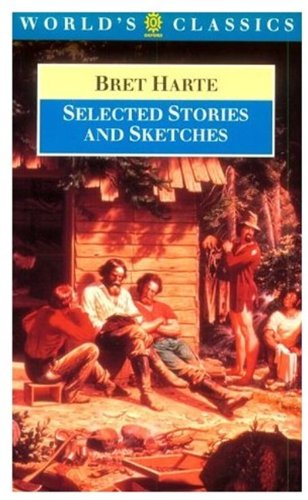
Some have accused him of sentimentalism, and the accusation seems accurate. Often, in reading a particular story, I got to its end and felt let down. Some characters are just too good. Some characters are too evil. And endings often just drop off the page, a day done, everything made right, and isn't that character of righteous action oh such a good person? When Harte is at his best, the righteous aren't so nice, and the bad are more self-interested than illogically evil, and the world is a tough place in which to dwell. Watching characters manage in that is much more fascinating than letting them dominate as we would expect or desire.
Monday, March 22, 2010
On "Tales of Carlos" by Paul Vidich (3415 words) ***
Taxis are a great place for stories, yet taxis usually seem to fall within larger stories (I think even of the sitcom Taxi, which only rarely actually involved story lines within the taxi--most occurred in the dispatch office, as I recall). Perhaps it's because taxis are generally the means of a journey from one place to another, and so the story inevitably uses the taxi as a transition. Vidich's story starts in a taxi and almost sticks to it, though in the end, he too takes us someplace else, someplace the taxi ultimately takes us. But it's an interesting ride, that's for sure, and the narrator himself seems to know this. Danger lurks--and a desire for something more, something different, something out of the ordinary. The narrator gets what he wants--almost. Read the story here at Our Stories.
Friday, March 19, 2010
On "The Friends" by B. J. Hollars (1882 words) ****
Here's a heartbreaker. Same old story--one person in love, the other not. Neither of them apparently really talk about it. This one goes on, and on, and on--for years. What makes this one special, I think, is the degree of closeness that the two characters have, in part caused by an unfortunate event near the story's beginning. From there, the dates of the events make the rest of this tale grow sadder and sadder. Read the story here at Necessary Fiction.
Tuesday, March 16, 2010
On "The Movement of Horses" by Adam Cushman (8839 words) ***
This is a sad story made funny, which is what a lot of really good stories are. What makes this story so humorous is the narrator, a troubled teen who hides his insecurities and loneliness behind a facade of bravado--and utter stupidity. The story shines from the moment one starts reading, largely because of that narration, but it really gets going when the narrator and his not-so-legitimate friend Dane steal a car with intentions of fleeing west to start a band (which of course requires a tattoo). These being teenagers--and young ones at that--the scheme goes predictably nowhere, but not before we learn quite a bit about our narrator, enough that he becomes an object of pity rather than just laughs. Read the story here at Fawlt magazine.
On "Ragged Dick" by Horatio Alger ****

Ragged Dick is the name of the book's hero. He's a shoeshine boy (a boot-black, as the novel calls such). At the start, he's an honest chap who likes a good joke and who spends all of his earnings on shows and drinks each night. At some point, he meets with a better-educated young man, and this man instills in Dick a desire to make better of himself. Rather than spend his earnings, he should save them. Then he could rent a room, have nicer clothes, and get an education. And so that's what Dick does, and his fortunes, with minor setbacks, keep getting better and better.
The moral is clear. Get an education and work hard (and be generous with others) and you'll make a success of yourself. Although true in theory and generally true in life, things rarely seem to come as easily, or with as little cost, as they do to Dick. The cynical part of me kept wanting to see Dick fall into a real hole through no fault of his own and truly struggle (as would happen in a naturalist novel), even if he comes out better in the end.
Early in the story, Dick agrees to make change for a man. The clerk in the store where he goes claims that the bill is counterfeit. Now Dick is out of his earnings and in danger of arrest. Here are the makings for a tragic novel and a very interesting plot. But this is Alger's world, where virtue is always rewarded and almost always immediately. As a result, Dick's story becomes more like a picaresque series of episodes than a heavily plotted novel. Dick goes outside and gathers the man who gave him the bill; the man claims the bill wasn't fake; the owner of the store comes out; the clerk gives in and hands the bill over, and then he's fired for attempting to jilt a customer out of money. Honesty prevails, in a city, known in the novel for its array of swindlers.
Yet, despite the episodic nature of the story, the novel is a fun read that rather pulls you in and along. Maybe it's the prospect of seeing Dick rise in the world that does it, or maybe it's that despite the rather corny nature of the whole work, one actually ends up liking Dick and caring for him and being glad when things turn his way.
The text is available for free here, and the audio version here.
Saturday, March 13, 2010
On "Twenty Questions" by Jennifer Howard (114 words) *****
I first came across this story on a workshop site and loved it--a story told completely in questions. It's not easy. I've often started off writing a piece entirely in questions. It's a great way to free the mind, because you know, at heart, the story can't stay all questions, so you don't care about putting crazy stuff down. But try actually writing a story in questions--keeping it that way--that is another task, one that I have never been able to complete. Howard, however, manages to convey so much here--we don't need the answers. Read the story here at the Collagist, and then read the other two shorts as well ("It's You" is a great little flash piece itself that almost seems an answer to these questions.)
On "A History of the Book in America," volume 4, edited by Carl F. Kaestle and Janice A. Radway ****
Distribution also had something to do with the change in the way books were marketed. Whereas subscription services (salesmen traveling around with a book idea, selling the idea, and then only after orders were placed, actually printing the book for the use of the buyers) and book trade shows (traveling salesmen and bookstore owners traveling to a trade show to interact with publishers and decide what to purchase for the coming year) were regular methods of the trade early in this period, the drop in printing prices, caused by the introduction of faster technological tools, allowed for the introduction of such things as cheap paperback books and larger and slicker magazines that resulted in an industry where trade publishers began sending salesmen to stores rather than having stores come to them and where magazine advertising in a periodical specifically geared around that publisher's own works was no longer as effective.
Another important change during this time had to do with copyright law. Copyrights were largely nill for foreign works reprinted in the United States. Hence, while an American author was protected by copyright, a British author's work wasn't. What should have been a great boon to American authors, able to make money on their work where Brits couldn't, was in fact a tremendous problem. Publishers, with plenty of free overseas material to pillage from, largely chose to reprint foreign works rather than pay an American author for an American work. In time, the United States finally allowed foreign entities the right to copyright as well. Add to this changes in the conception of the author, caused in large part by the philosophy of the Romantic writers of the early nineteenth century. Before the Romantics, the author was seen more like a screenwriter might be seen today--he was just one part in the production of a work, in this case a book, in the case of a screenwriter a movie. The printer, those who helped the author in conceiving the book, and the typesetter were all equal partners. The author, in some ways, was really one of the least important. The Romantics introduced the idea of the author as some kind of creative entity, solitary, apart from all these other more "business-oriented" portions of the process. As such, the author was owed his or her fair share of the book's profits, rather than a simple writer's fee. As the author of the chapter notes, however, who the copyright laws really benefited was the publishers. Anytime the publishers argued on behalf of the authors for copyright protection, they were really arguing on behalf of themselves. If the ideas in books are unique, then the people who publish them can demarcate intellectual property as their own and make a living off of it, giving a percentage of this to the authors as well.
Also of interest during this period was a shift in journalistic standards. Early in the period, newspapers were largely mouthpieces for particular political perspectives. If you were Republican, you read a Republican paper; if you were a Democrat, you read a Democratic paper. This broke down, however, around the turn of the century, when the Democratic Party became exceptionally weak. Populists rose to the fore, but the Democratic publishing machine wanted nothing to do with populism. Hence, newspapers, even of the Democratic stripe, had no desire to push one of the parties. Left without a significant difference of opinion among elite publishers, there wasn't much in the way of partisanship that one could take. Add to this the increasing importance of advertising and of maintaining large circulations. Newspapers, in an effort to gain audience share, couldn't afford to alienate customers. "Objectivity" became the norm for journalistic excellence. I found this discussion particularly interesting, especially in light of the way in which journalism now seems to be moving away from the objectivity (though still claiming to hold itself to the idea of being "fair and balanced") with the proliferation of media choices and the accompanying disintegration of large mainstream audiences into smaller interest groups.
Also in the book are discussions on the creation of academic presses, largely started to share academic ideas (often mostly from their own faculty) among scholars, and eventually to share such ideas with the public; and the creation of scientific and technical publishers (while one might have expected university presses to focus on this, the speed with which science advanced meant that journals had an advantage here).
There is a discussion of the change in censorship codes. The Victorians were squemish on sex to the point of censoring works of literature that were hundreds of years old and wholly acceptable in their time. Postal laws in the United States helped to keep these standards in place, banning people from shipping lewd materials. This censorship, during World War I, gave way to political censorship, then returned to sexual censorship following the war, but on looser terms.
The book also reviews ethnic publishing and religious publishing. Most ethnic presses, the text claims, aimed simultaneously to bring immigrants into the American mainstream and to remind immigrants of their home, bringing them news from across the sea. Generally, such presses only lasted for a generation or two. Second- and third-generation citizens of immigrants no longer had the connection to the homeland to keep such publications around. An exception to this was the Hispanic press, a chapter I particularly enjoyed given some of my personal interest in Hispanic American literature. That press, founded among peoples whose land was subsumed by an invading culture, struggled to keep alive the culture that once was. In some places like New Mexico, Spanish continued to be the language of the majority of inhabitants into the twentieth century, and fresh flows of immigrants from south of the border kept interest in the Spanish publications alive in many other regions, as in California. As with the African American press, much of the publishing had to do with civil rights.
As for religious publishing, Protestant publishing, the book shows, was and is a pervasive field that has been largely ignored in histories and probably deserves a book of its own. (I'd love to see a work comparing Protestant writings to the literary movements of their time--do the two influence one another at all? Why do scholars pay so much attention to high-brow literature but ignore religious texts that in some cases more people actually read?) Jewish publishing aimed to bring together the Jewish community in the United States and failed, but in the process it created a wider dissemination of varying Jewish ideas and cultures. Catholic publishing, by contrast, was largely organized through the church and maintain a more unified voice, though Catholicism's concern with icons (altars, beads) in addition to texts means the publishing takes on a lesser role than in Protestant denominations.
Schools and libraries also changed much during this time. Reading instruction early in the period focused on reading aloud--on elocution; later, however, it focused on reading silently and quickly in order to gather knowledge. In part, this was a change in theories of reading, but it was also a change in the purpose of reading. As more people became literate and stayed in school longer, and as more publications became available, the need to read to (illiterate) others decreased as the need to read more to glean new areas of knowledge increased. Higher education in the United States also changed during this time, as research libraries, once uncommon, began to rival those of Europe, with one key difference--they were more open to the public. Readers could browse the stacks rather than waiting on someone to retrieve a book from the stacks as in the European model. Public libraries also grew, in part with the aid of the Andrew Carnegie's donations. Here, however, there were many debates over what people should be reading in those libraries. Library journals founded during the period and the professionalizing librarians themselves (the Dewey system of classification was created during this period, and the first library schools founded) often aimed to push on to the public "useful" works of "high culture." Ideally, people were to check out something like 75 percent nonfiction; in reality, people actually checked out 75 percent fiction. Some librarians gave in. And as other media began to forge competition, the idea that any reading in and of itself was good began to displace the idea of the "right" kind of reading, for after all, today's reader of paperback romances might one day, with enough reading, become tomorrow's reader of biographies of Einstein. Or, for that matter, of histories of the book.
Wednesday, March 10, 2010
On "Free Coffee" by Bernard Kronik (436 words) ***
This is a simple piece, about the cost of free stuff. It works well because of the details it presents, and it's overarching concern--can this really be free? I know, I have questions like that myself sometimes, and sometimes I won't take something because I know there's got to be a catch. Sometimes, there is. Sometimes, there isn't. And sometimes there isn't, but it ends up costing anyway. That's what Kronik manages to convey here at Verb Sap.
Sunday, March 7, 2010
On "I Am a Famous Writer" by Robert Day (7546 words) *****
This piece is mad and wonderful. It reminds me a bit of Julio Cortazar's "Blow-Up," another story that seems to get lost in itself--and that in turn loses the reader (or at least this reader)--but that is so much fun to read one doesn't care if clarity is thrown to the wind. This is metafiction on acid, meta to the absurd extreme. At heart is the story of a famous writer writing, writing about his writing, about his friend's writing, or maybe his own writing about a fictional friend, or a fictional protagonist's writing about a real friend, or a fictional protagonist's writing about a fictional friend who is really himself writing about his fictional protagonist? Do you get it?
In between is some nice commentary on writing itself, on a certain kind of writing. There is automatic writing here. There is self-aggrandizing writing (let me quote myself!). There is writing done by assistants. (I'm reminded of some textbook editing experiences, wherein some writers, after giving a basic outline of what was desired, had most of the actual writing done by assistants, who they then rewrote before stamping their name on it.) But the story is so much fun one doesn't have be into writing--just into literature in general. Read it here at Summerset Review.
In between is some nice commentary on writing itself, on a certain kind of writing. There is automatic writing here. There is self-aggrandizing writing (let me quote myself!). There is writing done by assistants. (I'm reminded of some textbook editing experiences, wherein some writers, after giving a basic outline of what was desired, had most of the actual writing done by assistants, who they then rewrote before stamping their name on it.) But the story is so much fun one doesn't have be into writing--just into literature in general. Read it here at Summerset Review.
Thursday, March 4, 2010
On "Rot" by Laura Ellen Scott (845 words) ***
Scott's opening line kept me reading and reading. In this short piece, she piles on sentence after sentence, line after line, each one making me want more. I'm not completely sure of the plot, but here it doesn't seem to matter. Good writing will do that--keep me entranced with the details, with the voice. Or maybe I just like reading about children of murderers. Maybe you will too. Read it here at Identity Theory.
Monday, March 1, 2010
On "Someone Emailed Me Last Night and Asked if I Would Write About Nachos" by Sean Lovelace (2146 words) *****
So here's a story I referenced earlier but couldn't supply an online link to and, hence, couldn't write about. Now, it's public, and I'm so glad. Lovelace tears up the language in most of his writing, and by that I mean he both uses language in creatively new ways and tears apart language as we generally think about it. A set of simple declarative sentences (mostly simple, mostly declarative, mostly sentences), Lovelace waxes poetic on "junk" food, though really, I'm thinking this can't be junk food, not when Lovelace is writing about it. It's art. Read about nachos here at Fictionaut.
Friday, February 26, 2010
On "Titleist" by Peggy Price (883 words) ***
As with most things appearing in Elimae, this short piece concentrates on getting every word right, every image precise. I'm not quite sure what lurks behind this story (an adult woman returned home, spending days on the golf course with dad, looking for missing balls--these details hint to me some kind of misfortune in the woman's life, something she's looking for, trying to get over), but I admire the writing and the attention to detail. Simply gorgeous. Read the story here at Elimae.
On "The Ferment of Realism" by Warner Berthoff **
Tuesday, February 23, 2010
On "For Lack of White Robes" by Wade Hartel (3548 words) ***
Lust and religion--it's something juxtaposed a lot, probably quite a few stories involving religion. I think of a Rick Bass story about a Mormon girl dating a non-Mormon guy. I think even more of John Fante's Catholic protagonists, so full of bluster about the women around them, so full of guilt every time something goes wrong. Hartel's story doesn't involve much of Fante's Catholic guilt, but like the Bass story to which I refer (collected in Bass's The Watch), it does use religion as a context in which to talk about how people come together. In this case, it's Catholics on a mission, and our narrator has a particular interest in one young woman. Will he get her? You know how these kind of stories go, but you don't know how this one ends. Read the piece here at Eclectica.
Saturday, February 20, 2010
On "Beds" by Cheryl Diane Kidder (2217 words) *****
This short piece reminds me of Susan Minot's "Lust." Like that story, this one is built around a series of boyfriends and acquaintances with whom the narrator shares a bed. And like that story, the narrator manages to connect all the disparate times via an ending that packs a tremendous punch. How authors manage to do this, I'm never quite sure. These are stories that, for me, I stand mystified by. Read the story here at In Posse Review.
Wednesday, February 17, 2010
On "Small Town Seventeen--An American Triptych" by Ann Garvin (768 words)***
Madison Smartt Bell's Zero dB and Other Stories has at least two of these--stories split into thirds. In his collection, as I recall, the tryptichs are more images that work off of one another than pieces that one can make sense of in terms of plot. Garvin's short short has that feeling as well--simple moments from this one girl's life, as she prepares to go off to college and what that means regarding men (good and bad). Read it through a second time, and the plot emerges, the fact that this is all one night, that the first tryptich is about . . . But why tell you all this when you can read it for yourself here at the Del Sol Review.
Sunday, February 14, 2010
On "To Be Happy" by Sean Lovelace (535 words) *****
Here's a short piece with wise advice . . . or not. Lovelace has a handle on the language to admire. He's also got a sense of zany originality. In this piece, he puts those two talents together with a little bit of suggestiveness, a little undertone of angst, and provides something that is much more than what at first seems to pop to the surface. Why do we throw things? Does it make us happier? Do we like to think on the past? Is happiness really even the point? Read the story here at Juked.
On "Daily Life in the Industrial United States, 1870-1900" by Julie Husband and Jim O'Loughlin ***
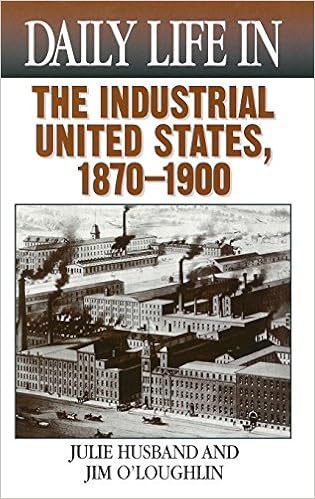
Still, both books work quite well in tandem. Some events not covered in Age of Excess are covered here; some events not covered here were covered in Age of Excess. A case in point would involve the discussions of popular culture. Age of Excess discusses touring play companies, worker issues among them, consolidation, and the eventual foundation for the system of live drama that exists today (too bad I don't better remember that discussion so I could go into detail here). Husband and O'Loughlin never mention the worker issues among touring companies. Instead, they devote their discussion of theater to the foundation of vaudeville, something not covered in Ray's book. Ray focuses on labor issues. Husband and O'Loughlin focus on cultural ones--the mix of "high" and "low" performances, the move toward fancier venues for performances and higher ticket prices, the accompanying drop in "low" art from the theater, and the creation of vaudeville (where entrance was cheap and performances repeated as many as twelve times a day) that once again allows that kind of mixing.
Another item covered here is the professionalization of sports, which was something I've read little about. Baseball starts as a community activity, with true "clubs" where men go to play on their leisure hours. Eventually, some entrepreneurs started selling tickets for entrance to watch. In time, better players forged traveling teams that would go to play teams of locals. Twenty years later, those teams forge a league, and professional baseball leagues are born.
The writing throughout is wonderfully clear. My one reservation with the text in the manner in which the authors chose to weave in primary materials. Boxes separate quotes illustrating points. As such, they disrupt an ongoing and interesting narrative. Often such quotes could simply have been integrated into the text proper; in other cases, they're hardly needed. But this is a quibble in an otherwise good basic reader about the era, one that seems to me more interesting than did a companion volume on the 1920s and 1930s in Greenwood Press's Daily Life series that I read a couple of years ago.
Thursday, February 11, 2010
On "Lady Glory and the Knave of Spades" by Nicole Kornher-Stace (3813 words) ***
Much genre fiction focuses on form and story more than the language that the writer uses to create that story. That's a likely reason I didn't give much attention to genre writing for many years. So much of a good story is how it's conveyed. So I really I like when a science fiction writer makes me listen to words again, the lilt of the tongue. Not to say the Kornher-Stace's story is science fiction--it's just good fiction with a postapocalyptic world as its setting. And that setting is made that much more interesting by the way in which it is conveyed. Would I have found this story interesting if the author had simply told this straight out? Hey, there's this girl I know . . . I don't think so. Read the story here at Farrago's Wainscot and see if you aren't also entranced.
Subscribe to:
Posts (Atom)

 Posts
Posts


