A woman, a man, a firefighter. Sex sounds. A burned esophagus. Desire. So many stories are about desire--not too many about esophaguses. This one keeps the desire buried deep within it; the esophagus plays only a minor roll, well, the burned one anyway. If we think of the esophagus as an organ from which sounds come, then there's plenty of it. There are plenty of sounds in this piece. A woman obsesses on the sounds her neighbors make, the sounds she makes, the sounds she and her boyfriend used to make. Mark Richard, in a class I took of his, once described stories as obsessions. They deal in a handful of things, maybe fewer, and work them until they are exhausted. And that's what Janeczko does here. It adds up to a nice treat. Read the story at Anderbo.
Thursday, June 26, 2008
On "The Rules of Urban Living" by Kara Janeczko (2354 words) ****


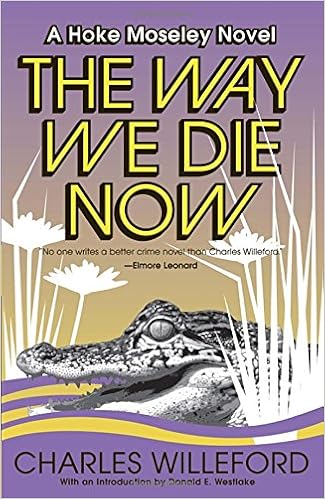
On "The Way We Die Now" by Charles Willeford ****
Monday, June 23, 2008
On "Fire Hazard" by Mike Young (1224 words) ***
Two people somewhere in a relationship, somewhere deep, where the relationship has worn to the point of irritation, where it has come to the point of love. How much are these two separate? How much are they the same? And how well do we really know that person we're with? These are the questions this story poses and doesn't answer, because the answers, of course, are impossible to present. But unlike most stories with a crash, an accident, I don't get the feeling this is necessarily tragedy. It's just how things are and how they're always going to be. Read the story here.
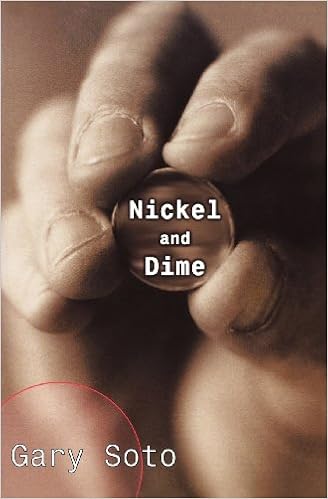
On "Nickel and Dime" by Gary Soto ***
Wednesday, June 18, 2008
On "Houses" by Merida Gorman (705 words) ***
I don't know what it is about this piece, but I find it mesmerizing. I'm not even sure what it's really about. I mean, on the surface, it's some woman visiting some man in a house out in the country, having some affair. It's some woman obsessing over the house of an actress not so far away, an actress the man tells the woman about. It's some woman that maybe isn't so healthy herself. But we only have seven hundred words, and like many flash pieces, what's not here leaves one a bit befuddled--but fascinated. Read the story here.
On "The Underground Man" by Ross MacDonald ****

Saturday, June 14, 2008
On "Creative Memories" by Brigitte N. McCray (3746 words) ***
This story does a good job of working a celebrity into the plot without really working a celebrity in. The title says much about what the piece is about, working on several levels, the father with Alzheimer's, the son's memories of his past, the scrapbook collectors, the boyfriend's own doubtful past. How much about ourselves do we make up? How much is anything real? In asking such questions, I can't help but be drawn back to Oscar Zeta Acosta's book, which I just finished rereading. Read the story here.
On "The Revolt of the Cockroach People" by Oscar Zeta Acosta *****
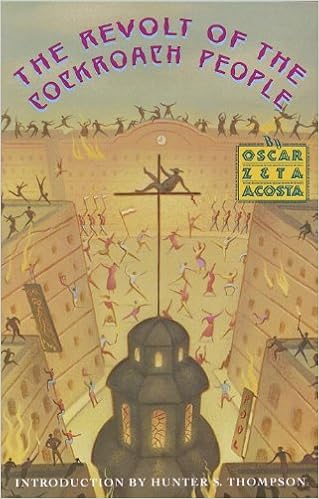
This year, over a decade later, I decided to reread both. I finished rereading the first autobiography a few months ago. But again, I wasn't all that intrigued. I wondered if my interest in Acosta had wained or if most of that interest had been created by me in the interest in writing that paper. But the moment I opened the second book, I realized that it really did have to do with the book itself. The first autobiography jumps around in time and seems out of focus to me (even though I realize it's really about a man finding his purpose in life). But this second book, all about the Brown Revolution in California, seems very much to have a setting, a place, a time, and a reason, much like Acosta's alter ego. It's fun reading about the movement, enough that Acosta makes me want to read more about it, makes me want to find out in more detail what happened in the movement--and also to find out which stories he's telling are true and to what extent. (Although this second book is also billed as autobiography, the book has a warning on the copyright page that everything EXCEPT the names used is fictional, an ironic twist on the usual autobiography. But so much of the book would put Acosta in legal jeopardy that he would of course have to deny any reality. The warning also goes quite well with one of the themes in the book, which is about what constitutes truth.)
Thursday, June 12, 2008
On "The Third Way" by Tamara Kaye Sellman (1768 words) ***
I'm not particularly keen on politics overtly making their way into fiction, but then again, can politics ever not make their way into fiction? Even their supposed absence (if that is possible) is a political statement of sorts, an argument perhaps for the status quo. And as a novel I recently read shows--that novel being Romano-Lax's The Spanish Bow--sometimes even though one may want to simply write a story or play music or draw a picture, forces around will often conspire to use what one does for its own political ends. Is silence then the only option? But is silence then also a political statement?
These things being on my mind at the time that I read this story, I couldn't help but be drawn to some of the questions that Romano-Lax's book raised. And I didn't even know at the time that I was reading a "political" story, not until I was halfway in. I thought I was reading a disaster story--with a unique twist, the reason the story is compelling: the piece is told backward. But maybe disaster stories and political stories are the same. I fear that too often they are. Our desire for power over others generally spells disaster for someone else somewhere, as it does here. Read the story at Terrain.org.
These things being on my mind at the time that I read this story, I couldn't help but be drawn to some of the questions that Romano-Lax's book raised. And I didn't even know at the time that I was reading a "political" story, not until I was halfway in. I thought I was reading a disaster story--with a unique twist, the reason the story is compelling: the piece is told backward. But maybe disaster stories and political stories are the same. I fear that too often they are. Our desire for power over others generally spells disaster for someone else somewhere, as it does here. Read the story at Terrain.org.
On "The Spanish Bow" by Andromeda Romano-Lax ****

But I'm glad that I put off my usual prejudices and dug in, because this book is a treasure in many ways. There's no doubt that it's well written, but it's also philosophical, which is something I haven't seen a lot of in fiction of late--a book that wrestles directly with big questions. The big questions in this book revolve around the relation of art to politics. The book is about a viola player in the early 1900s in Spain. Early on, the musician simply wants to play music, but he finds that difficult to do without being brought into political skirmishes and having to take sides. Later on, he plays politics more than his musician friends do, so his views shift. He even stops playing music because he sees it as an opiate for the masses, much as Marx saw religion. By contrast, a friend of his seemingly lives only for himself and politically seems to take whatever role is needed to forward his career. His answer seems to be to focus on the music alone throughout life--and that in the music itself is whatever political statement you want to make, rather than your actions alongside music.
Although one doesn't necessarily have to play politics very often on a national level, in this country, when doing art or our work, we all--I think--have moments when we're dragged into political skirmishes that we really don't want to be a part of. That is, we just want to do our jobs, work, or whatever. Or go to church. Or learn how to draw. But someone somewhere decides to push a few buttons, make these things into more than they are, and as a result, we can't just do what we want to do. Rather, doing what we want means we have to choose a side, take a stand. No longer is it just a job, but it's a job where we stand for one department against another or for the customer against the boss or for the boss against the customer. The book made me think quite a bit--well, okay, a little bit, since I'm not much on thought these days--about this subject.
The other thing I found interesting in the book was the whole discussion of this early-twentieth-century Spain. I haven't read that much about this period in one European country like this, so it's neat to find out so many things that were going on. The novel is partially based on a couple of real musicians, although they each lived about fifty years earlier, and it's written in the form of an autobiography. Early on I kept wishing that this actually was the autobiography. But I guess it's something that a novel can make me curious enough to actually want to read something nonfiction on the same subject. I've got to give it credit there.
Monday, June 9, 2008
On "Diary of the Living Dead or: Are You There God? It's Me. Also, a Bunch of Zombies" by Jake Swearingen (1758 words) *****
This is "literary fiction" plucked from the corpses of bad horror movies. I suppose I could wax on about deeper meanings and find some kind of significance to everything that is happening, but I'm finished with grad school and so just happy to wallow in its brilliance on a purely superficial level. This is piece is laugh-out-loud funny, and that's reason enough for me to highlight it here. Imagine Sartre in a zombie movie; imagine him writing a diary about it. You get the idea. Now read the story.
Thursday, June 5, 2008
On "The Price of a Haircut" by Brock Clarke (5024 words) ****
Brock Clarke has been tearing up the literary scene for few years now, and a nice thing about his work is that much of it is available online, in case you're too cheap to buy his books. Of course, you'll miss out on some of his best fiction that way ("For Those of Us Who Need Such Things" and "The Fat," for instance). Most of Clarke's fiction centers around men in crises who, generally, fail to measure up--and the men in this story seem to fall right into that line. This story is also one of the first in which I've seen Clarke address larger historical moments, in addition to the social issues that he has sometimes previously addressed. Read the story here.
Sunday, June 1, 2008
On "The Harvest" by Amy Hemphill (1927 words) *****
This classic story, which appears in Hemphill's second collection and first appeared in The Quarterly, is available online for everyone's perusal via Pif. What makes Hemphill's writing so amazing is how much she manages to get out of her sparse use of language. Read a story three times longer, and you'll almost certainly get less than what you'll get here. How does she do it? I'm not quite sure--lots of details help, and unique ones at that, but one feels after reading Hemphill's fiction that another eight thousand words were left in a previous draft somewhere and all for the better. This story revolves around an accident, but really it's about "harvesting," about where writers get their stories. Read it here.
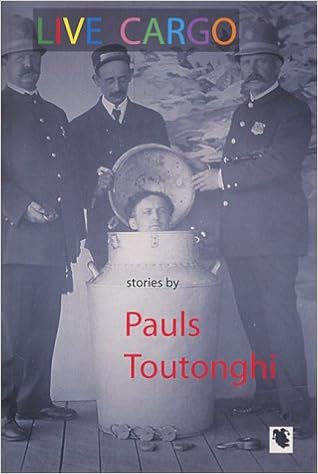
On "Live Cargo" by Paul Toutonghi ***
Wednesday, May 28, 2008
On "You Know" by R. A. Rycraft (1640 words) ***
What I like about this piece is its strong narrative voice. That alone is what kept me reading it through all three pages. The waitress is believable, and what she's fascinated by, therefore, fascinated me--because not every customer one deals with is all that interesting. The ending is quiet, and as with much literary fiction, I'm not sure this all adds up too much, but getting there was fun. Read the story here.
On "The Little Friend" by Donna Tartt ***

Monday, May 26, 2008
On "Tall Tales from the Mekong Delta" by Kate Braverman (6570 words) *****
This story is pretty widely anthologized and for good reason--it's one of Kate Braverman's best. I first came across Braverman while working in a bookstore. Her novel Palm Latitudes was a perennial presence on our sale table; I didn't like the cover and thus wasn't all that intrigued by the book. A short while after that book disappeared from our store, however, Braverman ended up being the teacher of a writing class I took. Then I'd have to buy the paperback at full price, so I could read what it was my teacher was writing. She was a different sort of author than I typically liked at that time--extremely lyrical. And her class was also seemingly difficult.
She taught--in class--with an intensity matched by few others. We'd have to bring in three-page exercises for review, and generally after she was done talking about them in class, we might have a sentence or two left. I wasn't used to that. But her mantra was that if we would learn what not to do, what not to write, we'd be 100 percent better as writers. Basically, it came down to writing what was not expected. I took this as lyricism given her own work and would for awhile adopt a similar voice. It would take many years to learn what she really meant and how to implement it without necessarily using some overly inflated language. And I would have those years, as I would take her class two more times.
As I took her class, I began also to appreciate her own lyrical voice. However, my real appreciation for that voice began with her story collection Squandering the Blue, in which this story is featured. The title story and this story especially managed to situate the lyricism within the simpler language I preferred and into a more quickly graspable conflict and plot. While the former story is one that resonates as very sad, personal, and realistic, the latter story, "Tall Tales," is essentially a tall tale, a story that manages to merge realism and fantasy to create something truly harrowing--a drug addiction, a man addiction, a fall into horror. Read the story here.
She taught--in class--with an intensity matched by few others. We'd have to bring in three-page exercises for review, and generally after she was done talking about them in class, we might have a sentence or two left. I wasn't used to that. But her mantra was that if we would learn what not to do, what not to write, we'd be 100 percent better as writers. Basically, it came down to writing what was not expected. I took this as lyricism given her own work and would for awhile adopt a similar voice. It would take many years to learn what she really meant and how to implement it without necessarily using some overly inflated language. And I would have those years, as I would take her class two more times.
As I took her class, I began also to appreciate her own lyrical voice. However, my real appreciation for that voice began with her story collection Squandering the Blue, in which this story is featured. The title story and this story especially managed to situate the lyricism within the simpler language I preferred and into a more quickly graspable conflict and plot. While the former story is one that resonates as very sad, personal, and realistic, the latter story, "Tall Tales," is essentially a tall tale, a story that manages to merge realism and fantasy to create something truly harrowing--a drug addiction, a man addiction, a fall into horror. Read the story here.
Thursday, May 22, 2008
On "Mexico" by Andrew Roe (2518 words) ***
This is one of those stories that works largely because the whole is more than the sum of its parts. It starts off promising enough, but by the time I reached the central incident, I was wondering why the story didn't just start there. And then, the language began to fall apart--extra words, dialogue lines that seemed to go on too long, and overwriting that seemed to rob the scene of much of its power. But hold on for those last three paragraphs--the author will whack you with some slam-bang lines that will leave you almost breathless. The story all comes together then. It's not easy to write endings like this. And like many such endings, it slips up on you in a way that all that seeming excess early on can not only be forgiven but seems, actually, necessary for the ending to have such power. Read the story here.
Monday, May 19, 2008
On "L.A. Doll" by Gregory Hahn (3070 words) ****
This story does a great job of playing with techniques that put it very much in line with the setting--Los Angeles. It features a "montage," after all, one that works fairly well. Sure, the story goes for many of the L.A. cliches--the superficiality, the concern with celebrity--but I think that's the point. The narrator has moved to Los Angeles to be a part of this scene. Read the story here.
Sunday, May 18, 2008
On "Executing Dexter" by Brian Leung (4628 words) *****
I first became aware of Brian Leung's work in college, in a writing workshop actually, where he was a student the same as I was. Even then, his talent was obvious. We shared two workshops together, spaced a little more than a year apart. In that year, he'd gone from being good to being obviously on his way to something larger than those around us. Next time we came across one another, he was a graduate student at the same college, doing a creative writing option, and he filled in one day for the teacher--and there I was, still an undergrad, on my last semester granted, but feeling small nonetheless. And then he was off to Indiana University for an MFA.
A few years after that, I was at the Yalobusha Review as an editor, and I was desperate for some decent material. The previous year's editor suggested I solicit work, rather than just wait around for stuff to come to me, and so I wrote to one of my former instructors about people whose work she might send our way. She suggested Brian and passed along an e-mail address. Brian submitted--a good piece about this photographer named René. Unfortunately, in the meantime, I'd ended up with four other good stories. So now I had five good stories, and there was room for six. The problem was that one of those five good stories was over sixty pages long--it was a novella essentially, the length of four stories. So my choice was to accept the novella and two other stories, or take the four shorter stories, reject the novella, and publish two other stories I was only halfway satisfied with. I chose the first option, which meant I had to write Brian and let him know we couldn't publish his piece, though I'd really wanted to. He took it graciously.
The next time I came across Brian's work was in a magazine, a piece called "Six Ways to Jump Off a Bridge," which was published in Story's very last issue or in the second-to-last issue. I'd been on-and-off long-time subscriber, so finding Brian suddenly in its pages was rather exciting. That story would later end up in Brian's book of short stories, World Famous Love Acts. I'd come across that collection, the winner of the Mary McCarthy Prize, by Sarabande books, because of Amazon.com about five years later.
You see, a short while before that I'd come across Brock Clarke's fiction in an issue of the Georgia Review, and an interest in his work had sparked me to buy his first book of stories, which had also won the Mary McCarthy Prize--Amazon being the only place that stocked it (none of our local chain booksellers being the type to stock small press titles). Amazon's recommendations, as unimaginatively perceptive as they often are, then proceeded to believe I'd be interested in anything that had won the Mary McCarthy Prize and recommended Brian's book when it came out a year later. Again, surprise. This time, I looked Brian up on the Internet, found out he was now teaching at Cal State Northridge and wrote him a short note to congratulate him. We caught up on what had happened to us over the past decade, and then I bought his book, read it, and was--typically--impressed. Three stories in particular stood out. My favorite was a piece called "Drawings by Andrew Warhol," which Brian told me after I'd read the book, was to be made into a movie. Perhaps, you can catch it on DVD somewhere (I don't think it was going to be feature length, so there's little chance you'll see it in the cinema, unfortunately). But one of my other favorites was "Executing Dexter."
Perhaps the best thing about the Barcelona Review is the way it makes available online work of some published authors that might slip under the radar otherwise, reprinting stories from collections with the author's permission. And one of those stories that it has republished is "Executing Dexter." The story is about two boys who run pretend baby executions for fun, but their seeming cruelty bespeaks other familial problems they both have at home. Both the ending and the beginning of this story are likely to hit you in the gut. Read it here.
A few years after that, I was at the Yalobusha Review as an editor, and I was desperate for some decent material. The previous year's editor suggested I solicit work, rather than just wait around for stuff to come to me, and so I wrote to one of my former instructors about people whose work she might send our way. She suggested Brian and passed along an e-mail address. Brian submitted--a good piece about this photographer named René. Unfortunately, in the meantime, I'd ended up with four other good stories. So now I had five good stories, and there was room for six. The problem was that one of those five good stories was over sixty pages long--it was a novella essentially, the length of four stories. So my choice was to accept the novella and two other stories, or take the four shorter stories, reject the novella, and publish two other stories I was only halfway satisfied with. I chose the first option, which meant I had to write Brian and let him know we couldn't publish his piece, though I'd really wanted to. He took it graciously.
The next time I came across Brian's work was in a magazine, a piece called "Six Ways to Jump Off a Bridge," which was published in Story's very last issue or in the second-to-last issue. I'd been on-and-off long-time subscriber, so finding Brian suddenly in its pages was rather exciting. That story would later end up in Brian's book of short stories, World Famous Love Acts. I'd come across that collection, the winner of the Mary McCarthy Prize, by Sarabande books, because of Amazon.com about five years later.
You see, a short while before that I'd come across Brock Clarke's fiction in an issue of the Georgia Review, and an interest in his work had sparked me to buy his first book of stories, which had also won the Mary McCarthy Prize--Amazon being the only place that stocked it (none of our local chain booksellers being the type to stock small press titles). Amazon's recommendations, as unimaginatively perceptive as they often are, then proceeded to believe I'd be interested in anything that had won the Mary McCarthy Prize and recommended Brian's book when it came out a year later. Again, surprise. This time, I looked Brian up on the Internet, found out he was now teaching at Cal State Northridge and wrote him a short note to congratulate him. We caught up on what had happened to us over the past decade, and then I bought his book, read it, and was--typically--impressed. Three stories in particular stood out. My favorite was a piece called "Drawings by Andrew Warhol," which Brian told me after I'd read the book, was to be made into a movie. Perhaps, you can catch it on DVD somewhere (I don't think it was going to be feature length, so there's little chance you'll see it in the cinema, unfortunately). But one of my other favorites was "Executing Dexter."
Perhaps the best thing about the Barcelona Review is the way it makes available online work of some published authors that might slip under the radar otherwise, reprinting stories from collections with the author's permission. And one of those stories that it has republished is "Executing Dexter." The story is about two boys who run pretend baby executions for fun, but their seeming cruelty bespeaks other familial problems they both have at home. Both the ending and the beginning of this story are likely to hit you in the gut. Read it here.
Subscribe to:
Posts (Atom)

 Posts
Posts


