Monday, January 27, 2020
On "Afterward" by Edith Wharton (5322 words) *****
This ghost tale focuses on a ghost one doesn't know exists until "afterward," and as such it's rather chilling. A couple buys a haunted house in which nothing seems wrong. But the woman keeps having premonitions about something being odd or strange. That said, nothing is. Until . . . it's too late. Afterward. Read the story here.


On "Lost Christianities" by Bart D. Ehrman *****
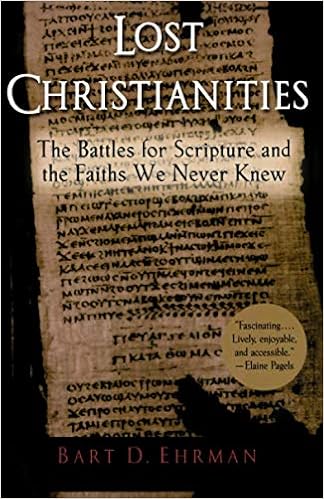
The point of this book is largely for Ehrman to explore what Christianity may have become if orthodox Christianity hadn't won out. As such, he looks at various heresies and how those who taught them thought about Jesus--and also how the proto-orthodox pushed their agenda. As Ehrman notes, those proto-orthodox not only won out but also then wrote the history of Jesus and early Christianity, ridding it of the differences that existed in those early years and of the voices of those who taught in a different way. These are all excellent points--and ones would totally agree with.
Now, of course, we have access to some of the original documents that were earlier only available to us in quotes from those arguing against heretical teachers. This was made possible by the discovery of the Nag Hammadi library most especially, among others. Interestingly, the teachings of those arguing against such thinkers turn out to be largely correct about what such people were teaching--or at least that seems to be the case when we read it through the lens of such arguers; take the lens away, and some of the teachings may not be quite as antithetical in all cases.
Ehrman begins his discussion of how we establish authority in Scriptures. He looks at how people wrote pseudo-epigraphically and how such forgeries could affect how people accepted a given work. He argues quite well against those who would say that pseudo-epigraphy was simply a rhetorical device that was accepted (something that seemed a point in John Collins's book on diasporic Jewish writers); as Ehrman notes, the whole point of writing in someone else's voice with their name was to pose as that authority and discovery of a work being "forged" in such a name meant it wasn't accepted as authoritative generally.
Next, Ehrman looks at different forms of Christianity that existed--Ebionites, Marcionites, and Gnostics. The first were more Jewish in temper and emphasized Jesus as human (rejecting Paul's writings); the second were more Gentile in orientation, rejected the Jewish Old Testament and virtually all writings by New Testament writers outside of Paul (and Luke's gospel), and emphasized Jesus as divine. Orthodox Christianity pushed both such views out.
Here's where Ehrman's work gets really interesting. He looks at the New Testament as it comes down to us and largely argues that it was in selecting these books--and the accepted texts for these books--that the proto-orthodox established their authority. The New Testament is not, as Ehrman notes, necessarily as nailed down as we suppose. Ancient manuscripts (of which we have more than any other ancient text) of the books that make up the New Testament include numerous differences. Most of these, Ehrman concedes, are merely spelling errors and other simple and obvious mistakes. But a few suggest an agenda. One of the most interesting sets of differences are passages in Luke, wherein references are made to Jesus's father and mother or parents--in many of the manuscripts such wording is "changed" to emphasize only his mother, the idea being that some had used Luke's references to his parents to say that Jesus had not been conceived by the Holy Spirit. Likewise, the oldest manuscripts (though not the majority of ancient manuscripts overall) have Father saying, in contract to Matthew and Mark, at the time of Jesus's baptism, "This is my beloved Son; today I have begotten you"--instead of "This is my beloved Son in whom I am well pleased." The majority of English translations take up the later version. Ehrman argues the manuscript was changed for the same reason (though this argument supposes that "oldest" is always better--something that I would say is not necessarily the case; the accepted text may be the real whose older versions fell into disrepair and the oldest could well be a changed text that we discovered; either way, though, the discrepancies do show the challenges textual editors/scholars have in defining what the original text was intended to be).
Then Ehrman goes into the subject of how the canon was settled on, again arguing that this was the product of proto-orthodox Christians winning out over the first four centuries. Indeed, if one looks at some second-century works, almost the entire the New Testament is referenced (namely in Polycarp's letter), while in other such works almost none of it is (Shepherd of Hermas, 2 Clement). What constituted Scripture differed from place to place, which is likely true. What is interesting here, however, is that in Asia Minor, it would appear that most of the New Testament was already settled by the time of Polycarp, which to me would suggest that this is where the proto-Orthodox canon formation actually came from, despite the fact that Rome continued to argue over biblical concepts for another several hundred years. In part, that would seem to make more sense because otherwise, it seems odd to me that some of the books we have in the New Testament would be there, as they don't well fit orthodox Christian doctrines. Indeed, modern scholarship to me, seems in a sense, to have taken on a kind of Marcionite canon insofar as most secular scholars now argue that other than about seven of Paul's letters, the rest of the New Testament was written much later and most of it pseudo-epigraphically; as such, we end up almost with an antinomian New Testament in which only a selection of Paul's letters count as truly apostolic.
Sunday, January 26, 2020
On "Breakfast" by John Steinbeck (1169 words) ***
While not one of Steinbeck's best stories, this one still shows much of his great skill. It's essentially the description of a breakfast among hired farmhands. Steinbeck thrusts at readers the sight, the smells, the taste, the sounds of all that is there. Read the story here.
On "Dialogue with Trypho" by Justin Martyr ***
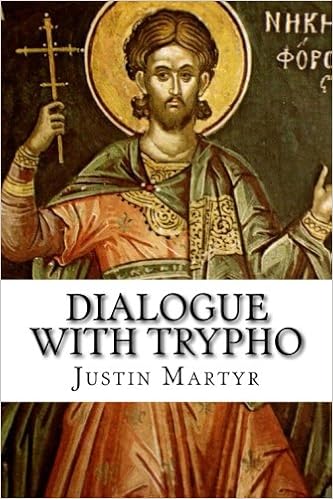
One of the most surprising things about the work to me was the number of arguments that Justin makes from scripture with regard to the Messiah's identity. The number of typologies and prophecies that he pulls out and argues by is incredible. They are the same arguments generally made today by Christians. But it's interesting to me to see that these arguments were already formed in the second century, as if very little has been added since then. A translation may be read here.
Monday, January 13, 2020
On "Monkey Park" by Madison Smartt Bell (about 7,000 words) ****
This one involves a night of randomness. It centers on a woman and her male friend and her husband. She spends more time with the former than the latter, and there's a feeling of sadness insofar as we know that there's something going on between them that they won't quite acknowledge and can't. There's putting on clown faces, drinking too much, going to a park to play and to look at monkeys involved. Read the story from Hudson Review here at Jstor (you can sign up for a free account and read it online).
On "Zero db and Other Stories" by Madison Smartt Bell *****
The two stories that are my favorite in this collection fall at the start of the second section, which is my favorite section of the book. The book as a whole is set into three sections, with "three" being something of a motif in this work, as designated by the first and last stories of the first section. Those stories are called Tryptichs--they are stories in three parts.
Triptych I is about a little girl at a hog killing. Where Bell excels throughout the collection is in his somber attention to detail, and that's what makes this otherwise less interesting story impressive. It's set in the South, among black folk and white, and burning and accidents are something of a theme throughout the three disparate parts.
"The Naked Lady" is a powerful piece of wit and writing skill and was the one that most impressed me when I first read the collection. It's about the friend of an artist, their horrific home, the sculptures the artist creates, and the rats they kill.
"Monkey Park" is another sort of hopelessness--this one involving a couple that isn't.
"Triptych II" focuses on different ways of dying, one among peacocks, one an old man, and one a bull. The idea here seems to be that people are little more than animals in the end, facing their final hours. And it mirrors the final story in the collection.
The middle section includes six stories about young men (or a young man, as many of the stories seem to be about the same person and arguably all of them could be) fighting--or perhaps, more so, giving into--depression. "The Structure and Meaning of Dormitory and Food Services" involves a young man who goes off to college, does well for a few months, and then sinks into a morass wherein he stops bothering to attend classes and spends most of his days on the "sad" side of the university cafeteria. Here, a blind man is sat down by him each day, but the blindness is really the narrator's own, as he is lost without knowing how to escape his own lethargy.
"Irene" finds a young man living in a Hispanic neighborhood with cheap rent. The man knows little of his neighbors and few of them, but he forges a kind of fascination with a twelve-year-old girl that is at some level a bit creepy but at the same time a kind of cry for connection--with someone, anyone.
"The Lie Detector" involves a young man who loses his apartment and has to go find a new one. Thing is, his old landlord seems to be trying to stiff him on the deposit; his new landlord seems to be trying to ask for extra kickbacks in order for him to move in; and true to form, the narrator himself begins to apply similar sorts of dishonesty to grift a bit more cash for his needs.
"I Heart NY" involves a young man trying to do just the opposite--that is, to be a responsible and good citizen. He takes real interest in those around, but the city doesn't seem to care much for or about him, and when he tries to help others, it rarely works out. Police don't come to assist. Muggers he catches turn out to be the wrong person, and so on.
"The Forgotten Bridge" focuses on the same young man as in "Lie Detector" after he is in the new apartment--and on the relationships he forges with his Hispanic neighbors. There's a kind of sadness to the tale insofar as it's told from a distant time with a certain amount of nostalgia, though it's nostalgia for a time that was rough on all of the people involved.
"Zero db" is about a man who works on sound for motion pictures and other productions. Here, he's recording people in a bar after a particularly bad day at work.
The final section/story is "Today Is a Good Day to Die" and focuses on an officer in Custer's army out west who is rescued from a snow storm by the Indians Custer has tried to and will try again to kill. This leads to some uncertainty in the officer regarding his role and purpose in life.
Sunday, January 5, 2020
On "Full Circle" by Edith Wharton (8349 words) *****
Betton is an author who finds fan mail tiresome, so he hires a man named Vyse to respond to the mail for him. Vyse is a former classmate--and also an author himself, an unsuccessful author who once asked Betton for help getting his novel published, a novel that Betton found riveting, much better than anything he could write himself. Betton, however, did not help--let other matters get in the way. Now, with Vyse as his needy and poor assistant, Betton feels guilty--but also uncertain of Vyse's motives. Does Vyse recognize that Betton is not as good a writer? Does he realize that this second novel is not as good as the first? How can Betton keep up his reputation for Vyse or keep needy Vyse in his employee? In one sense, this is a story of revenge--but of revenge that a person perpetrates on himself for a life badly lived. Read the story here.
On "Herod" by Peter Richardson ***
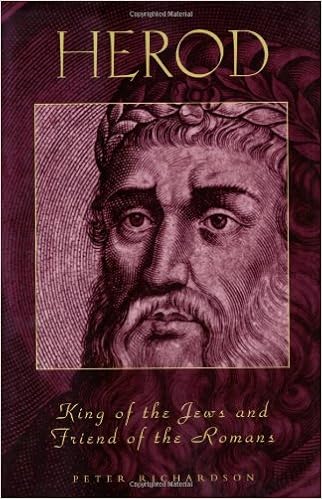
I came to this book not so much wanting to read about Herod as wanting to read more about the culture from which he derived--the Idumeans. The Edomites, of course, have a long history, but I wanted one that focuse specifically on the culture of the people at this time, the time of the Herods. There was no such book that I could find, so I figured a book about Herod might give me some of that. Indeed, this book did.
But because the focus was, as it should have been, being a biography, on Herod's political career, it was something of a disappointment for me.
Richardson uses fiction techniques to start and end his work. He begins with Herod's death, describing it from the point of view of various peoples who would have known him--radical zealots, Romans, Pharisees, and so on. Indeed, how he was remembered would have depended in many ways on what your own political and religious views were. He was, on some level, very religious, and another, just the opposite. He was an opportunist. He was one who did well for his adopted Jewish people. He was one who sold them out to Rome for his own gain. He was one who did the best he could to support Judah at a time of Roman hegemony. The conclusion reaches for similar points, documenting his various accomplishments.
In between, we get the actual biography, which is, as many histories can be, a bit overwhelming with its accounts of battles. Such rarely keeps me wanting to read, even in books that are outright about wars. After so many, they begin to seem similar, like so much maneuvering to attain specific ends. I tend to prefer to know those ends and in general how they were obtained--not so much the specifics.
The parts that spoke most to me, thus, were those that focused more on Herod's building program, which was impressive. Also of interest--though this too got bogged down in details--was his growing paranoia and the destruction of his family largely by himself. Finally, a mere chapter--but an interesting one--is devoted to his descendents, the tetrarchs that followed him and the final kings.
Saturday, December 14, 2019
On "Flight" by John Steinbeck (7661 words) *****
One of my favorite stories of all time, this one reminds me of what I found so engrossing about John Steinbeck when I was a teenager. It's a bit overwrought and melodramatic toward the beginning, but the slow, deliberative descriptions of a young boy--er, man--on the run fits with the inevitable end. Read the story here.
On "Chronicle of a Death Foretold" by Gabriel Garcia Marquez *****

This tale is wonderful for its various details but also for its tone. Garcia Marquez builds the story as if a man were really conducting research on an incident from earlier in his life. We read of interviews he's conducted, his own memories, written accounts. In that sense, the Chronicle is like reading an investigative report.
The story revolves around the killing of Santiago Nasar for the apparent deflowering of Angelica Vicario, whose new husband returns her as such. As we read further, we learn not just how the killing went down but how Nasar was implicated--even as his actual guilt is called into question. By the end, I found myself saddened by the course of events, which is as good as one could hope from such a story. The novella can be read here.
Saturday, December 7, 2019
On "The Last Asset" by Edith Wharton (12,119 words) *****
A journalist befriends an American woman who is at the center of the social world from which he draws his stories. She in turn wants a favor--she wants him to get in touch with her husband, from whom she has been separated for years. The husband is needed for the daughter's wedding, or else no wedding can take place. Why the husband is separated, how he lives, and why he has no interest in helping is at the center of this story, a center which comes to encompass even the journalist. The story is told in the third-person limited perspective of the journalist, and yet, it's one of those tales that fits in with The Great Gatsby or On the Road insofar as the story isn't really about the main character but about someone whom the main character is obsessed with (although actually, this story is about the main character insofar as he is the one transformed in it, even if he's not the main spring for the events). Those two novels are first person, and I wonder to some degree why, given that the story is still told from a limited perspective, why Wharton didn't settle on first person for this one. Read the story here.
On "Early Biblical Interpretation" by James M. Kugel and Rowan A. Greer ***

Much of the book--though not as much as I feared, since that wasn't something I was particularly interested in reading about at present--is given over to the rise of and cannonization of scripture. Much is also given over to different genres of the scripture, at least in the Old Testament, and of interpretation--wisdom writing, apocalyptic writing, interpretations among the Qumran sect, interpretations among the rabbis, the hellenistic allegorical approach.
While the first half of the book focuses on the Old Testament, the second half focuses on the New. The author of this half is particularly interested in Iraneaus's view of the scripture, as he is the first to reference most of the books in the New Testament in his own work. The author delves into the various ways early Christian writers put Old Testament scripture to work within the new Christian framework (Jesus in the Old Testament, the church as the new Israel, etc.). He also looks at the differences between the Alexandrian allegorical school and the Antiochan typological school, showing that actually the two schools are not perhaps as different as one might initially claim, as their main interest was in making theological points.
The book's final line is perhaps most telling of the two religious traditions that come out of interpreting Old Testament scripture: "It is instructive that the figure of Wisdom, portrayed in Prov. 8:22ff, as God's agent of creation and revelation, was equated in Ecclesiasticus (Ben Sira) with the Torah but was identified by Christians as early as Paul with Christ. From the same point of departure we thus find two paths, strikingly similar in many of their presuppositions and methods, but finally divergent" (203).
Sunday, November 24, 2019
On "Pointing East, Where Things Happen" by Donna Baier Stein (3770 words) ***
Is he or isn't he? When a man has an affair, it's hard to trust him ever again--that's the angle in this story, centered on a revival meeting and a mysterious bracelet too small for his wife. Read the story here at Summerset Review.
On "From Sabbath to Sunday" by Samuele Bacchiocchi *****
Having now worked with scholarly books for more than twenty years and having read more extensively among the works Bacchiocchi examines, this book now seems like a fairly easy read. The more interesting parts for me are those that focus on the historical shift to Sunday and those that discuss specific scriptures used to justify the shift. Much of the early portion of the work focuses more on other scholars' claims regarding the shift, showing how those claims don't pass muster. In that sense, those early sections are where the book seems most scholarly and most tied to the dissertation from which it derives. When Bacchiocchi is dealing with primary sources, as the later chapters do, the work is much more interesting, indeed, for me, gripping.
Saturday, November 23, 2019
On "The House of the Dead Hand" by Edith Wharton (10,201 words) *****
Wharton had a knack for mysteries. This one reads like a gothic tale ala Poe and Borges. A man is asked to get a copy of a newly discovered painting by Leonardo, which has been purchased for a private collection. The purchaser, however, is a man who will not allow others to photograph the image and, save for the young visitor (who has some special connections), even look or describe the painting, which was purchased by the daughter of the current owner. The painting, however, is also the daughter's prison sentence, for the father is not just possessive of it but insanely attached to it such that no one else in the family can live a normal life. Read the story here at the Atlantic.
On "The Divinity of the Roman Emperor" by Lily Ross Taylor ****
As Taylor notes, the real irony is that while Caesar was killed to keep him from amassing too much power and becoming a "god," his very death is what led to him gaining divinity and thus the emperors that would follow him.
The idea that an emperor would be a god was really something that derived from eastern kingdoms in the Roman empire--most specifically Egypt. People in that portion of the empire were thus more inclined to think of an emperor as a god to begin with. The trickier part was getting Roman people to go along with such an idea. In that sense, a dead emperor was more easily proclaimed such than a living one. Rather, it was the "Genius" (similar to a metaphysical soul) of an emperor that was godlike and that was worshiped. This Genius, within the emperor, lived on beyond his body, ascending to the godly realm after the body's death.
That nations like Judah were allowed not to worship an emperor, while still showing deference to him through sacrifices for him rather than to him, shows also the degree to which emperor worship was largely for political ends--whatever works to subject people to the rulership is what was most important.
Sunday, November 10, 2019
On "Deafness" by James Chapin (2276 words) ****
This lightly science fiction story revolves around a mysterious phenomenon wherein vast swaths of people lose their hearing. It's told in the form of a letter from one relative to another, about the "old days"--the days when one could hear. The other day I was on the phone with my mother; dad couldn't come to the phone. His hearing's not so good these days, and on this day, it was no good at all. What is there to say to a silent world? What is there to say to the silence? Chapin has some ideas. Read the story here at New World Writing.
On "The Moral World of the First Christians" by Wayne A. Meeks ****
Because these are such large subjects, he chooses to focus on various philosophical schools and within those various philosophical schools individual philosophers. As such, Plutarch's writing stands in for Platonic philosophy; Musonius Rufus for the Stoics. In the end, he looks for what they have in common: the desire to lead a happy life is the choice to live in conformity to nature, which is made possible by reason.
For Jewish moral thinking, Meeks focuses on sages, like Yeshua ben Sira, the sect at Qumran, Philo, and the Mishnah. All, of course, stress the importance of the biblical law, though they differ to a great degree in terms of how much they integrated those ideas into Greek thinking.
Meeks then looks at various types of (or emphases among) Christian sects (Gentile, Jewish, Apocalyptic) and closes with a discussion of where such sects met: synagogue, house, school, and church.
Finally, in the last chapter, Meeks examines what specific New Testament passages tell us about the moral foundation of Christians in the first century, how the writings were related to common literary practice, and how the moral standards developed into standardized forms of expression.
Sunday, October 27, 2019
On "The Reckoning" by Edith Wharton (8233 words) *****
This story looks at the emotional toll that divorce takes on a person, most especially the person not expecting/wanting the divorce. Unattached love is all fine and glorious if you're the one who gets out first. The story renders a bit too little of the pain that is usually experienced on the part of the party ending the relationship, but it does so to make a point about how love cannot be all about one's own self and feelings at a given time. Read the story here.
On "Moral Exhortation, a Greco-Roman Sourcebook" by Abraham J. Malherbe ***
A few things become evident in reading the extracts. One is that, contrary to what I've read elsewhere, the selections Malherbe has chosen seem to show a set of philosophers very much concerned with morality--including, most notably, sexual morality. Romans come across as quite conservative per the selections chosen--adultery is discouraged and even fornication, as are homosexual relations. I end up wondering, however, to what extent these selections speak to the actual environment of the day. Mahlerbe, in fact, may be drawing largely from Stoic philosophy for those passages, and as such, a more conservative view certainly makes sense, since the Stoics were all about "denying the self" in a sense. In fact, it's easy to see how (gnostic) religion inevitably seems to advocate either aestheticism or its opposite when under the influence of such ideas, because both in essence argue that the physical should not be our focus.
Another major thing that becomes obvious, I have already denoted--that the structures of writing often are similar between Christians and philosophers. In this regard, one of the more interesting sets of extracts have to do with extended metaphors. As Paul uses metaphors to racing (sports), war, and the body (for unity), so too do the philosophers. One could say that such shared metaphorical ideas show that the concepts were common in the society at the time, but I also ended up thinking about how such ideas likely aren't unique to just the time period, that even without such metaphors in scripture or other ancient writings, writers today would likely come up with similar ideas.
Although the extracts are interesting and the summaries useful, this is indeed a sourcebook--Malherbe largely stays in the background, and the book doesn't build to any kind of crescendo in terms of its contents.
Subscribe to:
Posts (Atom)

 Posts
Posts


